What3words – The Space-Powered App Saving Lives

Earlier this month, a 14-year-old boy saved his younger brother’s life using what3words when he suffered a life-threatening seizure.

What3words is a satellite-powered geocoding system, conveniently located in an app. By dividing the world into 57 trillion 3m x 3m squares, it allows users to communicate their exact location using a unique three-word address.

Liam, aged 10, suffered a brain injury after being diagnosed with Burkitt’s leukemia when he was five – this left him prone to potentially life-threatening seizures. When one struck on a rural road in the West Midlands and Liam’s medication failed, his brother quickly opened what3words and called 999. Thanks to his quick thinking and this piece of life-saving technology, dispatchers were on the scene within five minutes.

“We were in a very rural area, in the middle of nowhere, and we didn’t know the name of the farm or road we were on,” said the boys’ father. “The app gave the paramedics an exact location so they could reach us in just five minutes. If it wasn’t for Callum thinking to pull up the app, Liam could have lost his life.”

What3words is available in 193 countries and in more than 45 languages – it’s even been used to save a man trapped 20 metres down a vertical cave entrance. The experienced caver was in a remote part of the Yass Valley in Australia when he became stuck, but was thankfully rescued using this innovative space-powered app.

In an incident in July 2020, an 11-year-old boy used the app to save his grandma after their car was crushed by a tractor. It rolled unmanned down a hill on a country lane in the North York Moors, completely crushing the driver’s side and trapping her inside. The young boy had no idea where they were, but was able to the words ‘fetches, melons and daydreams’ to notify the emergency services of their location. The boy’s mother, who works as an ambulance dispatcher, had told him to download the app in case of an emergency.

The Yorkshire police later revealed they had used the app over 500 times in the past year to locate callers.

“Having this type of technology integrated within our Emergency Operations Centre system has changed the way we are able to deal with incidents,” said Trevor Baldwin, Head of Service Development at Yorkshire Ambulance Service. “Asking people questions about their location when they have little knowledge of an area takes time and responses aren’t always that accurate […] It has been particularly helpful when identifying the locations of road traffic collisions, but the biggest success story to date was when it was used to help us find a runner in cardiac arrest who we then managed to resuscitate. Time is precious in these circumstances.”

When surveyed in July 2022, 44% of emergency services said they what3words to locate callers every day. A third use the technology on a weekly basis. One service reported using the app almost 2000 times this year so far to locate callers.

This is a great example of space being used for good. Using cutting-edge GPS, satellite and other space technologies, the sector can drive innovation and save lives. What3words is completely free to download for iOS and Android devices and even words offline. If you don’t have one of these devices, you can still access what3words on your web browser. We strongly urge everybody out there to make a note of this and download the app if you can – it could save a life one day.

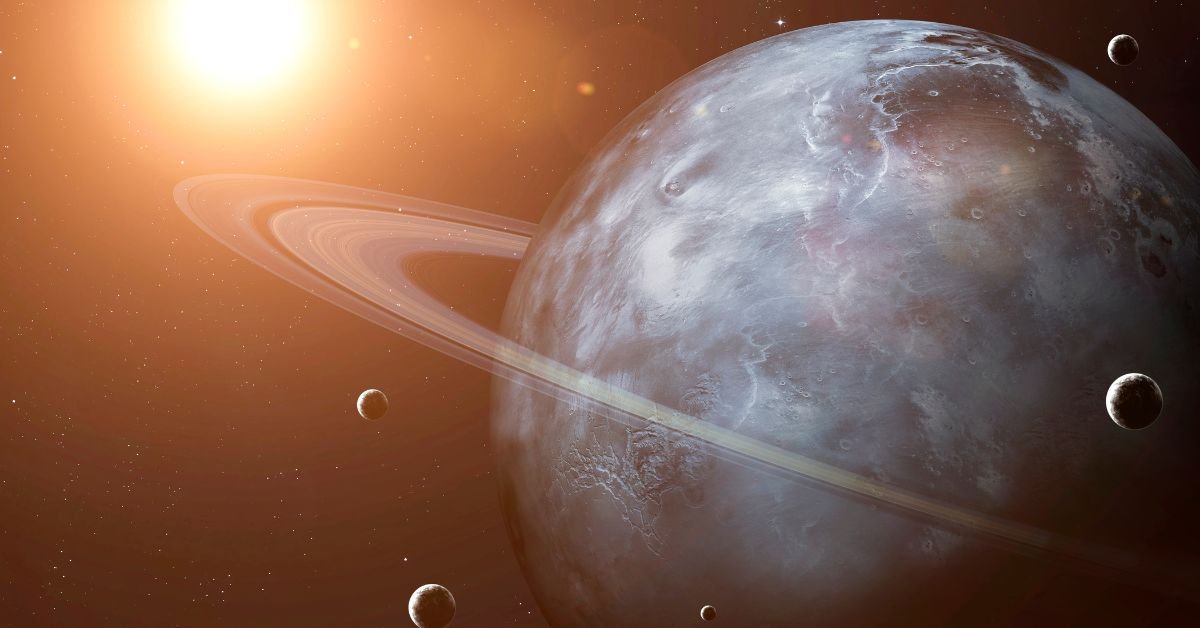
Mysterious Dust Ring Around Uranus Rediscovered

Nearly 40 years after NASA launched Voyager 2 to explore interstellar space, astronomers have made a startling discovery hidden in decades-old data.

When Voyager 2 launched on August 20th 1977, it made history as the first – and currently only – spacecraft to visit Uranus. On this historic mission, the spacecraft discovered 10 orbiting moons and two rings around the ice giant. One of the rings, dubbed Zeta, has been shrouded in mystery ever since – until now.

After its initial sighting, experts were unable to locate Zeta for almost 20 years. Experts even thought they’d “missed” Zeta because it was not visible in a single image.

Amateur image processor Ian Regan has shed new light on this illusive ring through rediscovered Voyager 2 data.

“He took hundreds of images, stacked them together, to produce this image of the Uranian system,” commented planetary scientist Matthew Hedman. “This is the most comprehensive view of the zeta ring that exists and we didn’t know it was in the Voyager data for decades.”

Thanks to this new information, researchers have been able to calculate Zeta’s distance from Uranus – around 37,000km – and to estimate its brightness.

“For a long time we thought we only had two images of this ring. This shows that there is a lot of information still encoded in the Voyager data that deserves a second look,” said Hedman.

This latest image of the Uranian system has raised some questions within the scientific community.

In 2007, Hawaii’s Keck Observatory gathered the first observations of Uranus’ rings since Voyager. Their findings showed Zeta 40,000km above Uranus, 20,000km further than Voyager 2 had imaged.

 “The trick is that the location of this ring didn’t match the Voyager images. Something has changed about this ring over the course of 20 years. We’re still not sure what it is,” Hedman explained.

Alongside this, experts in the Keck observatory detected that Zeta had become much brighter since its last sighting, meaning dust had been introduced into the system. One potential explanation could be a space rock colliding with Uranus, creating dust and debris that then settled in the zeta ring. Another theory holds changing seasons in space responsible, however these ideas are both unconfirmed.

“It got significantly brighter, which means dust got introduced to the system sometime in those 20 years,” Hedman said. “Now, what did that? We have no idea.”

As further questions are raised around the icy planet and its rings, experts are making plans to find answers. There’s even talk of a large-scale NASA mission on the horizon to explore the Uranus system.

For now, the James Webb Space Telescope is keeping an eye on Uranus, collecting further data and images of the planet’s rings. In September 2022, the clever space telescope captured some of the clearest images of Uranus’s rings we’ve ever seen – this is the first time we’ve seen the rings in infrared.

Sparked by Voyager’s historic mission into interstellar space, it seems we still have a lot to learn about the other planets in our solar system. As experts learn from this exciting discovery and plan future missions, we can’t wait to see what they’ll find next.

China Adds to Growing Environmental Monitoring Constellation

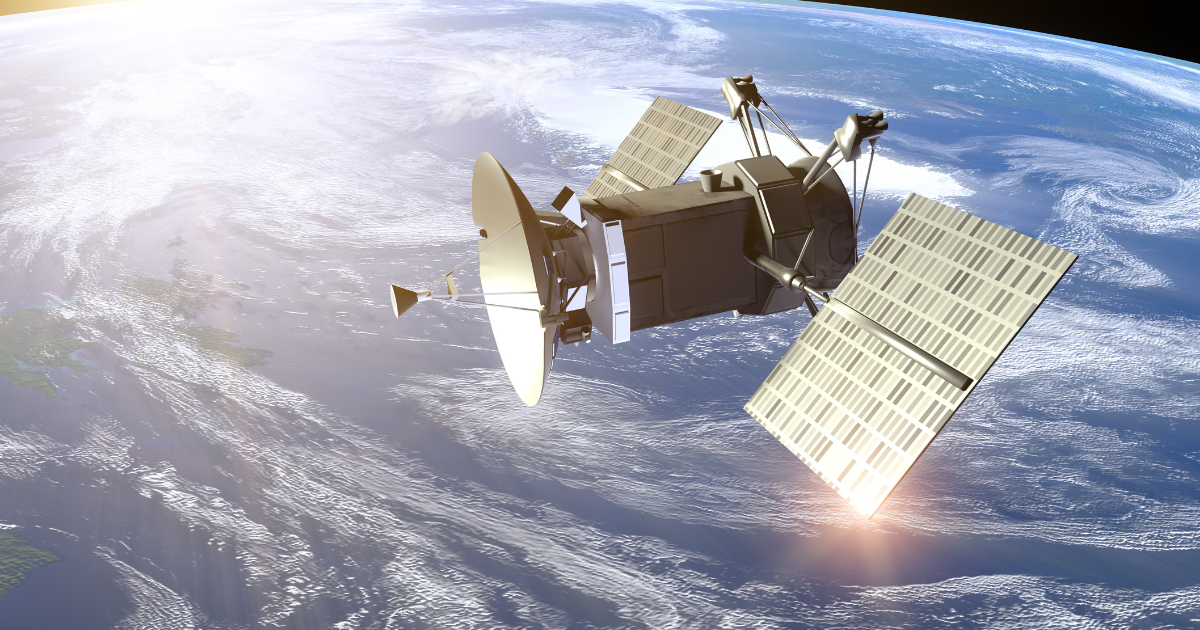
China has launched a new Synthetic Aperture Radar (SAR) satellite for environmental monitoring.

Huanjing-2E took flight earlier this month on a Long March 2C rocket from the Taiyuan Satellite Launch Center in northern China.

The SAR satellite’s 5-meter resolution S-band radar image data will support “disaster prevention, reduction, relief, and environmental protection,” as well as “serve natural resources, water conservancy, agriculture, forestry, earthquakes, and other fields,” according to the China National Space Administration (CNSA).

Huanjing-2E’s launch follows that of Huanjing-2A and 2B in 2020. This is the latest addition to a fast-growing series of environmental monitoring systems, all deployed and operated by China.

China is making huge advances in space-based Earth monitoring, using commercial constellations to gather data about environmental change more efficiently than ever.

Because they collect data at different wavelengths, SAR satellites can obtain many types of information such as water and moisture content, surface makeup, the impact of natural or man-made disasters and changes in habitat. They have day, night and all-weather capabilities, which means they don’t require sunlight to function and are not affected by atmospheric conditions. They can also “see” through things like vegetation, snow, sand and smoke. The ability to repeatedly scan the same area regardless of weather conditions makes SAR a great tool for measuring changes in Earth’s landscapes and environment.

These capabilities provide enormous value for industries like geospatial intelligence that rely on environmental data and imaging to document and assess human activity on Earth. This kind of cutting-edge space technology also plays a huge role in agriculture, reforestation, flood management, snow and ice monitoring, wildfires, and so much more.

On their mission to help Earth from space, China also recently added to their Haiyang (meaning “ocean” in Chinese) satellite constellation. These satellites use microwave sensors to monitor the marine environment, measuring sea surface height, temperature and wind field. Since the first launch in 2002, China has added eight satellites to the constellation, with 10 more on the way.

It’s safe to say that China has solidified itself as a big player in space. Following their first satellite launch in 1970, the country’s launch capabilities boomed in the 2010s and are continuing to grow today. Today, China has full-cycle capability, meaning their satellites can be manufactured locally, then launched on Chinese rockets from Chinese launch sites. While most reports assign 499 of the 4,852 active satellites orbiting Earth to China, more recent reports estimate the number to be around 562. This makes them the world’s second largest commercial satellite owner, beaten only by the US with a monopoly of 61%.

With the climate crisis raging on and natural disasters increasing in frequency, it’s great to see more focus directed towards using space for good. If the sector continues to drive innovation through these next-generation space technologies, we can monitor and assess all kinds of damage to our planet, working together to minimise harm as far as possible.

Hurricane Ian – How the Space Sector is Saving Lives

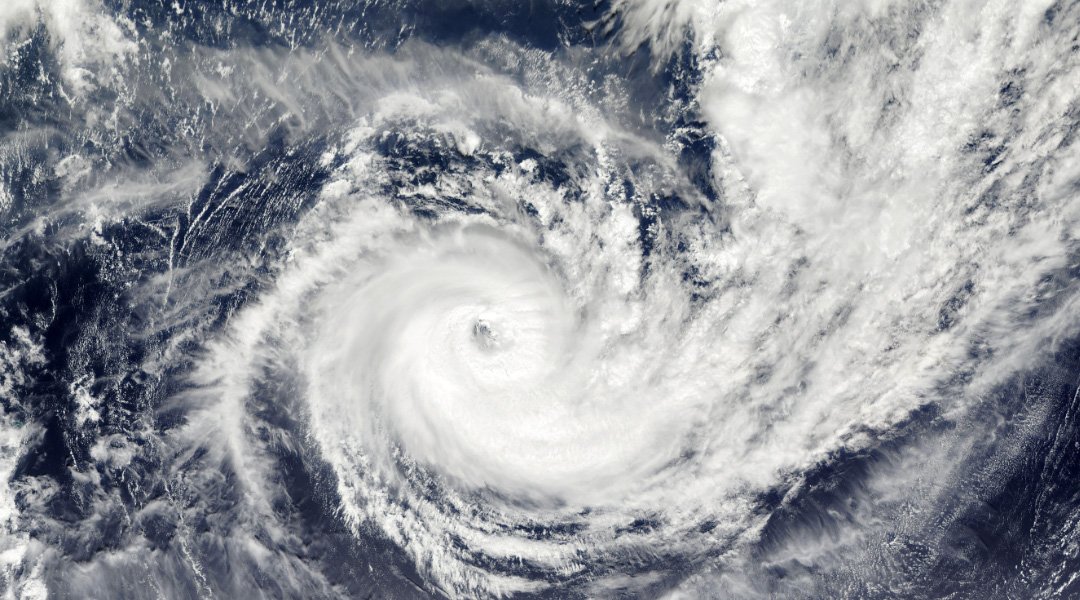
Hurricane Ian has left millions without power, triggered billions in damages and caused at least 81 deaths, with many more reporting loved ones as missing.

After initially making its way through Cuba, the hurricane grew to span practically the entire state of Florida. After being downsized to a tropical storm, it regained hurricane strength and hit South Carolina. Homes, communities and businesses have been devastated by this historic storm.

The category 4 storm was nearly double the size of Hurricane Charley, with 150 mph wind and “biblical” storm surge reaching up to 12 feet. The huge amount of wind, rain and flooding have made this one of the worst hurricanes in Florida’s history. It was described by President Joe Biden as potentially the “deadliest” storm to ever hit the state.

With natural disasters like these on the rise, along with increasing intensity and unpredictability, more focus is moving towards disaster risk reduction and response.

Space technologies play a crucial part in crisis management and disaster response. They enable early warning, prevention and faster response time. The space sector has already proved vital in monitoring and assessing damage caused by Hurricane Ian.

NASA’s weather sensors onboard the International Space Station (ISS), TEMPEST (Temporal Experiment for Storms and Tropical Systems) and COWVR (Compact Ocean Wind Vector Radiometer), provided critical data on the hurricane. While studying the planet’s surface and atmosphere, the systems observed as the storm passed over the Caribbean Sea in low-Earth orbit. Astronauts onboard the ISS took pictures of the hurricane from 400 kilometres above Earth as it approached southern Cuba. The weather sensors streamed this data directly to the NASA Jet Propulsion Laboratory via their Tracking and Data Relay Satellite (TDRS) constellation. The information was with forecasters in under two hours of being collected, enabling early warning and evacuation for those in vulnerable areas.

Satellites also provided valuable data on the storm. Satellite imagery detailed the full extent of the life-threatening storm, allowing experts to track and monitor its path of destruction and create response plans. The National Oceanic and Atmospheric Administration (NOAA) even provided street-by-street satellite maps of affected areas, enabling residents to assess the damage to their homes even if they are inaccessible.

In other news, SpaceX CEO Elon Musk donated 120 Starlink satellites to southwest Florida, restoring internet access to parts of the state hit particularly hard by the storm. It has been reported that over 850,000 people in Florida still have no power.

“We are working with Elon Musk and Starlink satellite,” Florida Governor Ron DeSantis told reporters. “They are positioning those Starlink satellites to provide good coverage in southwest Florida and other affected areas. We are expecting 120 additional large Starlink units to deploy to Southwest Florida.”

In the face of disaster, space-based technologies allow us to stay ahead of the curve and act fast. As the frequency and severity of these natural disasters increases, just as is has done in the face of Hurricane Ian, the space sector’s capabilities will play a vital role in saving lives, minimising damage to affected areas and helping to rebuild communities.

NASA’s DART Spacecraft is on an Asteroid Collision Course

NASA’s Double Asteroid Redirection Test (DART) mission is attempting the world’s first planetary defense test.

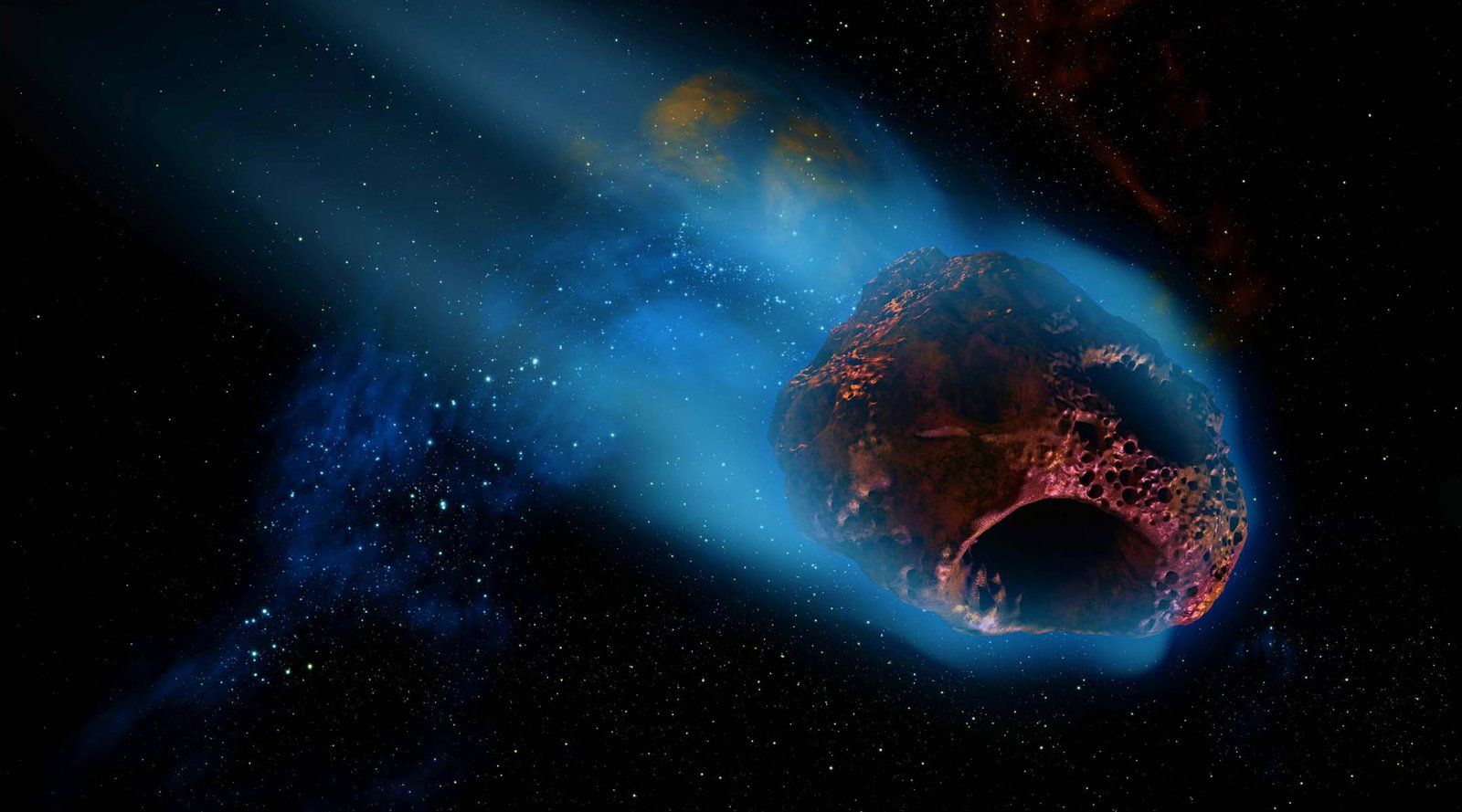
The multi-million-dollar DART spacecraft is currently travelling through space on an intentional collision course with Dimorphos, the asteroid moonlet of Didymos.

DART was launched on 23rd November 2021 aboard a SpaceX Flacon 9 rocket from Vandenberg Space Force Base in California – you can even track its journey and mission clock. The spacecraft is now preparing to collide with its asteroid target at the end of this month.

The craft will crash into the 160m wide asteroid at 7:14pm ET (00:14am GMT) on Monday 26th September 2022. You can watch the impact live on NASA’s YouTube channel. If successful, this method could deflect future Earth-bound asteroid and save countless lives.

“These objects are hurtling through space and have of course scarred the moon and, over time, also on Earth have had major impacts, have affected our history,” Thomas Zurbuchen, NASA’s associate administrator for science, commented during a news conference.

DART is a small spacecraft, with its core consisting of a box just under a metre wide on all sides. The craft has solar arrays that roll out to 12 meters in width. Once both arrays are deployed, DART will be around the size of a school bus. The spacecraft’s electric propulsion system uses a flow of charged ions to create a gentle but constant push.

On 11th September, the crew confirmed the spacecraft’s “mini photographer” LICIACube (Light Italian CubeSat for Imaging Asteroids) was successfully ejected ahead of the crash. LICIACube will stop at a safe distance of 600 miles from Dimorphos to observe the collision with its two optimal cameras. Once DART hits the asteroid, the CubeSat will continue its journey to inspect the scene from a closer distance. The Italian micro-satellite will transmit the real-time footage to scientists back on Earth.

This will be NASA’s first time using the kinetic impactor technique as a planetary defense method. DART will crash into the moonlet at 15,000 mph, transferring kinetic energy into the asteroid and pushing it closer to Didymos. If successful, Dimorphus will orbit Didymos at least 73 seconds quicker than before. DART will only be changing the period of orbit by a small amount, but this deflection would be enough to veer a future Earth-bound asteroid off its course.

“This will give us all confidence that deflection technology could work in the future,” Andrea Riley, a program executive at NASA working with the agency’s Planetary Defense Coordination Office, commented at a news conference. “If it misses, it still provides a lot of data. This is a test mission. This is why we test; we want to do it now rather than when there is an actual need.”

While DART’s target poses no threat to us, this innovative mission could save millions of lives if an Earth-threatening asteroid were discovered in the future.

“This isn’t just a one-off event,” said Nancy Chabot, the DART coordination lead at the Johns Hopkins University’s Applied Physics Laboratory in Maryland. “We want to know what happened to Dimorphos, but more important, we want to understand what that means for potentially applying this technique in the future.”

As DART’s collision date draws closer, ground-based telescopes will monitor the system and provide further updates. This is an exciting time for the space sector – along with the rest of the plane – as NASA embark on this first journey of its kind.

Could this little spacecraft be the catalyst for missions that one day save us from a dinosaur-like fate?

Watch Europe Dry up from Space in this Shocking Timelapse

Satellite images have revealed the shocking impact of droughts across Europe in July and August.

Huge areas of lush green land turned sandy brown as extreme weather conditions savaged the continent.

The European Union’s Copernicus Program captured the mosaic of images through their constellation of Earth-observing Sentinel satellites.

Josef Aschbacher, European Space Agency (ESA) Director General, noted that ESA’s Copernicus Sentinel-3 satellites measured “extreme” land surface temperatures exceeding 45°C in Britain, 50°C in France and 60°C in Spain.

“Today, we are very concerned about the energy crisis, and rightly so. But this crisis is very small compared to the impact of climate change, which is of a much bigger magnitude and really has to be tackled extremely fast,” he commented.

Alongside the timelapse, Copernicus EU tweeted, “In 2022, #drought has affected the whole of Europe.”

Reports have dubbed this drought Europe’s worst in 500 years. The extremely hot and dry conditions increased the risk of forest fires, while water levels in European rivers dropped so low that they were closed to traffic. Water levels dropped to such extremes in Spain that a previously submerged complex of Roman ruins became visible, along with a church submerged underwater by Spanish dictator General Franco. The Global Drought Observatory revealed that 47% of Europe was under drought and weather warnings in August.

Agriculture was hit particularly hard by these historic heatwaves and drought. Lack of precipitation led to widespread stress on crops, particularly across Italy, France, Germany, Portugal, Spain and Hungary.

The space sector – in particular the Geospatial Intelligence (GEOINT) sector – played a vital role in documenting this historic weather and raising awareness of its impact.

Climate monitoring and early warning rely heavily on the space industry. Space-related technologies and information allow us to assess specific areas’ exposure to climate change, adjusting adaptation and mitigation strategies accordingly. Alongside this, Earth observation allows us to predict and monitor natural disasters, as well as gain accurate weather forecasts.

As the climate crisis rages on, the space sector will be instrumental in our shared mission to protect global communities and minimise the impact of climate change.

SpaceX and T-Mobile Partner to Boost Signal from Space

SpaceX Chief Engineer Elon Musk and T-Mobile CEO and President Mike Sievert have announced ‘Coverage Above and Beyond: a game-changing new plan to bring cell phone connectivity everywhere’.

The team are working to provide some degree of cellular service “practically everywhere in the continental U.S., Hawaii, parts of Alaska, Puerto Rico and territorial waters”, according to Musk and Sievert.

“The important thing about this is that it means there are no dead zones anywhere in the world for your cell phone,” said Elon Musk. “We’re incredibly excited to do this with T-Mobile.”

Despite powerful 5G and Long-Term Evolution (LTE) wireless networks, over 500,000 square miles of the US, as well as large stretches of ocean, receive absolutely no signal from any provider. Multiple wireless coverage providers have struggled to find a solution for these dead zones. However, terrain limits like deserts and mountains across the US as well as land-use restrictions such as national parks make this an incredibly difficult task.

To remedy the problem, the two companies are building a new network that will broadcast nationwide from Starlink’s satellites using T-Mobile’s mid-band spectrum. This satellite-to-cellular service will offer near to complete coverage practically anywhere users can see the sky.

“It’s going to massively improve people’s convenience and it’s going to save lives,” commented Elon Musk.

Using this technology, the pair plan to bring text coverage to customers across all corners of the continental US, Hawaii, parts of Alaska, Puerto Rico and territorial waters. Following more satellite launches from SpaceX over the next year, coverage will be brought to even more areas outside of T-Mobile’s coverage/signal network.

“We’ve always thought differently about what it means to keep customers connected, and that’s why we’re working with the best to deliver coverage above and beyond anything customers have ever seen before,” commented Mike Sievert. “More than just a groundbreaking alliance, this represents two industry-shaking innovators challenging the old ways of doing things to create something entirely new that will further connect customers and scare competitors.”

This project will rely on Starlink’s next-generation satellites, planned to launch on SpaceX’s Starship rocket. These satellites will have large antennae to directly provide connectivity to phones on the T-Mobile network. Users won’t need to make any additional purchases to access this new service. Conveniently, the majority of smartphones on T-Mobile’s network will already be compatible with the network.

“We are constructing special antenna. They are actually very big antenna that are extremely advanced,” said Musk. “The important thing is you will not need to get a new phone. The phone you currently have will work.”

With other exciting companies like Aquarian Space working to develop communication networks for interplanetary exploration – including high speed internet on the moon – this marks the beginning of a very exciting time for the space sector. With capabilities like these, we’ll be connected like never before with people in the most remote corners of the world, and maybe one day the universe.

These two industry giants are paving the way for global connectivity with a shared vision to empower the world. Could SpaceX and T-Mobile’s partnership signal the end of cellular dead zones?

Elon Musk’s Starlink Hacked With $25 Device

AT THE BLACK HAT SECURITY CONFERENCE IN LAS VEGAS, BELGIAN CYBER-SECURITY RESEARCHER LENNERT WOUTERS REVEALED VARIOUS HARDWARE VULNERABILITIES THAT LEFT STARLINK’S SATELLITES EXPOSED TO HACKERS. USING A HOMEMADE MODCHIP THAT COST $25 TO DEVELOP, HE WAS ABLE TO GAIN FREE ACCESS TO STARLINK’S SYSTEM AND RUN CUSTOM CODE ON THE NETWORK’S DEVICES.

Wouters has also previously hacked Tesla, another of Elon Musk’s companies, by producing hardware that can unlock one of their electric vehicles in just 90 seconds.

In a presentation titled “Glitched on Earth by Humans”, Wouters demonstrated the attack on a Starlink User Terminal (UT) that allowed him to break into the dish and explore the Starlink network. Using a voltage fault injection attack, he was able to bypass SpaceX security protections.

“Our voltage fault injection attack was first performed in a laboratory setting and later implemented as a custom printed circuit board or ‘modchip’. The presented attack results in an unfixable compromise of the Starlink UT and allows us to execute arbitrary code,” Wouters commented. “The ability to obtain root access on the Starlink UT is a prerequisite to freely explore the Starlink network.”

Starlink operates through satellite dishes or UTs located in people’s homes and businesses. Wouters’ successful breach has exposed the system’s vulnerability.

In a press release, Wouters commented, “The widespread availability of Starlink User Terminals (UT) exposes them to hardware hackers and opens the door for an attacker to freely explore the network.”

Following the hack, Wouters has made his homemade tool available on GitHub, complete with instructions on how to execute the attack.

SpaceX have dubbed Wouters a “badass engineer” and are now offering up to $25,000 to researchers who can find bugs in the network through their bug bounty programme. Their website already provides a list of 32 researchers who have found significant flaws in Starlink’s system. Elon Musk commented that the company actually encourages this type of hacking, as long as it’s done non-disruptively. SpaceX even praised Wouters’ work in a six-page paper called ‘Starlink invites security researchers (bring on the bugs)’.

Following the presentation, SpaceX’s information security manager Christopher Stanley tweeted, “#BringOnTheBugs – We love working closely with security researchers! Special shout-out to @LennertWo for an amazing presentation! We are hiring! If you are a badass engineer and love space, please check out spacex.com/careers”.

It seems SpaceX have given people the chance to hack into the space sector, quite literally. To anyone thinking a career in space is out of reach – we hope this story inspires you to think otherwise. Aspiring hackers can breach multi-billion-dollar space giants from the comfort of their bedrooms. These individuals are forcing these companies to take notice of them and learn from their expertise.

The space industry is rapidly expanding and constantly providing new areas to enter into. There’s more than one way to get into the space sector, and they’re not as conventional as you might think.

Celebrating 10 Years of the Curiosity Mars Rover

WHEN A JETPACK FIRST LOWERED CURIOSITY ONTO MARS, SHE WAS ONLY SETTING OUT ON A TWO-YEAR MISSION TO DISCOVER WHETHER THE RED PLANET COULD HAVE HOMED ANCIENT MICROBIAL LIFE. FAST FORWARD 10 YEARS – THE CAR-SIZED ROVER IS STILL EXPLORING WITH NO SIGNS OF STOPPING.

Since landing, Curiosity has travelled 17.5 miles and climbed over 2000ft in elevation. You can even track her live location! The rover still has practically full capabilities, with all science instruments said to be working almost just as they were when they landed.

Curiosity has collected 41 material samples, had her data published in 883 scientific papers and captured 494,540 images – including a 1.8-billion-pixel panorama, her largest and highest resolution panorama ever.

A great way to keep up with Curiosity’s adventures is to follow her Twitter account. As of August 2022, she has 4.3 million followers cheering her on.

Launched in November 2011, Curiosity was designed to explore Gale Crater, a 96-mile-wide impact basin with a 3-mile-high rock-layered mountain called Mount Sharp in the centre. This particular landing site was chosen as it has several signs of the historic presence of water. Scientists back on Earth wanted to discover the history of this crater, how it came to be, and what it could teach us about the Red Planet’s history.

After years of exploration, experts concluded the crater was formed around 3.7 billion years ago when a large meteor hit the planet, annihilating the rock below while forming the mountain peak in the middle.

In alignment with NASA’s Mars Exploration Program, Curiosity’s main science goals are divided into four categories:

• determine whether life ever arose on Mars

• characterize the climate of Mars

• characterize the geology of Mars

• prepare for human exploration

To mark 10 incredible years of exploration and discovery, we’re looking back over Curiosity’s achievements as one of the largest and most powerful rovers ever sent to Mars.

DISCOVERING AN ANCIENT STREAMBED

Only seven weeks after landing, Curiosity discovered smooth, rounded pebbles that experts believe likely rolled downstream for miles on an ancient streambed. The varying sizes and shapes of these rocks allowed experts to calculate the speed and depth of the water that once flowed there.

“At a minimum, the stream was flowing at a speed equivalent to a walking pace – a meter, or three feet, per second – and it was ankle-deep to hip-deep,” said Rebecca Williams of the Planetary Science Institute.

Since life thrives around water on Earth, this first discovery suggested that parts of Mars may well have been habitable billions of years ago.

DRILLING SAMPLES FROM MARTIAN ROCK

Curiosity later drilled her first sample from an ancient network of streams flowing from the rim of Gale Crater. Vital chemical ingredients for life such as nitrogen, sulphur, oxygen, carbon, hydrogen and phosphorus were discovered in powder from the sedimentary rock. Layers of mudstone, nodules, and veins were also found in the ancient bedrock, indicating that the planet experienced multiple periods of wet conditions. After studying the sample further, scientists found that clay minerals made up at least 20% of its composition – these minerals form when fresh water reacts with igneous materials. Experts concluded that rivers and lakes existed in Gale Crater for a million years, if not longer.

“The range of chemical ingredients we have identified in the sample is impressive, and it suggests pairings such as sulphates and sulphides that indicate a possible chemical energy source for micro-organisms,” said Paul Mahaffy, principal investigator of the SAM suite of instruments at NASA’s Goddard Space Flight Center.

DETECTING ACTIVE AND ANCIENT ORGANIC CHEMICALS

After discovering the historic presence of water and life-supporting chemistry, Curiosity went on to measure a tenfold increase of methane – an organic chemical – in Mars’ atmosphere over a two-month period. This was a huge discovery as methane is produced both by chemical reactions and by living organisms – this means that present-day Mars is an active environment.

“This temporary increase in methane – sharply up and then back down – tells us there must be some relatively localized source,” commented Sushil Atreya of the University of Michigan, a member of the Curiosity rover science team. “There are many possible sources, biological or non-biological, such as interaction of water and rock.”


ASSESSING RADIATION LEVELS

Aside from discovering about Mars’ past, Curiosity has taught us about our potential future on the planet. The rover has been measuring and assessing the planet’s radiation levels with her Radiation Assessment Detector (RAD), helping scientists understand potential risks to human visitors.
While Earth has a magnetic field to shield it from high-energy particles, Mars does not. This kind of radiation can cause serious problems both for health and for astronaut’s life support systems. However, data from Curiosity’s RAD suggests that natural Martian elements like sediment and rock could shield astronauts from this harmful radiation.

In 2019, Curiosity was parked by a cliff in Murray Buttes from September 9th to 12th. During this time, RAD reported a decrease in overall radiation of 4%, and a decrease in neutral particle radiation of 7.5%. These findings sparked new areas of research, one of which involved Curiosity’s counterpart, Perseverance, being sent to Mars with spacesuit samples to see how they fare against the planet’s radiation.

So, there you have it. After 6686 Martian days, Curiosity’s incredible journey and discoveries like these have led to some ground-breaking conclusions about the Red Planet’s history, as well as our future there.

“A fundamental question for this mission is whether Mars could have supported a habitable environment,” said Michael Meyer, lead scientist for NASA’s Mars Exploration Program at the agency’s headquarters in Washington. “From what we know now, the answer is yes.”

Thanks to Curiosity, scientists have pieced together the history of Mars’ evolution. Now we’ve answered this essential question, it seems we still have a lot to learn.

On her 10th birthday, we’re wishing this curious robot many more on Martian soil as she continues to fuel our understanding of the planet.

NASA’s Orion Spacecraft Ready for Deep Space Tests

NASA’S SPACE LAUNCH SYSTEM (SLS) AND ORION SPACECRAFT ARE READY FOR AN UNCREWED TEST FLIGHT AROUND THE MOON ON MONDAY.

This is the first in a series of increasingly complicated tests under the Artemis 1 mission, working towards getting humans back on the Moon and eventually onto Mars.

Monday’s launch will be NASA’s first moon rocket test flight since 1967. For the first time in a generation, this human spacecraft designed for deep-space missions will usher in a new era of space exploration. If Orion returns from the Moon as planned, astronauts could be setting off on their own mission around the Moon in 2023 before actually landing there in 2025.

“We are go for launch, which is absolutely outstanding. This day has been a long time coming,” commented Robert Cana, NASA Associate Administrator. “I’m a product of the Apollo generation, and look what it did for us. I cannot wait to see what comes from the Artemis generation because I think it’s going to inspire even more than Apollo did.”

The entire spacecraft stands at 322 feet, which is almost as tall as The Shard in London. SLS, which will catapult the Orion capsule into space, has been dubbed the most powerful rocket ever built.

NASA has now extended Orion’s initial 21-day mission to 42 days. Once the spacecraft has orbited the Moon, it will have travelled around 40,000 miles beyond the far side of the Moon – further than any crewed spacecraft has travelled before. The craft will spend around two weeks in orbit before returning to Earth for an ocean splashdown.

“We are pushing the vehicle to its limits, really stressing it to get ready for crew. It is incredibly risky,” said NASA Associate Administrator for Exploration Systems Development, Jim Free.

Launch is set for Monday 29th August from the Kennedy Space Centre in Florida, 8:33am local time (1:33pm in the UK). While many space-enthusiasts will flock to watch liftoff in person, you can also catch it on NASA’s websitetheir app and or their YouTube channel.

NASA’s Artemis 1 mission heralds a huge leap in space exploration. This is an incredibly exciting time not just for the space community, but for the whole of humanity. As NASA prepares for this mission milestone, we can’t wait to see where this extraordinary project takes us.