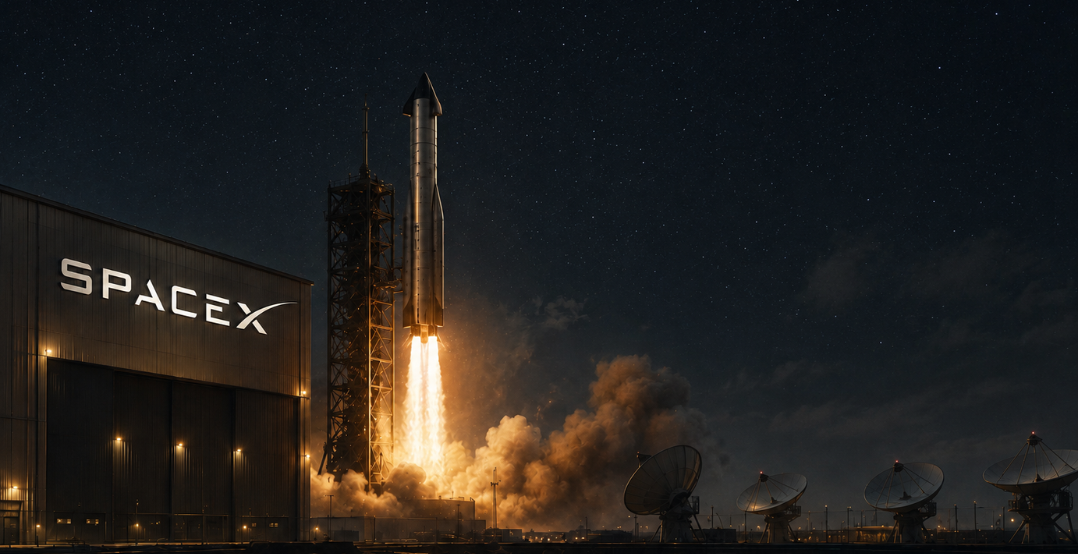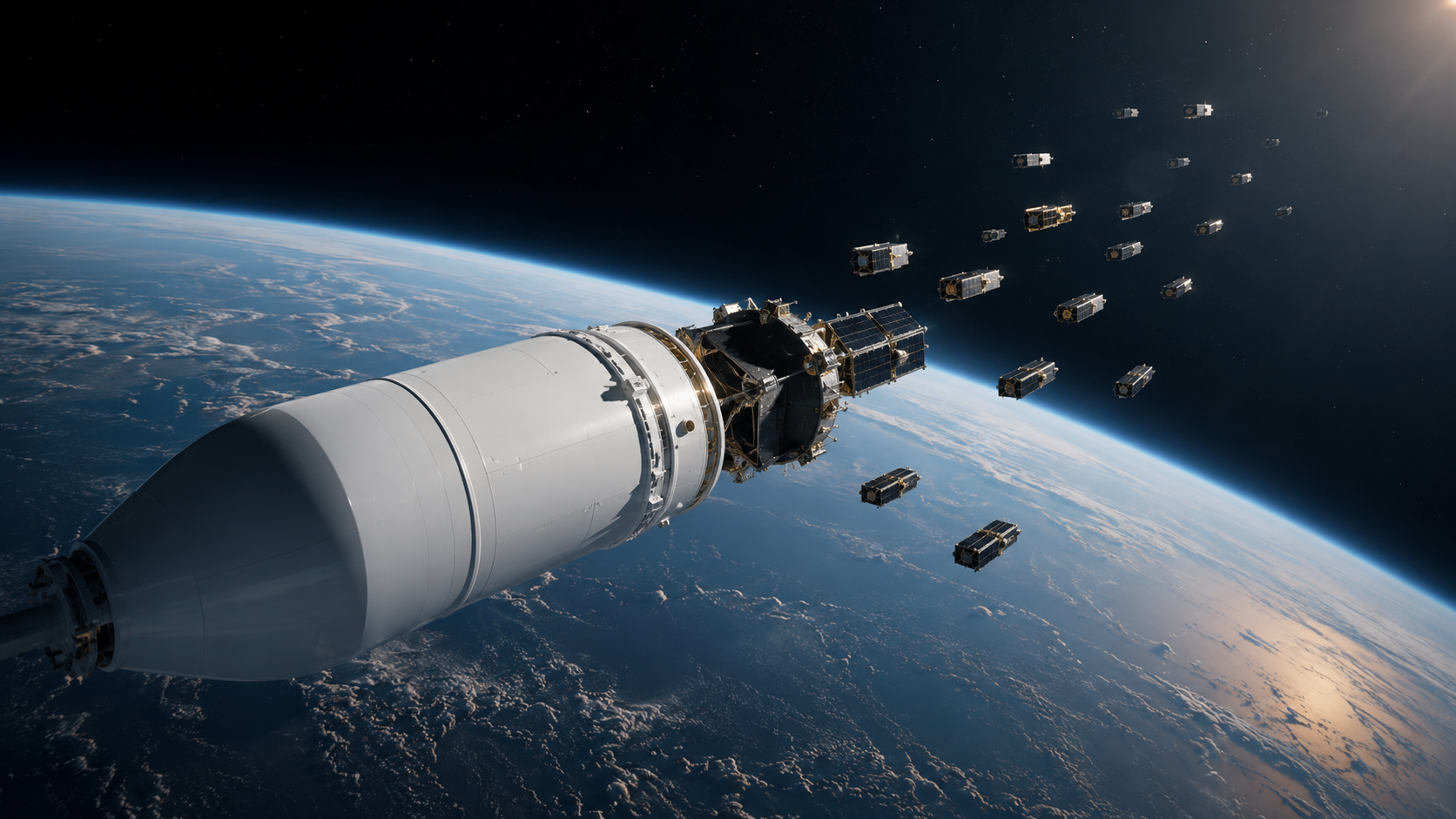
Yesterday at 2:39 AM, three AST SpaceMobile satellites launched successfully from Cape Canaveral aboard a SpaceX Falcon 9 rocket. BlueBirds 8, 9, and 10 – the largest commercial communications arrays ever deployed in low Earth orbit, each measuring approximately 2,400 square feet – are now in orbit and operational.
It was the first time AST SpaceMobile launched three satellites on a single rocket. The Falcon 9’s booster, flying for the 29th time, landed cleanly on its drone ship. The mission went exactly as planned.
Three weeks ago, that outcome wasn’t obvious.
What Happened Between Then and Now
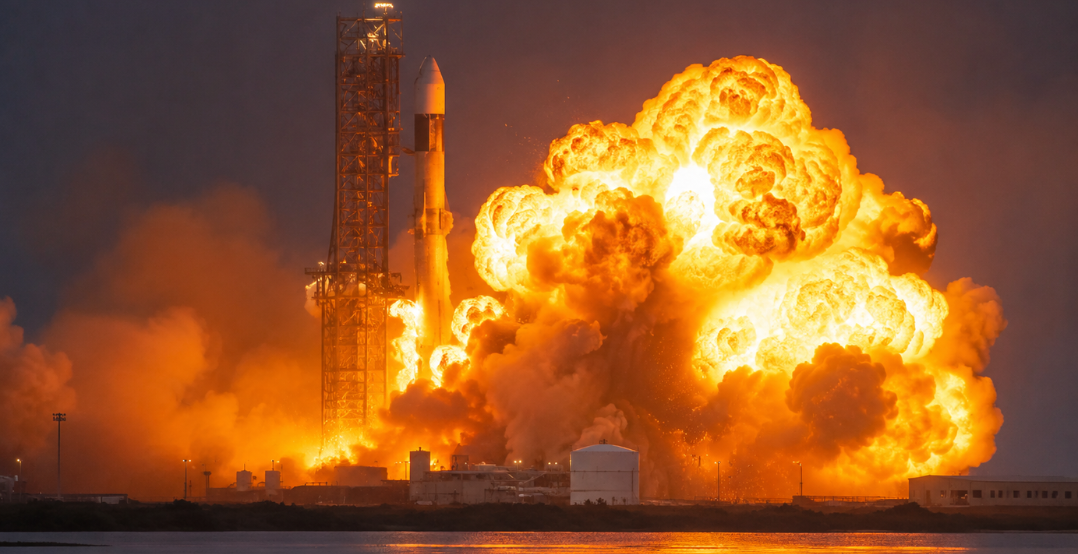
In late May, Blue Origin’s New Glenn rocket – one of AST SpaceMobile’s contracted launch providers – exploded during a static fire test at Cape Canaveral. The rocket, the launch pad, and the ground infrastructure were destroyed, and it was Blue Origin’s only New Glenn pad.
That explosion came after an earlier setback in April, when New Glenn’s third flight placed AST’s BlueBird 7 satellite into a lower than planned orbit due to an upper stage cryogenic leak. The satellite couldn’t sustain operations and had to be de-orbited.
Two Blue Origin failures in two months and Wall Street reacted. ASTS stock dropped 18% in a single day, Deutsche Bank downgraded the stock and cut its price target, and analysts questioned whether AST could reach its target of 45 satellites in orbit by the end of 2026 without access to Blue Origin’s launch capacity.
Yesterday’s launch was the answer.
Why This Matters Beyond the Headlines
The stock moved 6% after the launch, which is fine. But the real story isn’t about share prices. It’s about what this launch demonstrates about how the space sector actually works.
AST SpaceMobile didn’t panic after the Blue Origin setbacks. They had a multi-partner launch strategy already in place – agreements with both SpaceX and Blue Origin, precisely because launch risk is a known variable in this industry. When one provider encountered problems, the constellation deployment continued on the other provider.
This is what operational maturity looks like. Not avoiding setbacks (they’re inevitable in space) but building your program so that no single failure can stop your deployment timeline.
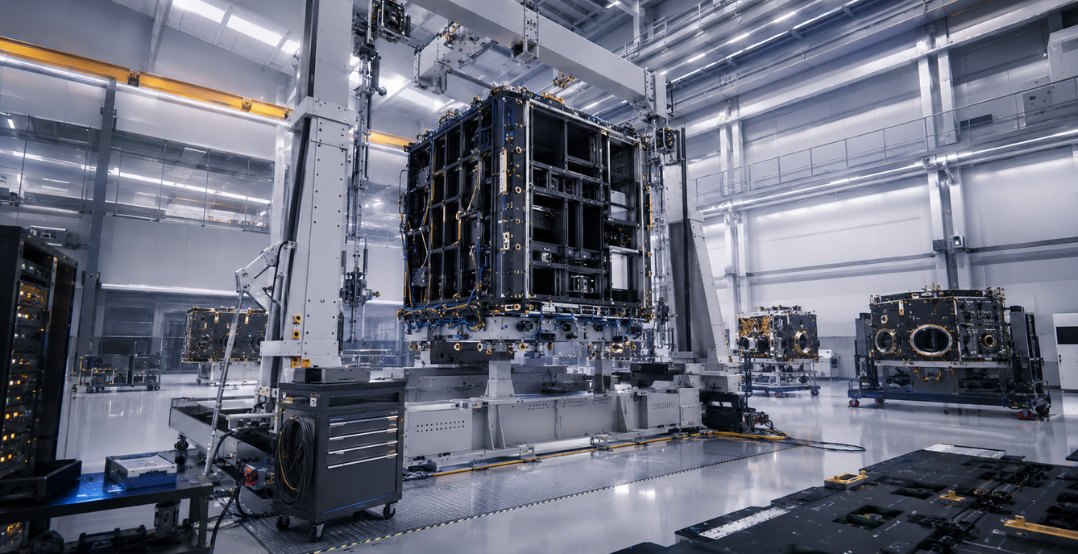
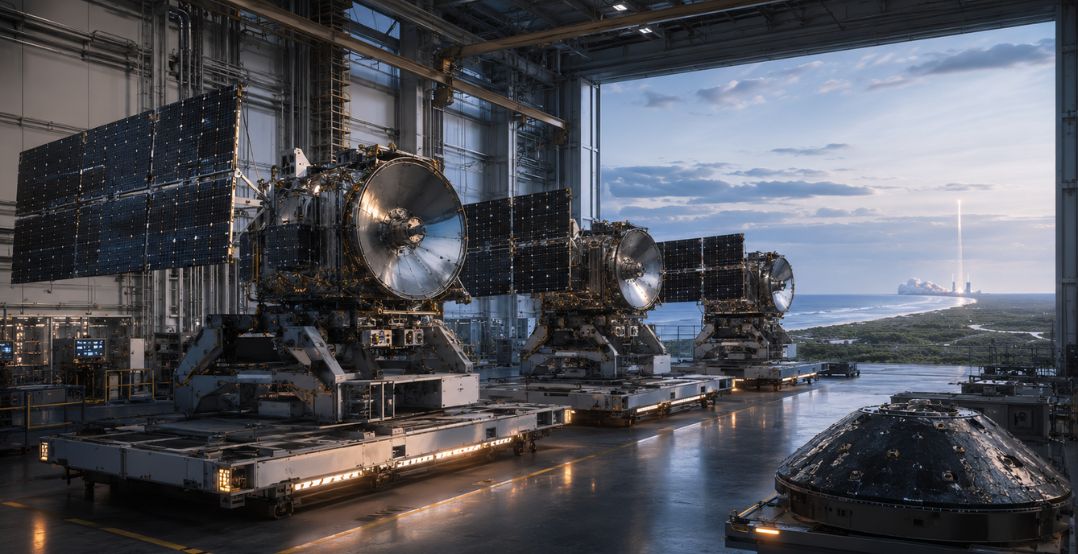
BlueBirds 11, 12, and 13 are already in final preparations for shipment to Cape Canaveral. BlueBirds through 37 are in active production and assembly. The company’s manufacturing operation in Midland, Texas runs across over 500,000 square feet, supported by a workforce of more than 2,250 people, backed by 3,900+ patents.
The pipeline didn’t stop because a rocket blew up. The manufacturing kept running, the next satellites kept being built, and yesterday, three more went to orbit.
The SpaceX Factor
It’s worth noting whose rocket made yesterday’s launch work.
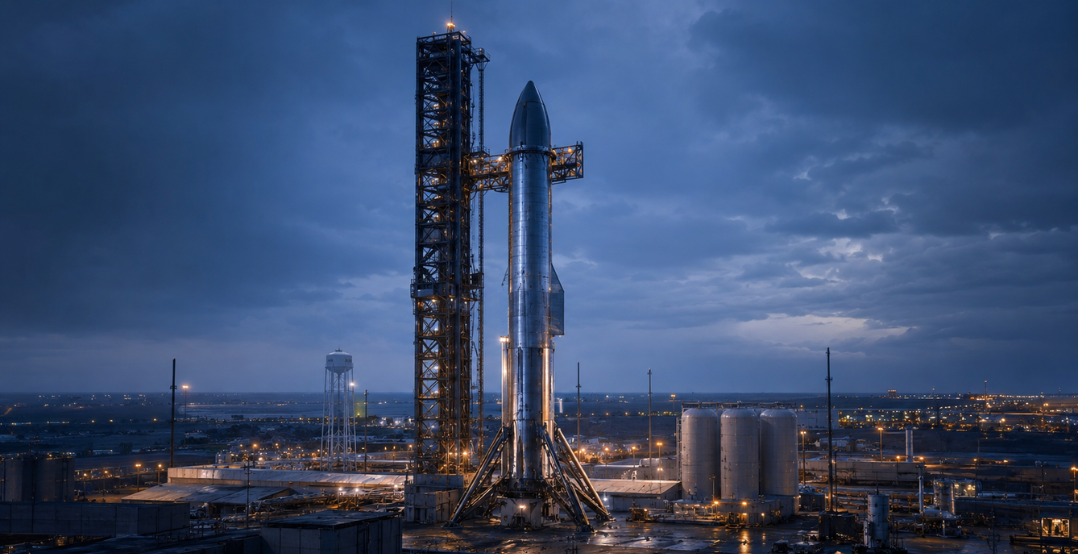
SpaceX’s Falcon 9 is the most reliable operational rocket in the world. Booster B1077, which carried these three BlueBirds, has now flown 29 times. The rocket launches roughly every two to three days across all its customers. The reliability isn’t accidental – it’s the product of years of iteration, failure, investigation, and redesign. SpaceX famously lost a Falcon 9 on the pad in 2016 and came back stronger.
With SpaceX’s IPO now filed and surpassing a $1.75 trillion valuation, the company’s role as the space sector’s most critical infrastructure provider is only becoming more prominent. For companies like AST SpaceMobile that depend on reliable launch access, SpaceX’s track record is part of the business case.
What This Means for the Talent Market
Here’s where the bigger picture connects to hiring.
AST SpaceMobile now has 10 BlueBird satellites in orbit, with dozens more in production. The company is targeting 45 this year. Each satellite that reaches orbit moves the company closer to commercial service activation across the US, Canada, Europe, Saudi Arabia, and Japan – with partners including AT&T, Verizon, Vodafone, and Rakuten.
That progression from constellation deployment to commercial operations creates a workforce shift. The company is moving from a build-and-launch phase to a build-launch-and-operate phase. The engineering talent needed for the second phase – network operations, spectrum management, ground segment software, commercial integration with mobile carriers – is different from the satellite manufacturing and launch integration talent that got them here.
AST SpaceMobile’s 2,250-person workforce will need to grow as the network moves toward service activation. And they’re not the only company in this position. Amazon’s Leo constellation is scaling in parallel. Starlink already operates over 10,000 satellites. The direct-to-device broadband market – which AST SpaceMobile is pioneering – is moving from concept to commercial reality, and every step forward creates demand for people who can build, operate, and sell these services.
The Resilience Story
There’s a broader lesson in what happened over the past three months that matters for anyone working in or thinking about joining the space sector.
In April, a satellite was lost. In May, a rocket exploded. Wall Street panicked. Analysts downgraded. The stock dropped by a third from its highs.
In June, three satellites launched successfully, the manufacturing pipeline kept running, and the company reaffirmed its deployment targets.
This is normal in the space sector – not comfortable, but normal. The companies that survive and scale are the ones that build redundancy into their plans, keep executing through setbacks, and don’t let one bad month define their trajectory. That resilience, that ability to keep building when the news is bad, is one of the most valuable qualities in the sector.
The Takeaway
Yesterday’s launch was a milestone for AST SpaceMobile. But it was also a reminder of something that the space sector demonstrates over and over: setbacks don’t define a company. What a company does after the setback is what matters.
AST SpaceMobile lost a satellite, lost access to a launch provider, weathered a stock crash – and three weeks later put three more spacecraft in orbit. The constellation is growing. The workforce is scaling. The commercial service is getting closer.
The space sector rewards companies that keep building. Yesterday was proof of that.