What the SBIR/STTR Reauthorization Means for Space Hiring in 2026

On March 17, the House passed a five-and-a-half-year reauthorization of the SBIR and STTR programs by a 345-41 vote. The Senate had already approved the bill unanimously two weeks earlier. After a five-month freeze that left nearly $6 billion stranded and roughly 4,000 small businesses locked out of new awards, federal innovation funding is about to flow again (Grey Journal)

For the space sector, this isn’t just a policy headline. It’s a hiring event.

What Froze – and What It Cost

When SBIR and STTR authority lapsed in September 2025, agencies across the federal government stopped issuing new solicitations and committing new funds. For the hundreds of early-stage space and defense companies that rely on non-dilutive federal funding to bridge R&D and commercialization, the impact was immediate.

Programs stalled. Hiring plans were paused or scaled back. Contractors working on federally funded projects faced uncertainty about whether their positions would continue. Maj. Gen. Stephen Purdy, the acting space acquisition head for the Department of the Air Force, publicly said he was “very concerned” about the pause, particularly for commercial companies that form a critical part of the Space Force’s industrial base (Air & Space Forces).

The companies most affected were the ones least able to absorb the disruption: pre-revenue startups and growth-stage firms that depend on SBIR Phase I and Phase II awards to fund the engineering work that keeps their programs – and their teams – moving forward.

Why the Restart Creates a Talent Surge

When $6 billion in frozen funding begins to unlock, it doesn’t trickle into the market. It arrives in waves as agencies resume solicitations and companies restart paused programs. That creates a compressed hiring window – many companies will be looking to fill roles they’ve been holding open for months, all at roughly the same time.

In the space sector, this means demand for a set of roles that was already constrained is about to tighten further. Systems engineers, software developers working in mission-critical environments, test and integration specialists, and program managers with experience navigating federal contracts are all going to be in higher demand as SBIR-funded companies ramp back up.

The concentration effect matters. When dozens of small space companies restart hiring in the same quarter, they’re all drawing from the same limited candidate pool. An RF engineer with experience in satellite communications payloads and a clearance pathway isn’t suddenly easier to find because funding returned – the pool is the same size it was before the freeze, but the number of companies competing for those candidates just increased.

The Strategic Breakthrough Awards: A New Scaling Mechanism

The reauthorization doesn’t just restart the old programs. It introduces Strategic Breakthrough Awards – grants of up to $30 million per company for startups that are ready to scale federally funded technology into production (Collaboration AI). Only agencies with $100 million or more in annual SBIR obligations can issue these awards, and Department of Defense applicants face additional technology maturity requirements.

For space companies, this is significant. A $30 million award to scale a technology from prototype to production doesn’t just fund hardware. It funds the team that builds, tests, and operates the hardware. Companies that receive Strategic Breakthrough Awards will need to hire aggressively, and they’ll need people who can operate at the intersection of technical execution and federal program management,one of the most constrained talent profiles in the sector.

The question for these companies won’t be whether they can win the award. It will be whether they can hire fast enough to execute on it.

Enhanced Security Screening Adds Hiring Complexity

The reauthorization also strengthens national security due diligence requirements for SBIR and STTR applicants. New screening now includes checks against the Section 889 Prohibition List, the Military End User List, and Chinese military company designations. STTR applicants face heightened scrutiny that extends to their partner research institutions.

For companies hiring into these programs, this has practical implications. Candidates with certain foreign affiliations, dual citizenships, or prior employment at flagged entities may face additional vetting. The pool of eligible candidates for SBIR-funded roles – already narrowed by clearance and ITAR requirements – could shrink further depending on how agencies implement the new screening protocols.

Companies that understand these constraints early will have an advantage. Those that discover them mid-search will lose time and candidates.

What This Means for Companies Hiring Now

The SBIR/STTR restart is going to create a compressed, competitive hiring environment for space companies over the next two to three quarters. The companies that come out ahead will be the ones that take a few steps now rather than waiting for their funding to arrive:

Map the roles you’ll need before the award hits.

If you’re expecting a Phase II or a Strategic Breakthrough Award, the hiring plan should already exist. Waiting until the money is in the account to start thinking about who you need means you’re already behind the companies that started building their pipeline during the freeze.

Understand the new screening requirements and how they affect your candidate pool.

If your program involves STTR partnerships or defense applications, factor in the additional vetting timelines. A candidate who is technically perfect but takes an extra eight weeks to clear screening is a candidate who might not be available when you need them.

Recognize that you’re not the only company restarting.

The funding freeze affected thousands of businesses. Many of them are in your sector, hiring for the same roles, in the same geographies. The competitive dynamics of the post-freeze market are different from what you experienced before September 2025.

The SBIR and STTR programs exist to fuel the kind of early-stage innovation that the space sector depends on. Their restart is good news for the industry. But for the companies counting on that funding to grow, the talent challenge hasn’t paused along with the money — it’s been building. The ones who planned for the restart will scale. The ones who didn’t will be hiring into a market that just got a lot more crowded.

India Successfully Lands Spacecraft on Moon’s South Pole

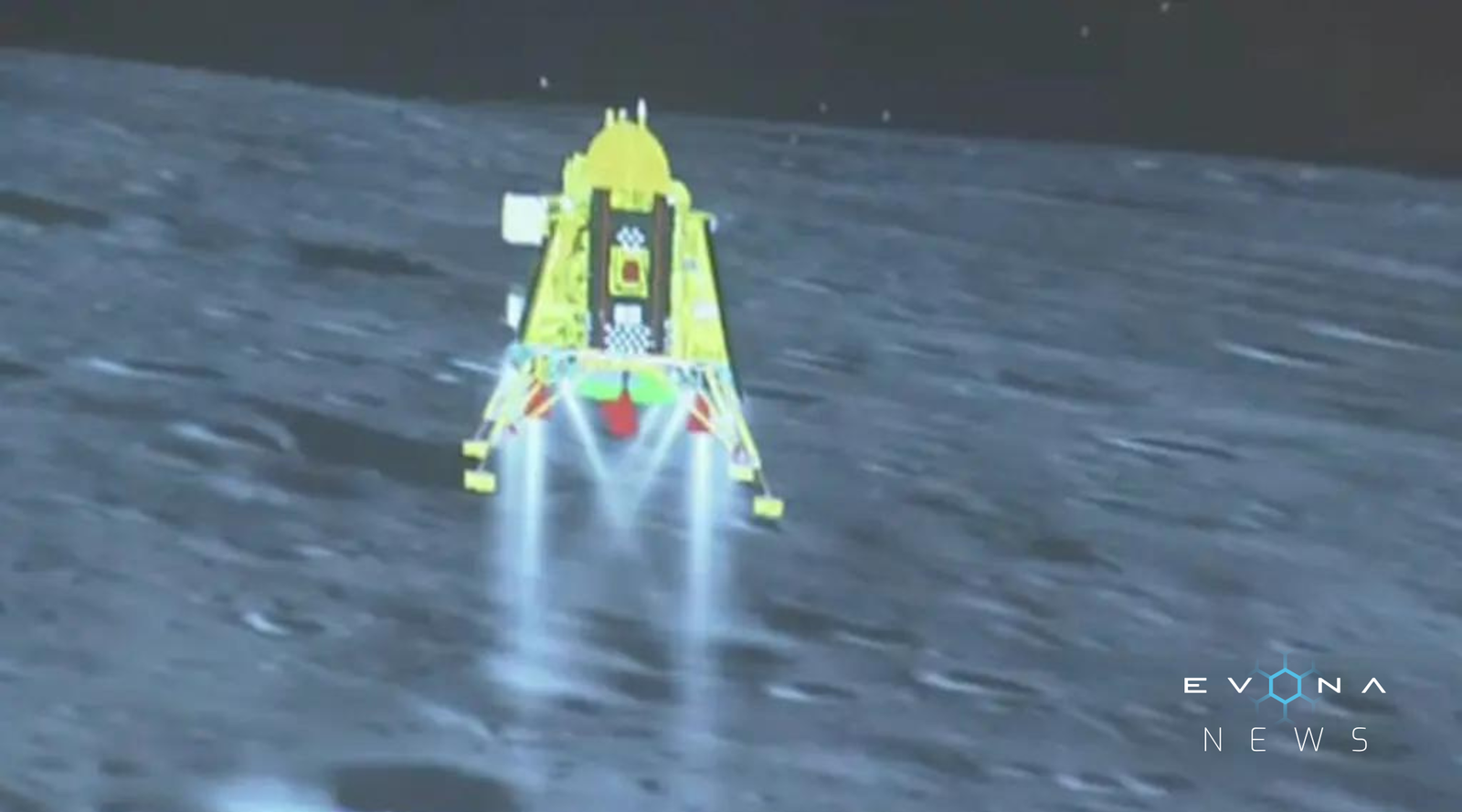
Chandrayaan-3 successfully lands near Moon’s south pole, making it the first country to do so.

India has emerged as the first nation to successfully execute a spacecraft landing at the moon’s enigmatic south pole. The Chandrayaan-3 mission’s successful touchdown marks a pivotal moment in space history, positioning India as a prominent global power in space.

The moment of triumph arrived six weeks after Chandrayaan-3’s (the word for “moon craft” in Sanskrit) launch from a spaceport in Andhra Pradesh, India.

“We have achieved soft landing on the moon! India is on the moon!” ISRO (Indian Space Research Organisation) chairman Sreedhara Somanath announced, immediately after the Vikram lander touched down.

Indian spacecraft Chandrayaan-3, the word for "moon craft" in Sanskrit, travels after it was launched from the Satish Dhawan Space Centre in Sriharikota, India.
Indian spacecraft Chandrayaan-3 travels after it was launched from the Satish Dhawan Space Centre in Sriharikota, India. Aijaz Rahi/AP Photo


While being the fourth country to achieve a moon landing, India sets itself apart by accomplishing a soft landing at the uncharted southern region of the lunar surface, thought to contain deep craters with water ice. Inside the lander is the six-wheeled Pragyaan rover, which will roam the lunar surface gathering crucial images and data to be sent back to Earth for analysis.

If successful, this mission could unravel the mysteries of the moon’s water resources and open up possibilities for future lunar exploration.

India’s Prime Minister Narendra Modi claims “this success belongs to all of humanity and it will help moon missions by other countries in the future”.

CompassCom Unveils Game-Changing CompassLDE Connectors

CompassCom Software has unveiled its cutting-edge CompassLDE Connectors, designed to integrate seamlessly with Esri ArcGIS solutions.

These connectors empower users to access real-time location and status data for their assets within their ArcGIS maps, as well as conduct in-depth analysis of operational data.

The CompassLDE Connectors significantly enhance personnel safety, increase operational efficiency, and support the achievement of sustainability targets.

CompassCom CEO W. Brant Howard explained, “Our innovative plug-and-play CompassLDE Connectors now enable Esri users at all ArcGIS product levels to visualize live location and status information for their vehicles, staff, and equipment on their GIS displays. Advanced Esri users can leverage CompassLDE telemetry data with their big data analytics applications to gain valuable insights into their operations.”

CompassCom has developed CompassLDE Connectors for three Esri products:

  • ArcGIS Online
  • ArcGIS GeoEvent Processor
  • ArcGIS Velocity

Widely adopted across North America by public works, public safety, street maintenance, and transportation departments at both state and local government levels, CompassLDE (Location Data Engine) was initially created as an Automated Vehicle Location (AVL) data engine. It subsequently evolved into a mobile resource management solution capable of tracking any GPS-enabled device. Today, CompassLDE serves as a versatile on-premises or cloud-based server that can monitor thousands of assets across multiple fleets and various wireless communication networks.

In its latest iteration, CompassCom has expanded CompassLDE’s capabilities to collect an almost infinite range of sensor inputs, or telemetry, from field assets. Predominantly associated with vehicle activities, this data encompasses Ignition On/Off, Engine Diagnostics, Idle Time, Material Spreader On/Off, Plow Up/Down, Miles Traveled, and other data points. The server can even monitor the amount of sand or chemicals dispensed by a snowplow, as an example.

The groundbreaking CompassLDE Connectors by CompassCom Software represent a significant leap forward in asset tracking and management. By seamlessly integrating with Esri ArcGIS solutions, users can now access a wealth of real-time data and insights, optimizing decision-making processes and resource allocation. The potential applications of this technology extend across various industries and sectors, promising a brighter future of increased safety, operational efficiency, and sustainability.


Maxar’s Vivid Standard: The Future of Global Mapping

Maxar Technologies has just unveiled an exciting new upgrade to their popular global basemap.

The new and improved Vivid Standard boasts a remarkable 30-centimeter per pixel resolution, a significant improvement from the previous 50-centimeter resolution, making it the most detailed global basemap yet.

Thanks to this enhanced resolution, the Vivid Standard has the capability to identify even the smallest of structures. Moreover, the basemap provides a highly accurate view of new roads, buildings, and vegetation, making it an essential tool for those who rely on precise mapping information.

“We are able to do a lot more things with 30-centimeter imagery, which we have not been able to do previously,” explained Sid Dixit, Maxar’s vice president of engineering and product. “We can identify structures like bus stops and traffic lights, and we get a very accurate view of new roads, vegetation and buildings.”

Maxar’s Vivid Standard basemap is available to over 220 customers, who can utilize it for a range of applications, including training, gaming, and planning. By coupling the basemap with artificial intelligence, organizations can create highly realistic 3D simulations, which will undoubtedly transform the way we interact with maps.

To create the Vivid Standard, Maxar combines an incredible 400,000 image strips, maintaining image consistency by using cloud-free imagery from the spring and summer months. The new basemap includes both native 30-centimeter per pixel resolution imagery and lower-resolution imagery enhanced through the use of AI and machine learning.

Maxar’s team is not stopping here, as they plan to continue to improve the Vivid basemap even further by aiming for an unprecedented 15 centimeters per pixel resolution in the future. This order of magnitude improvement would undoubtedly revolutionize our understanding of the world from space.

Overall, the new Vivid Standard basemap is a remarkable achievement that showcases Maxar’s commitment to innovation and technology. We can’t wait to see what other groundbreaking developments will come from these industry innovators in the future.

Timber in Orbit: Japan’s Wooden Satellite Prepares for Launch

In a daring move, researchers from Kyoto University and Sumitomo Forestry are planning to launch a wooden satellite into orbit by 2024.

The LignoSat Space Wood Project plans to send a wooden satellite into Low Earth Orbit (LEO) by 2024

This innovative project, known as the LignoSat Space Wood Project, started in April 2020. Their goal is simple but ambitious: they want to see if wood can survive the harsh conditions of Low Earth Orbit (LEO), a challenge usually faced by metal-based satellites. This exciting work could change the future of space technology, making it more sustainable.

“The experiment’s results astoundingly proved the resilience of wood under simulated LEO conditions,” announced Koji Murata, the spearhead of the space-wood research initiative, in a 2021 statement. Murata’s intention was to delve into the impacts of the harsh LEO environment on organic materials.

To facilitate this experiment, a panel carrying three different wood samples was sent to the International Space Station (ISS). The panel found its temporary home in the Japanese Experimental Kibo Module on the station, enduring the vacuum of space for a full ten months during 2022.

After this comprehensive exposure, Japan Aerospace Exploration Agency (JAXA) astronaut Koichi Wakata oversaw the successful retrieval of the wood panel, which was then transported back to Earth aboard SpaceX’s CRS-26 cargo Dragon spacecraft in January 2023. The subsequent analysis conducted by Kyoto University researchers authenticated wood’s extraordinary durability in space, with the study reporting “no decomposition or deformations, such as cracking, warping, peeling, or surface damage,” in the face of extreme exposure.

The compelling findings led the researchers to select wood from Magnolia trees for the next phase of the LignoSat project, due to its “relatively high workability, dimensional stability and overall strength,” according to the team’s press release.

Space debris in orbitThe transformative discovery heralds numerous opportunities, especially when considering the environmental advantages wooden satellites could hold over traditional metal-based ones. Not only does wood offer a cost-effective and cleaner production process, but it also provides an environmentally conscious solution to the prevalent issue of space debris disposal.

In general, most deorbiting satellites incinerate in Earth’s atmosphere, with the remaining fragments deliberately directed to descend into remote oceanic regions. However, wooden satellites are anticipated to completely combust upon reentry into Earth’s atmosphere. Even in the highly improbable event of any fragments surviving this descent, these organic materials would naturally decompose, eliminating the risk of hazardous debris.

Geared up for its extraordinary next move, the LignoSat project is all set to propel the world’s first wooden satellite into orbit next year. This pioneering effort is the fruit of a collaborative endeavor between NASA and JAXA. It stands as a landmark moment, heralding a new chapter in the story of satellite manufacturing technology.

Seradata Welcomes Melissa Quinn: New Horizons with EVONA

Following a transformative journey at Spaceport Cornwall, Melissa Quinn is poised to chart new territories in her newly unveiled role as general manager at Slingshot Seradata.

Her appointment to this crucial position at a leading space market analysis firm signals another significant milestone in her illustrious career.

We at EVONA are incredibly proud to have placed Melissa in this new role. We’re thrilled to announce this transition and look forward to witnessing the innovative leadership and purpose-driven dedication Melissa will undoubtedly bring to her new position.

“After a decade at Spaceport Cornwall, and having achieved that historic first launch, my next career step had to be about more than finding just a job. It was crucial to me that my new venture aligned with my Space for Good purpose, and the prospective company was passionate about space and sustainability. I have definitely found that in Slingshot Seradata,” said Melissa Quinn. “Ross at EVONA really understood my needs and supported me throughout the whole process. It was a fantastic experience from start to finish (and beyond!), and the space industry is lucky to have them finding the skills we need to move us all forward.”

Melissa Quinn’s tenure at Spaceport Cornwall was nothing short of legendary. Beginning her journey as aerospace sector engagement manager in 2010, Melissa’s consistent demonstration of excellence led to her promotion to head of engagement in 2015. Recognizing her substantial contributions, the organization further elevated her to the role of head of spaceport in 2020. As the world’s first female spaceport leader, Melissa carved out a significant place in history, paving the way for more diverse leadership in the sector. Under her skilled guidance, Spaceport Cornwall carried out the UK’s first ever satellite launch, made possible through a strategic alliance with Virgin Orbit. During her leadership, not only did Spaceport Cornwall secure the UK’s first licensed spaceport, but it also set new standards for the UK’s broader engagement in space exploration and technology. This marked a significant milestone, redefining the landscape of the industry.

Under Melissa’s guidance, Spaceport Cornwall secured key investments, navigated complex regulations, and delivered advanced infrastructure, all while conveying the compelling story of space exploration to the local community. Melissa’s work extended far beyond the bounds of Cornwall, garnering international recognition through features in the New York Times, The Guardian, BBC World News, and The Independent.

It’s no surprise that Slingshot Seradata, the space industry’s premier launch and satellite database, selected Melissa for the role of general manager. The company, recently acquired by Slingshot Aerospace, can anticipate significant expansion under Melissa’s innovative leadership. Given her track record of overseeing high-profile national projects, managing multidimensional stakeholders, and amplifying the profile of space initiatives, she is exceptionally suited to navigate Slingshot Seradata’s expansive database and drive their market analysis system forward.

Slingshot Seradata, renowned for capturing comprehensive data on every orbital launch and satellite since Sputnik in 1957, is about to leap into its next chapter with Melissa at the helm. Her expertise in aerospace markets, project management, and strategic leadership will be instrumental in managing day-to-day operations and steering Slingshot Seradata’s market analysis tool for a deeper dive into the world’s satellite systems.

“From the moment we initially engaged with Melissa about the position at Slingshot Seradata, we knew she was the right fit,” commented Ross Crosby, EVONA’s Head of Contract. “Her track record of innovative leadership, coupled with her consistent and pragmatic decision-making skills, aligns perfectly with Slingshot Seradata’s goals and vision. But it’s not just about experience – her commitment to the sustainable use of space, and her ability to inspire others to share this vision, is exceptional. Melissa’s impact at Spaceport Cornwall significantly advanced the industry, and we anticipate the same transformative influence at Slingshot Seradata. They’ve gained a dynamic leader who will propel them into their next phase, and Melissa is joining a company that will leverage her skills to the fullest, fostering continued growth and expansion in the industry.”

It’s a thrilling day in the space industry as we welcome this highly anticipated transition. There’s been an electrifying buzz around Melissa’s move, fuelled by much speculation and excitement. Today, we celebrate not just a job transition, but a testament to Melissa’s unwavering commitment to propelling the space industry forward.

Melissa Quinn, a name synonymous with trailblazing leadership and strategic space innovation, is set to take Slingshot Seradata on an unforgettable journey. The future of space data analysis has never looked brighter.


To hear more about Melissa’s incredible story so far, straight from the source herself, tune into the latest episode of the EVONA Origin Stories podcast on Spotify, or get the full experience on YouTube.

NUVIEW to Revolutionize Earth Observation with Satellite Mapping

Embarking on an industry-defining mission, NUVIEW stands at the frontier of the Earth observation industry.

3D mapping using LiDAR satellite technology. Credit: NUVIEW

Their pioneering project is the first of its kind, setting the stage for a new epoch in global terrain mapping. By creating the first-ever commercial satellites equipped with Light Detection and Ranging (LiDAR) technology, NUVIEW is venturing into an uncharted territory that has been eagerly awaited for decades.

As we stand today, organizations shell out nearly $3BN every year to secure LiDAR data. Unfortunately, the yield from such substantial investment is merely a 5% mapping of the world’s surface, a limitation primarily due to the restrained capabilities of traditional airborne data collection methods. NUVIEW is set to disrupt this bottleneck with a more scalable, high-quality solution, democratizing LiDAR data access.

By leveraging cutting-edge satellite technology, NUVIEW is poised to revolutionize remote sensing. Their LiDAR imaging satellites will emit rapid-fire laser pulses, each meticulously measured for the time taken to reflect back from the Earth’s surface. By harnessing this data, NUVIEW’s satellites will construct intricate 3D maps of the terrain below, radically augmenting our understanding of the Earth.

3D mapping using LiDAR satellite technology. Credit: NUVIEW

The current LiDAR mapping landscape offers a limited scope, with drones and UAVs covering only a handful of square kilometers each day, and aircraft barely managing hundreds. In contrast, NUVIEW’s satellite constellation aspires to capture millions of square kilometers, making the concept of comprehensive global LiDAR mapping a tangible reality.

The game-changing potential of NUVIEW’s initiative spans numerous applications across multiple industries. From evaluating the density of vegetation in tree canopies for carbon production, to devising efficient water management strategies for farmers, the possibilities are immense. The regular updates from NUVIEW’s satellites also enable large-scale applications in flood mapping, forestry assessment, and infrastructure planning, all of which were previously impractical.

While this is undoubtedly a monumental technological challenge, NUVIEW’s team is prepared and equipped to tackle any technical hurdles. They stand ready to pioneer a future where the annual comprehensive mapping of the Earth’s land surface is a norm rather than an exception.

3D mapping using LiDAR satellite technology. Credit: NUVIEW

As NUVIEW blazes this trail, the company is recruiting across various roles and disciplines, inviting professionals to join this unique opportunity to be a part of a revolutionary endeavor that promises to redefine the remote sensing industry. EVONA is dedicated to helping guide you through this transition, ensuring a seamless move to NUVIEW. Embrace this extraordinary chance to contribute to a game-changing mission in Earth observation, supported every step of the way by our crew of experts.

“Joining NUVIEW is more than just being a part of a groundbreaking team. It represents a unique opportunity that is truly extraordinary,” commented Katie Graumann, NUVIEW COO and co-founder. “As members of this pioneering team, we are at the heart of a revolution, pushing the boundaries of what the remote sensing industry is capable of. We are not just observers of change, but makers of it, blurring the lines between what was once imagined and what is now achievable. NUVIEW is more than just a company — It is a lighthouse of innovation, illuminating the path to untapped possibilities and pioneering solutions in Earth observation.”

In their ambition to image the Earth’s entire land surface annually, NUVIEW is setting out to establish a new gold standard in global elevation data. This landmark mission is more than a scientific breakthrough; it’s a game-changer that fundamentally enhances our perception of the planet we inhabit.

Contact our crew and join NUVIEW in making this seismic shift a reality.

Underwater Volcano Eruption Wreaked Havoc on Satellite Signals

A historic underwater volcanic eruption was potent enough to create plasma bubbles that meddled with radio communications in space, according to a study published in Scientific Reports.

The insights from this study could pave the way to develop strategies to prevent disruptions in satellite and GPS signals on Earth and shed light on the volcanic activities on extraterrestrial planets.

Tonga Underwater Volcanic Eruption, 15 January 2022. Credit: Stuart Rankin via Flickr

The Hunga Tonga-Hunga Ha’apai underwater volcano, positioned in close proximity to Tonga’s 169 islands in the South Pacific, experienced an extraordinary eruption in January 2022. This underwater mountain’s fierce explosion led to the formation of an unprecedented volcanic plume stretching 35 miles (57 kilometers) high, causing tsunamis reaching as far as the Caribbean. The eruption proved to be the mightiest natural explosion in over a hundred years, competing with the largest nuclear bomb of the United States in terms of its strength.

Previous research had revealed that the atmospheric waves triggered by the eruption, which caused variations in air pressure, were potent enough to cause disturbances in the ionosphere – one of Earth’s highest atmospheric layers. Spanning an altitude ranging from about 50 miles to 620 miles (80 to 1,000 km), this layer is subjected to solar radiation. This exposure stimulates its molecules and atoms, generating ions.

Scientific speculation has existed for a while about the potential for volcanic activity to impact the F-region of the ionosphere. The F-region, which lies approximately 90 to 500 miles (150 to 800 km) from Earth, has the highest ion concentration within the atmosphere.

Within the equatorial zones of the ionosphere, plasma bubbles may form and cause interruptions to satellite communications and GPS signals. The question of whether terrestrial events, such as volcanic eruptions, could lead to the formation of these “equatorial plasma bubbles” has intrigued researchers for a long time.

“In the ionosphere, plasma bubbles are rarely observed,” commented Atsuki Shinbori, the lead author of the study and an atmospheric scientist at Nagoya University in Japan.

The study employed the Arase satellite of Japan to detect equatorial plasma bubbles, the Himawari-8 satellite to monitor atmospheric waves, and ground-based stations to follow ionospheric motions. After the Tonga eruption’s shockwave made contact with the ionosphere, researchers detected equatorial plasma bubbles that reached an altitude of at least 2,000 kilometers [1,240 miles], a distance much beyond the range predicted by standard models.

Interestingly, the scientists noted a sudden increase in electron density and a rise in the ionosphere’s height, even hours before the shockwave’s arrival. They hypothesized that the swift reaction could have been a result of the eruption’s atmospheric waves interacting with the ions in the ionosphere, leading to rapid energy travel along Earth’s magnetic field lines.

These findings could empower researchers with the capability to predict the occurrence of plasma bubbles linked to volcanic eruptions and other geophysical phenomena. Despite being unable to avoid the severe impacts these bubbles could have on satellite communications and GPS signals, “we will be able to alert operators of airplanes and ships that are expected to pass through the occurrence region of the plasma bubbles in the future,” added Shinbori.

Future investigations could extend beyond Earth, studying the atmospheric impact of volcanoes on distant worlds.

“With Venus shrouded by dense clouds, it’s challenging to verify the existence of active volcanoes through optical satellite observations alone,” Shinbori noted. “However, the Arase satellite’s plasma measurements could potentially confirm volcanic activity there.”

This cutting-edge research, unveiled online on May 22, offers exciting new frontiers in understanding the Earth’s atmospheric interactions and their implications on satellite communications.

NASA’s TESS Unearths “Super-Earths”

In a recent revelation, NASA’s Transiting Exoplanet Survey Satellite (TESS) has identified two ‘super-Earth’ exoplanets in the habitable zone of a neighboring star, TOI-2095.

Located approximately 137 light-years away from our solar system, these exoplanets are slightly larger than Earth and they both orbit the same red dwarf star.

NASA’s Transiting Exoplanet Survey Satellite (TESS)
NASA’s Transiting Exoplanet Survey Satellite (TESS). Credit: NASA

The detection of these exoplanets was possible due to the transit method, where they passed, or ‘transited’, in front of their host star, causing a slight decrease in the star’s brightness. By examining these light fluctuations, the existence and some key features of the two planets were discerned.

The red dwarf TOI-2095, despite being cooler than the sun, belongs to the most abundant category of stars in the universe. However, it’s known that red dwarfs are prone to intense bursts of ultraviolet and X-ray radiation during their early stages. This could potentially strip away the atmospheres of nearby orbiting planets, casting doubt on the habitability of such planets, even if they are in the star’s habitable zone, where liquid water could theoretically exist on a planet’s surface.

The intriguing candidates, named TOI-2095 b and TOI-2095 c, are therefore prime subjects for further detailed research. The proximity of TOI-2095 b to its host star is approximately a tenth of the average distance between Earth and the sun. With a diameter 1.39 times that of Earth and potentially 4.1 times its mass, this exoplanet completes its orbit in approximately 17.7 Earth days.

TOI-2095 c, the second planet in the system, is situated slightly further from the star and takes 28.2 Earth days to complete its orbit. It is estimated to have a diameter around 1.33 times that of Earth and potentially up to 7.5 times its mass. Scientists speculate that surface temperatures on both planets could range between 75 degrees Fahrenheit and 165 degrees Fahrenheit (24 to 74 degrees Celsius).

Felipe Murgas of the University of La Laguna in Spain, who led the team that made the discovery, has suggested that the relatively long orbital periods of these two planets could be pivotal in understanding the processes that influence the composition of small planets around red dwarfs.

Since its launch in 2018, NASA’s TESS mission has identified approximately 330 confirmed exoplanets and more than 6,400 potential candidates that require additional study or analysis, showcasing the effectiveness of this mission.

The team plans to conduct further studies on these two super-Earths by precisely measuring their radial velocity, which could help in estimating their masses more accurately, and in turn, determine their densities. This information could aid in understanding whether these planets have retained their atmospheres.

The study was recently uploaded to the preprint server arXiv and awaits peer review.

ClearSpace and Arianespace Join Forces Space Debris Removal

Swiss startup ClearSpace has recently secured a contract with Arianespace to launch its first space debris removal mission on Europe’s Vega C rocket in the latter half of 2026.

Luc Piguet, the company’s CEO and co-founder, revealed that the 700-kilogram servicer is planned to be launched from French Guiana to Low Earth Orbit (LEO) as a secondary passenger, accompanying a primary payload yet to be determined. The Vega C rocket has the capacity to launch roughly 2,300 kilograms to a reference 700-kilometer polar orbit.

The mission of ClearSpace-1 necessitates compatibility with a co-passenger for its journey towards a spent upper stage of an earlier Vega version, left in an 800-kilometer by 660-kilometer altitude gradual disposal orbit from a 2013 launch. The servicer aims to seize the debris with its four articulated arms.

Under a €110 million ($121 million) contract with the European Space Agency (ESA), ClearSpace will attempt a controlled re-entry, causing the servicer and the 112-kilogram Vega Secondary Payload Adapter (VESPA) to burn up in the Earth’s atmosphere. Piguet explained, “the ESA contract required ClearSpace to fly with Europe’s flagship launch service provider Arianespace for this mission.”

While Germany-based Isar Aerospace and Rocket Factory Augsburg are developing rockets that promise cost and lift performance benefits for a dedicated launch, Piguet mentioned that both companies are still working towards their maiden flights.

Despite Vega C rocket’s successful initial flight in July, it has been grounded since its second mission failed to reach orbit in December. Europe plans to return Vega C to flight by year-end after identifying the cause of the failure as an eroded nozzle component.

Upon completing the initial design phase for the ClearSpace-1 mission, ClearSpace has started procuring components from subcontractors. Piguet anticipates the servicer’s construction to begin next year, with integration scheduled for 2025.

In terms of future funding, Piguet shared that ClearSpace might explore a Series B funding round in 2023 to diversify its capital sources. The company recently raised about $29 million in a Series A round and has a sponsorship deal with Swiss luxury watchmaker Omega.

Although the ESA-backed funding serves as a valuable endorsement, Piguet acknowledged its commercial development constraints, such as geographical spending limits. To address this challenge, ClearSpace launched a U.S.-based subsidiary, ClearSpace Today, Inc., in April, marking its first expansion outside Europe.

Regarding the company’s plans, Piguet said, “Our objective is to start having missions in the U.S., too,” as “if we want to be serious about in-orbit servicing and move on from 2026-2027 … we have to get there with a pipeline of missions that are in progress.” ClearSpace envisions annual launches to establish a recurring business case and scale up commercial operations.

Piguet expects the U.K. to decide between ClearSpace and its Japanese rival, Astroscale, early next year for a British mission to remove two spacecraft from LEO in 2026. Additionally, ClearSpace is seeking co-funding from ESA for a mission to extend the life of a geostationary Intelsat satellite before it runs out of fuel between 2026 and 2028.

ClearSpace’s pioneering space debris removal mission represents a vital step towards sustainable space operations and a safer space environment. Their partnership with Arianespace and ESA support highlights the global urgency in addressing space debris risks. As ClearSpace expands into the U.S. and plans annual launches, their commitment to developing a sustainable business model can inspire more innovations in space debris mitigation.

The success of this mission will set the stage for future in-orbit servicing and debris removal endeavors, ensuring the preservation of the space environment and continued functionality of satellite systems for generations to come.