Timber in Orbit: Japan’s Wooden Satellite Prepares for Launch

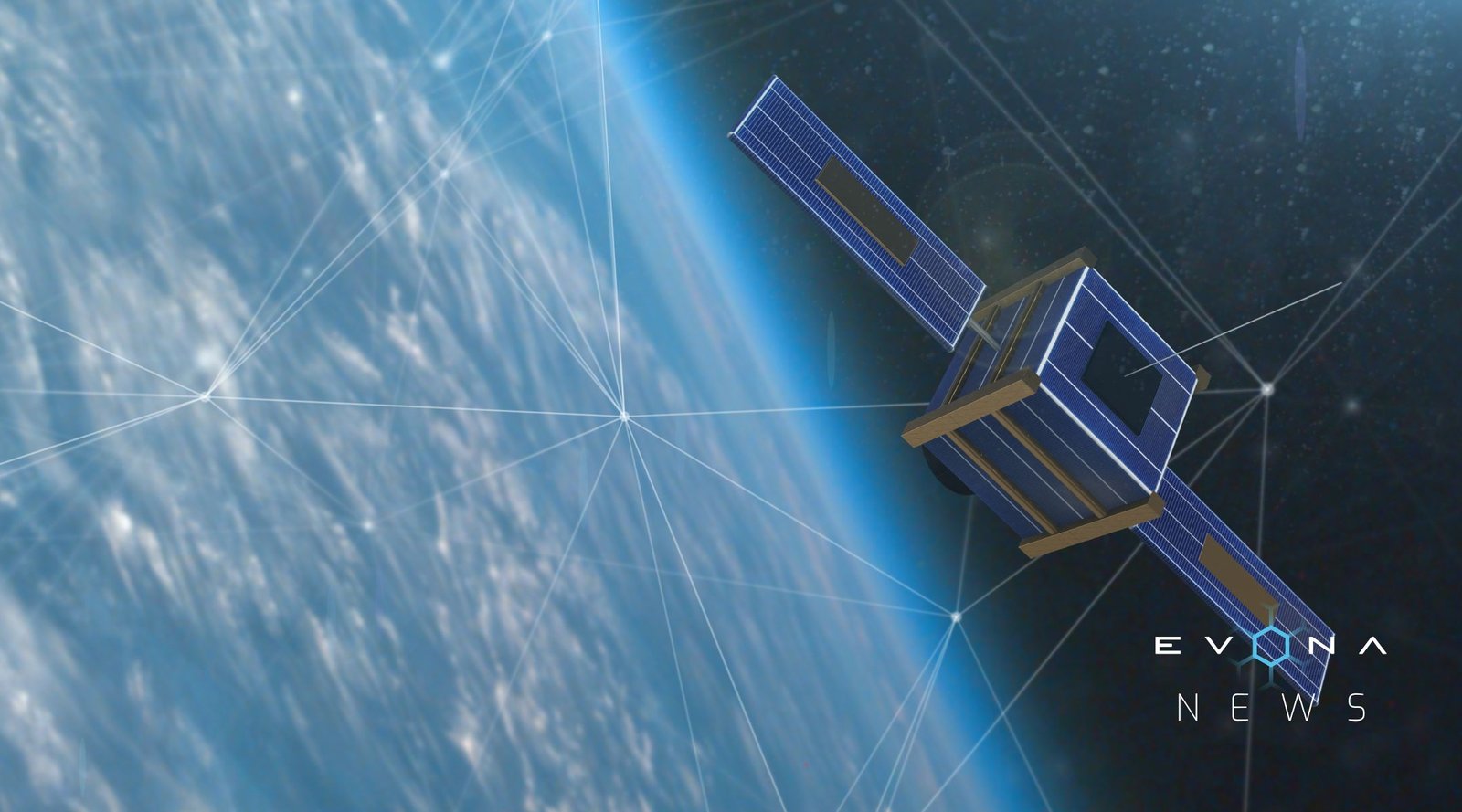
In a daring move, researchers from Kyoto University and Sumitomo Forestry are planning to launch a wooden satellite into orbit by 2024.

The LignoSat Space Wood Project plans to send a wooden satellite into Low Earth Orbit (LEO) by 2024

This innovative project, known as the LignoSat Space Wood Project, started in April 2020. Their goal is simple but ambitious: they want to see if wood can survive the harsh conditions of Low Earth Orbit (LEO), a challenge usually faced by metal-based satellites. This exciting work could change the future of space technology, making it more sustainable.

“The experiment’s results astoundingly proved the resilience of wood under simulated LEO conditions,” announced Koji Murata, the spearhead of the space-wood research initiative, in a 2021 statement. Murata’s intention was to delve into the impacts of the harsh LEO environment on organic materials.

To facilitate this experiment, a panel carrying three different wood samples was sent to the International Space Station (ISS). The panel found its temporary home in the Japanese Experimental Kibo Module on the station, enduring the vacuum of space for a full ten months during 2022.

After this comprehensive exposure, Japan Aerospace Exploration Agency (JAXA) astronaut Koichi Wakata oversaw the successful retrieval of the wood panel, which was then transported back to Earth aboard SpaceX’s CRS-26 cargo Dragon spacecraft in January 2023. The subsequent analysis conducted by Kyoto University researchers authenticated wood’s extraordinary durability in space, with the study reporting “no decomposition or deformations, such as cracking, warping, peeling, or surface damage,” in the face of extreme exposure.

The compelling findings led the researchers to select wood from Magnolia trees for the next phase of the LignoSat project, due to its “relatively high workability, dimensional stability and overall strength,” according to the team’s press release.

Space debris in orbitThe transformative discovery heralds numerous opportunities, especially when considering the environmental advantages wooden satellites could hold over traditional metal-based ones. Not only does wood offer a cost-effective and cleaner production process, but it also provides an environmentally conscious solution to the prevalent issue of space debris disposal.

In general, most deorbiting satellites incinerate in Earth’s atmosphere, with the remaining fragments deliberately directed to descend into remote oceanic regions. However, wooden satellites are anticipated to completely combust upon reentry into Earth’s atmosphere. Even in the highly improbable event of any fragments surviving this descent, these organic materials would naturally decompose, eliminating the risk of hazardous debris.

Geared up for its extraordinary next move, the LignoSat project is all set to propel the world’s first wooden satellite into orbit next year. This pioneering effort is the fruit of a collaborative endeavor between NASA and JAXA. It stands as a landmark moment, heralding a new chapter in the story of satellite manufacturing technology.

Seradata Welcomes Melissa Quinn: New Horizons with EVONA

Following a transformative journey at Spaceport Cornwall, Melissa Quinn is poised to chart new territories in her newly unveiled role as general manager at Slingshot Seradata.

Her appointment to this crucial position at a leading space market analysis firm signals another significant milestone in her illustrious career.

We at EVONA are incredibly proud to have placed Melissa in this new role. We’re thrilled to announce this transition and look forward to witnessing the innovative leadership and purpose-driven dedication Melissa will undoubtedly bring to her new position.

“After a decade at Spaceport Cornwall, and having achieved that historic first launch, my next career step had to be about more than finding just a job. It was crucial to me that my new venture aligned with my Space for Good purpose, and the prospective company was passionate about space and sustainability. I have definitely found that in Slingshot Seradata,” said Melissa Quinn. “Ross at EVONA really understood my needs and supported me throughout the whole process. It was a fantastic experience from start to finish (and beyond!), and the space industry is lucky to have them finding the skills we need to move us all forward.”

Melissa Quinn’s tenure at Spaceport Cornwall was nothing short of legendary. Beginning her journey as aerospace sector engagement manager in 2010, Melissa’s consistent demonstration of excellence led to her promotion to head of engagement in 2015. Recognizing her substantial contributions, the organization further elevated her to the role of head of spaceport in 2020. As the world’s first female spaceport leader, Melissa carved out a significant place in history, paving the way for more diverse leadership in the sector. Under her skilled guidance, Spaceport Cornwall carried out the UK’s first ever satellite launch, made possible through a strategic alliance with Virgin Orbit. During her leadership, not only did Spaceport Cornwall secure the UK’s first licensed spaceport, but it also set new standards for the UK’s broader engagement in space exploration and technology. This marked a significant milestone, redefining the landscape of the industry.

Under Melissa’s guidance, Spaceport Cornwall secured key investments, navigated complex regulations, and delivered advanced infrastructure, all while conveying the compelling story of space exploration to the local community. Melissa’s work extended far beyond the bounds of Cornwall, garnering international recognition through features in the New York Times, The Guardian, BBC World News, and The Independent.

It’s no surprise that Slingshot Seradata, the space industry’s premier launch and satellite database, selected Melissa for the role of general manager. The company, recently acquired by Slingshot Aerospace, can anticipate significant expansion under Melissa’s innovative leadership. Given her track record of overseeing high-profile national projects, managing multidimensional stakeholders, and amplifying the profile of space initiatives, she is exceptionally suited to navigate Slingshot Seradata’s expansive database and drive their market analysis system forward.

Slingshot Seradata, renowned for capturing comprehensive data on every orbital launch and satellite since Sputnik in 1957, is about to leap into its next chapter with Melissa at the helm. Her expertise in aerospace markets, project management, and strategic leadership will be instrumental in managing day-to-day operations and steering Slingshot Seradata’s market analysis tool for a deeper dive into the world’s satellite systems.

“From the moment we initially engaged with Melissa about the position at Slingshot Seradata, we knew she was the right fit,” commented Ross Crosby, EVONA’s Head of Contract. “Her track record of innovative leadership, coupled with her consistent and pragmatic decision-making skills, aligns perfectly with Slingshot Seradata’s goals and vision. But it’s not just about experience – her commitment to the sustainable use of space, and her ability to inspire others to share this vision, is exceptional. Melissa’s impact at Spaceport Cornwall significantly advanced the industry, and we anticipate the same transformative influence at Slingshot Seradata. They’ve gained a dynamic leader who will propel them into their next phase, and Melissa is joining a company that will leverage her skills to the fullest, fostering continued growth and expansion in the industry.”

It’s a thrilling day in the space industry as we welcome this highly anticipated transition. There’s been an electrifying buzz around Melissa’s move, fuelled by much speculation and excitement. Today, we celebrate not just a job transition, but a testament to Melissa’s unwavering commitment to propelling the space industry forward.

Melissa Quinn, a name synonymous with trailblazing leadership and strategic space innovation, is set to take Slingshot Seradata on an unforgettable journey. The future of space data analysis has never looked brighter.


To hear more about Melissa’s incredible story so far, straight from the source herself, tune into the latest episode of the EVONA Origin Stories podcast on Spotify, or get the full experience on YouTube.


NUVIEW to Revolutionize Earth Observation with Satellite Mapping

Embarking on an industry-defining mission, NUVIEW stands at the frontier of the Earth observation industry.

3D mapping using LiDAR satellite technology. Credit: NUVIEW

Their pioneering project is the first of its kind, setting the stage for a new epoch in global terrain mapping. By creating the first-ever commercial satellites equipped with Light Detection and Ranging (LiDAR) technology, NUVIEW is venturing into an uncharted territory that has been eagerly awaited for decades.

As we stand today, organizations shell out nearly $3BN every year to secure LiDAR data. Unfortunately, the yield from such substantial investment is merely a 5% mapping of the world’s surface, a limitation primarily due to the restrained capabilities of traditional airborne data collection methods. NUVIEW is set to disrupt this bottleneck with a more scalable, high-quality solution, democratizing LiDAR data access.

By leveraging cutting-edge satellite technology, NUVIEW is poised to revolutionize remote sensing. Their LiDAR imaging satellites will emit rapid-fire laser pulses, each meticulously measured for the time taken to reflect back from the Earth’s surface. By harnessing this data, NUVIEW’s satellites will construct intricate 3D maps of the terrain below, radically augmenting our understanding of the Earth.

3D mapping using LiDAR satellite technology. Credit: NUVIEW

The current LiDAR mapping landscape offers a limited scope, with drones and UAVs covering only a handful of square kilometers each day, and aircraft barely managing hundreds. In contrast, NUVIEW’s satellite constellation aspires to capture millions of square kilometers, making the concept of comprehensive global LiDAR mapping a tangible reality.

The game-changing potential of NUVIEW’s initiative spans numerous applications across multiple industries. From evaluating the density of vegetation in tree canopies for carbon production, to devising efficient water management strategies for farmers, the possibilities are immense. The regular updates from NUVIEW’s satellites also enable large-scale applications in flood mapping, forestry assessment, and infrastructure planning, all of which were previously impractical.

While this is undoubtedly a monumental technological challenge, NUVIEW’s team is prepared and equipped to tackle any technical hurdles. They stand ready to pioneer a future where the annual comprehensive mapping of the Earth’s land surface is a norm rather than an exception.

3D mapping using LiDAR satellite technology. Credit: NUVIEW

As NUVIEW blazes this trail, the company is recruiting across various roles and disciplines, inviting professionals to join this unique opportunity to be a part of a revolutionary endeavor that promises to redefine the remote sensing industry. EVONA is dedicated to helping guide you through this transition, ensuring a seamless move to NUVIEW. Embrace this extraordinary chance to contribute to a game-changing mission in Earth observation, supported every step of the way by our crew of experts.

“Joining NUVIEW is more than just being a part of a groundbreaking team. It represents a unique opportunity that is truly extraordinary,” commented Katie Graumann, NUVIEW COO and co-founder. “As members of this pioneering team, we are at the heart of a revolution, pushing the boundaries of what the remote sensing industry is capable of. We are not just observers of change, but makers of it, blurring the lines between what was once imagined and what is now achievable. NUVIEW is more than just a company — It is a lighthouse of innovation, illuminating the path to untapped possibilities and pioneering solutions in Earth observation.”

In their ambition to image the Earth’s entire land surface annually, NUVIEW is setting out to establish a new gold standard in global elevation data. This landmark mission is more than a scientific breakthrough; it’s a game-changer that fundamentally enhances our perception of the planet we inhabit.

Contact our crew and join NUVIEW in making this seismic shift a reality.

Underwater Volcano Eruption Wreaked Havoc on Satellite Signals

A historic underwater volcanic eruption was potent enough to create plasma bubbles that meddled with radio communications in space, according to a study published in Scientific Reports.

The insights from this study could pave the way to develop strategies to prevent disruptions in satellite and GPS signals on Earth and shed light on the volcanic activities on extraterrestrial planets.

Tonga Underwater Volcanic Eruption, 15 January 2022. Credit: Stuart Rankin via Flickr

The Hunga Tonga-Hunga Ha’apai underwater volcano, positioned in close proximity to Tonga’s 169 islands in the South Pacific, experienced an extraordinary eruption in January 2022. This underwater mountain’s fierce explosion led to the formation of an unprecedented volcanic plume stretching 35 miles (57 kilometers) high, causing tsunamis reaching as far as the Caribbean. The eruption proved to be the mightiest natural explosion in over a hundred years, competing with the largest nuclear bomb of the United States in terms of its strength.

Previous research had revealed that the atmospheric waves triggered by the eruption, which caused variations in air pressure, were potent enough to cause disturbances in the ionosphere – one of Earth’s highest atmospheric layers. Spanning an altitude ranging from about 50 miles to 620 miles (80 to 1,000 km), this layer is subjected to solar radiation. This exposure stimulates its molecules and atoms, generating ions.

Scientific speculation has existed for a while about the potential for volcanic activity to impact the F-region of the ionosphere. The F-region, which lies approximately 90 to 500 miles (150 to 800 km) from Earth, has the highest ion concentration within the atmosphere.

Within the equatorial zones of the ionosphere, plasma bubbles may form and cause interruptions to satellite communications and GPS signals. The question of whether terrestrial events, such as volcanic eruptions, could lead to the formation of these “equatorial plasma bubbles” has intrigued researchers for a long time.

“In the ionosphere, plasma bubbles are rarely observed,” commented Atsuki Shinbori, the lead author of the study and an atmospheric scientist at Nagoya University in Japan.

The study employed the Arase satellite of Japan to detect equatorial plasma bubbles, the Himawari-8 satellite to monitor atmospheric waves, and ground-based stations to follow ionospheric motions. After the Tonga eruption’s shockwave made contact with the ionosphere, researchers detected equatorial plasma bubbles that reached an altitude of at least 2,000 kilometers [1,240 miles], a distance much beyond the range predicted by standard models.

Interestingly, the scientists noted a sudden increase in electron density and a rise in the ionosphere’s height, even hours before the shockwave’s arrival. They hypothesized that the swift reaction could have been a result of the eruption’s atmospheric waves interacting with the ions in the ionosphere, leading to rapid energy travel along Earth’s magnetic field lines.

These findings could empower researchers with the capability to predict the occurrence of plasma bubbles linked to volcanic eruptions and other geophysical phenomena. Despite being unable to avoid the severe impacts these bubbles could have on satellite communications and GPS signals, “we will be able to alert operators of airplanes and ships that are expected to pass through the occurrence region of the plasma bubbles in the future,” added Shinbori.

Future investigations could extend beyond Earth, studying the atmospheric impact of volcanoes on distant worlds.

“With Venus shrouded by dense clouds, it’s challenging to verify the existence of active volcanoes through optical satellite observations alone,” Shinbori noted. “However, the Arase satellite’s plasma measurements could potentially confirm volcanic activity there.”

This cutting-edge research, unveiled online on May 22, offers exciting new frontiers in understanding the Earth’s atmospheric interactions and their implications on satellite communications.

NASA’s TESS Unearths “Super-Earths”

In a recent revelation, NASA’s Transiting Exoplanet Survey Satellite (TESS) has identified two ‘super-Earth’ exoplanets in the habitable zone of a neighboring star, TOI-2095.

Located approximately 137 light-years away from our solar system, these exoplanets are slightly larger than Earth and they both orbit the same red dwarf star.

NASA’s Transiting Exoplanet Survey Satellite (TESS)
NASA’s Transiting Exoplanet Survey Satellite (TESS). Credit: NASA

The detection of these exoplanets was possible due to the transit method, where they passed, or ‘transited’, in front of their host star, causing a slight decrease in the star’s brightness. By examining these light fluctuations, the existence and some key features of the two planets were discerned.

The red dwarf TOI-2095, despite being cooler than the sun, belongs to the most abundant category of stars in the universe. However, it’s known that red dwarfs are prone to intense bursts of ultraviolet and X-ray radiation during their early stages. This could potentially strip away the atmospheres of nearby orbiting planets, casting doubt on the habitability of such planets, even if they are in the star’s habitable zone, where liquid water could theoretically exist on a planet’s surface.

The intriguing candidates, named TOI-2095 b and TOI-2095 c, are therefore prime subjects for further detailed research. The proximity of TOI-2095 b to its host star is approximately a tenth of the average distance between Earth and the sun. With a diameter 1.39 times that of Earth and potentially 4.1 times its mass, this exoplanet completes its orbit in approximately 17.7 Earth days.

TOI-2095 c, the second planet in the system, is situated slightly further from the star and takes 28.2 Earth days to complete its orbit. It is estimated to have a diameter around 1.33 times that of Earth and potentially up to 7.5 times its mass. Scientists speculate that surface temperatures on both planets could range between 75 degrees Fahrenheit and 165 degrees Fahrenheit (24 to 74 degrees Celsius).

Felipe Murgas of the University of La Laguna in Spain, who led the team that made the discovery, has suggested that the relatively long orbital periods of these two planets could be pivotal in understanding the processes that influence the composition of small planets around red dwarfs.

Since its launch in 2018, NASA’s TESS mission has identified approximately 330 confirmed exoplanets and more than 6,400 potential candidates that require additional study or analysis, showcasing the effectiveness of this mission.

The team plans to conduct further studies on these two super-Earths by precisely measuring their radial velocity, which could help in estimating their masses more accurately, and in turn, determine their densities. This information could aid in understanding whether these planets have retained their atmospheres.

The study was recently uploaded to the preprint server arXiv and awaits peer review.

ClearSpace and Arianespace Join Forces Space Debris Removal

Swiss startup ClearSpace has recently secured a contract with Arianespace to launch its first space debris removal mission on Europe’s Vega C rocket in the latter half of 2026.

Luc Piguet, the company’s CEO and co-founder, revealed that the 700-kilogram servicer is planned to be launched from French Guiana to Low Earth Orbit (LEO) as a secondary passenger, accompanying a primary payload yet to be determined. The Vega C rocket has the capacity to launch roughly 2,300 kilograms to a reference 700-kilometer polar orbit.

The mission of ClearSpace-1 necessitates compatibility with a co-passenger for its journey towards a spent upper stage of an earlier Vega version, left in an 800-kilometer by 660-kilometer altitude gradual disposal orbit from a 2013 launch. The servicer aims to seize the debris with its four articulated arms.

Under a €110 million ($121 million) contract with the European Space Agency (ESA), ClearSpace will attempt a controlled re-entry, causing the servicer and the 112-kilogram Vega Secondary Payload Adapter (VESPA) to burn up in the Earth’s atmosphere. Piguet explained, “the ESA contract required ClearSpace to fly with Europe’s flagship launch service provider Arianespace for this mission.”

While Germany-based Isar Aerospace and Rocket Factory Augsburg are developing rockets that promise cost and lift performance benefits for a dedicated launch, Piguet mentioned that both companies are still working towards their maiden flights.

Despite Vega C rocket’s successful initial flight in July, it has been grounded since its second mission failed to reach orbit in December. Europe plans to return Vega C to flight by year-end after identifying the cause of the failure as an eroded nozzle component.

Upon completing the initial design phase for the ClearSpace-1 mission, ClearSpace has started procuring components from subcontractors. Piguet anticipates the servicer’s construction to begin next year, with integration scheduled for 2025.

In terms of future funding, Piguet shared that ClearSpace might explore a Series B funding round in 2023 to diversify its capital sources. The company recently raised about $29 million in a Series A round and has a sponsorship deal with Swiss luxury watchmaker Omega.

Although the ESA-backed funding serves as a valuable endorsement, Piguet acknowledged its commercial development constraints, such as geographical spending limits. To address this challenge, ClearSpace launched a U.S.-based subsidiary, ClearSpace Today, Inc., in April, marking its first expansion outside Europe.

Regarding the company’s plans, Piguet said, “Our objective is to start having missions in the U.S., too,” as “if we want to be serious about in-orbit servicing and move on from 2026-2027 … we have to get there with a pipeline of missions that are in progress.” ClearSpace envisions annual launches to establish a recurring business case and scale up commercial operations.

Piguet expects the U.K. to decide between ClearSpace and its Japanese rival, Astroscale, early next year for a British mission to remove two spacecraft from LEO in 2026. Additionally, ClearSpace is seeking co-funding from ESA for a mission to extend the life of a geostationary Intelsat satellite before it runs out of fuel between 2026 and 2028.

ClearSpace’s pioneering space debris removal mission represents a vital step towards sustainable space operations and a safer space environment. Their partnership with Arianespace and ESA support highlights the global urgency in addressing space debris risks. As ClearSpace expands into the U.S. and plans annual launches, their commitment to developing a sustainable business model can inspire more innovations in space debris mitigation.

The success of this mission will set the stage for future in-orbit servicing and debris removal endeavors, ensuring the preservation of the space environment and continued functionality of satellite systems for generations to come.

Massive Radio Array Will Scan For Alien Signals – Are We Alone?

The pursuit of extraterrestrial life has taken a significant leap forward as the world-renowned National Science Foundation’s Karl G. Jansky Very Large Array (VLA) joins the quest.

Karl G. Jansky Very Large Array
Karl G. Jansky Very Large Array. Credit: Mihaisiscanu via Wikimedia Commons

The VLA’s focus is on detecting technosignatures, emissions unique to artificial transmitters, with the potential to reveal advanced civilizations beyond our own.

Situated about 50 miles west of Socorro, New Mexico, the VLA is a remarkable radio astronomy observatory, boasting 27 antennas spread across 23 miles of desert terrain. Since 2017, the VLA has participated in the Very Large Array Sky Survey (VLASS) project. Its new mission involves collecting and analyzing data during VLASS observations, using a specialized receiver to identify narrow-band components in signals from intentionally engineered transmitters and differentiate them from natural occurrences.

The SETI Institute leads this groundbreaking effort in collaboration with the National Radio Astronomy Observatory and the Breakthrough Listen Initiative. The new processing system for SETI is named COSMIC (Commensal Open-Source Multimode Interferometer Cluster).

VLA expert Paul Demorest explains, “COSMIC operates commensally, meaning it functions in the background, using a copy of the data astronomers are obtaining for other scientific purposes.”

COSMIC can identify various transmissions, such as pulsed and transient signals, while monitoring an impressive range of frequencies and examining around ten million star systems. Since 2023, COSMIC has detected signals from Voyager 1, the most distant human-made object, currently located about 15 billion miles away.

Combining the VLA’s unparalleled sensitivity with the COSMIC system makes this SETI search about a thousand times more comprehensive than previous efforts. This collaboration could potentially uncover a radio whisper, suggesting that we are not the only intelligent inhabitants of the Milky Way Galaxy.

Tony Beasley, Director of the NRAO, expressed enthusiasm for the partnership, stating, “The National Radio Astronomy Observatory is proud to partner with the SETI Institute in this exciting initiative. Partnerships that bring together world-class research instruments, private research institutes, and members of the public personally committed to forefront science can enable new important discoveries.”

As the VLA and COSMIC continue searching for extraterrestrial life, researchers and scientists worldwide eagerly await the results. Detecting technosignatures would mark a turning point in human history, transforming our understanding of our place in the cosmos and unlocking new avenues for scientific exploration and collaboration.

Even if the search does not yield immediate results, the collected data will still provide invaluable information for other areas of astronomical research. This could potentially offer new insights into galaxy formation, dark matter distribution, and enigmatic cosmic phenomena like fast radio bursts.

This partnership combines resources and expertise to enhance the likelihood of detecting technosignatures and expand our understanding of the universe. Ultimately, it aims to answer the age-old question of whether we are alone in the universe.

Balloon-Based Telescope Offers New Insights Into Dark Matter

The Super Pressure Balloon Imaging Telescope (SuperBIT) has taken its first images of the cosmos from the edge of space.

Astronomers are hoping to gain valuable data that could help unravel the mysteries surrounding dark matter.

On April 16, the stratospheric observer was carried to a high altitude above Earth’s atmosphere by a football field-sized NASA helium balloon in its first operational flight.

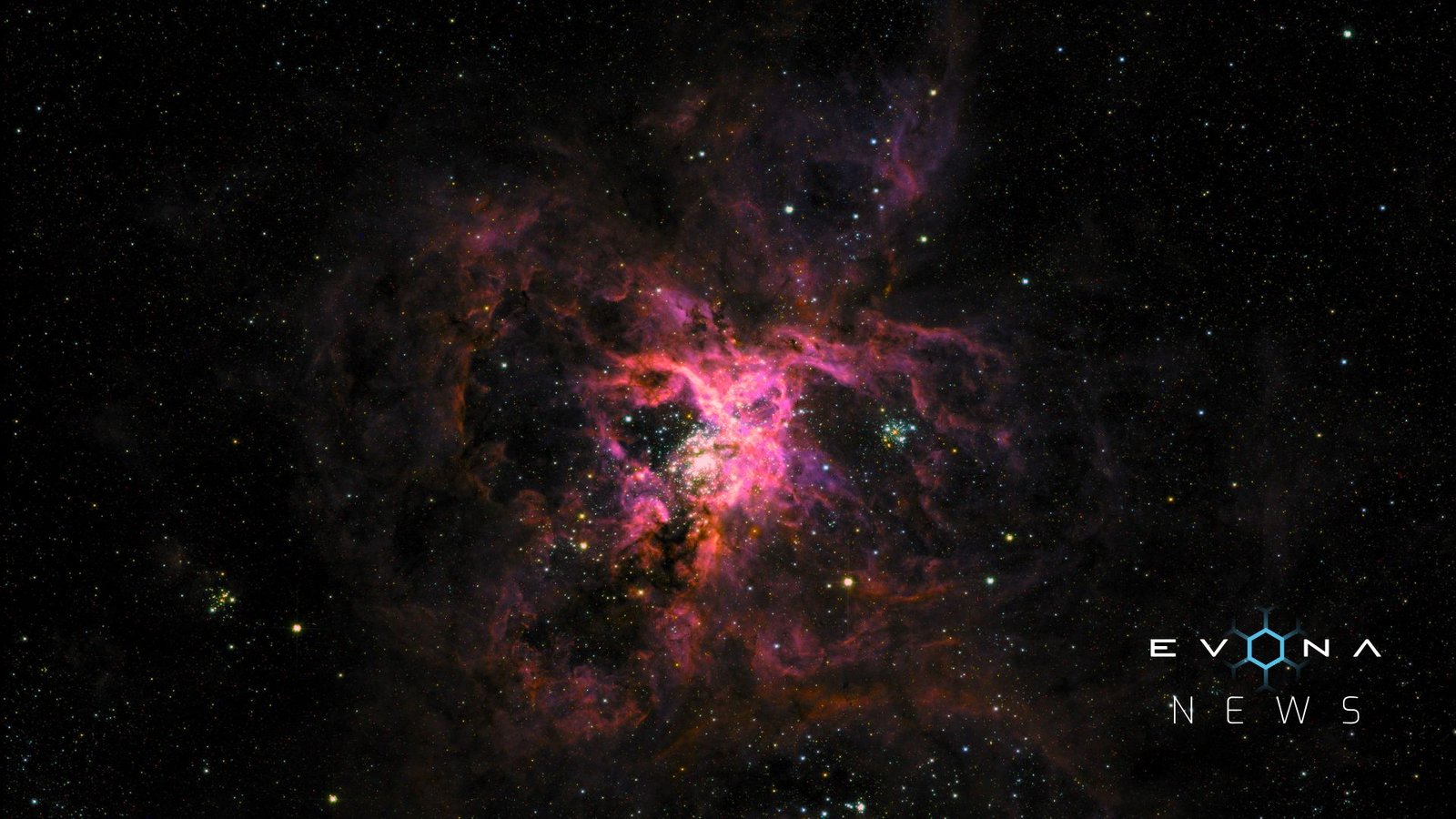
The Tarantula Nebula taken by the Super Pressure Balloon Imaging Telescope (SuperBIT). Credits: NASA/SuperBIT

During the flight, SuperBIT captured images of the Tarantula Nebula, a region within the Large Magellanic Cloud, which is a satellite galaxy of the Milky Way located approximately 160,000 light-years from Earth. This immense cloud of gas and dust, spanning 931 light-years, is a hotbed of star formation. The telescope also obtained images of the Antennae galaxies, NGC 4038 and NGC 4039, which are located around 60 million light-years away in the southern constellation of Corvus. These galaxies are currently experiencing a collision and merger that likely began a few hundred million years ago, making them the closest and youngest examples of colliding galaxies.

SuperBIT’s primary goal is to capture images of galaxies in the visible-to-near ultraviolet light spectrum. Although the Hubble Space Telescope covers this range, SuperBIT offers a wider field of view. To study dark matter, the telescope will utilize gravitational lensing, a natural phenomenon predicted by Einstein’s theory of general relativity. Gravitational lensing occurs when massive objects like galaxies warp spacetime, causing light to bend as it travels along the curvature.

Dark matter, which does not interact with electromagnetic radiation or light, is virtually invisible. However, it does interact with gravity, allowing astronomers to infer its presence. Gravitational lensing is an ideal method for mapping dark matter’s distribution, and SuperBIT may help scientists determine whether dark matter particles can bounce off one another when galactic clusters collide. Such research could finally reveal the composition of dark matter particles.

Professor Richard Massey from Durham University explained that SuperBIT would observe clusters of galaxies colliding with each other. He stated, “Essentially, we’re using the largest particle accelerators in the universe to smash lumps of dark matter and see where the bits fly.” He added, “If dark matter goes ‘crunch’, or if bits are chipped off, we could finally start to learn what it’s made of.”

The Antennae Galaxies taken by the Super Pressure Balloon Imaging Telescope (SuperBIT). Credit: NASA
The Antennae Galaxies taken by the Super Pressure Balloon Imaging Telescope (SuperBIT). Credit: NASA/SuperBIT

SuperBIT, a collaboration between NASA, Durham University, the University of Toronto, and Princeton University, launched from Wānaka, New Zealand. The telescope and its super-pressure balloon can travel around the globe at an altitude of approximately 21 miles (34 kilometers) for 100 days, above 99.5% of Earth’s atmosphere. This vantage point enables SuperBIT to gather scientific data and take high-resolution images without the blurring effect of the atmosphere.

The telescope can be safely returned to Earth via parachute, allowing the team to update its design. Funding has already been secured to upgrade SuperBIT’s 1.6 feet (0.5-meter) aperture telescope to 5.2 feet (1.6 meters), equipping it with a wider-angle lens and increased megapixels for the camera. This enhancement will increase its light-gathering power tenfold.

With a price tag of approximately $5 million, the balloon-carried telescope represents a significantly more economical option compared to rocket-launched instruments. In fact, SuperBIT costs almost 1,000 times less than equivalent satellite missions. NASA officials envision that the relatively low cost of SuperBIT could pave the way for a fleet of these telescopes to be deployed above Earth, collectively exploring the enigmas of the universe with greater affordability and accessibility.

Ariane 5 Launches ESA’s JUICE Mission to Explore Jupiter

On April 14th,  the esteemed Ariane 5 rocket carried out its second-to-last mission, launching a European spacecraft on an eight-year voyage to Jupiter.

A model of an European rocket Ariane 5 in the Museum of Air and Space(Musée de l'air et de l'espace, Le Bourget, France)
A model of an European rocket Ariane 5 in the Museum of Air and Space (Musée de l’air et de l’espace, Le Bourget, France) via Wikimedia Commons.

The Ariane 5 lifted off from Kourou, French Guiana’s European spaceport, after unfavorable weather postponed the launch the day before. The Jupiter Icy Moons Explorer (JUICE) spacecraft successfully detached from the Ariane upper stage 26 minutes after liftoff.

Ground controllers established communication with JUICE approximately 40 minutes after liftoff. Shortly after, they deployed the spacecraft’s two large solar arrays, which cover a total area of 85 square meters and will provide power for the six-ton probe.

The signal acquisition from JUICE took slightly longer than anticipated but remained within the normal range. Solar array deployment occurred sooner than expected, which Jean-Marc Nasr, head of space systems at Airbus Defence and Space, explained was due to precise sun acquisition by spacecraft systems. He deemed it “a sign of a perfect mission.”

The launch marks the beginning of JUICE’s lengthy journey to Jupiter and its three largest moons. The Airbus-built spacecraft will utilize several gravity-assist flybys to reach its destination, starting with a joint Earth-moon flyby in August 2024, followed by additional Earth flybys in September 2026 and January 2029, and a Venus flyby in August 2025.

Upon reaching Jupiter in July 2031, JUICE will conduct 35 flybys of Europa, Ganymede, and Callisto, investigating their surfaces and underground oceans to determine habitability. The spacecraft will orbit Ganymede from December 2034 until the mission’s conclusion in September 2035.

Josef Aschbacher, ESA’s director general, expressed pride in the mission, stating it addresses “questions of science that are burning to all of us.”

The mission, which has an estimated cost of 1.5 billion euros ($1.65 billion), will utilize ten instruments, including one contributed by NASA. The Japanese space agency JAXA and Israel Space Agency are also partners, providing components for other instruments.

JUICE spacecraft concept. NASA public domain image collection.

This launch marks the sixth time an Ariane 5 rocket has carried ESA missions, including the December 2021 launch of NASA’s James Webb Space Telescope with significant ESA contributions. Since 1996, there have been a total of 116 Ariane 5 launches.

Only one Ariane 5 flight remains, tentatively scheduled for late June, carrying two European government communications satellites, France’s Syracuse 4B and Germany’s Heinrich Hertz.

Stéphane Israël, Arianespace’s CEO, described the final launches as a “wonderful symbol” for France and Germany. The Ariane 5 will be replaced by the Ariane 6, whose maiden flight has been delayed multiple times. The latest target for the Ariane 6 debut is late 2023, though there is speculation it may be pushed back further.

While Aschbacher did not provide a new estimate for the Ariane 6 launch, he expressed confidence in its progress, saying, “We have to go through some decisive milestones in the next couple of weeks, but certainly we are on a good track.” He acknowledged feeling a tinge of sadness about Ariane 5’s retirement but expressed optimism that Ariane 6 will be “an equally good launcher.”

NASA Partners with Capella Space for Earth Observation Data

NASA has recently entered into a Blanket Purchase Agreement (BPA) with Capella Space Corporation to acquire high-resolution Synthetic Aperture Radar (SAR) commercial Earth observation data products.

The BPA is a sole source agreement, which means that only Capella Space Corporation is authorized to provide these services to NASA.

The contract requires Capella Space Corporation to deliver high-quality SAR commercial Earth observation data products that have a resolution ranging from 0.5 to 1.2 meters. NASA will issue fixed-price BPA Calls for these products, with a maximum value of $7 million per call. The work will be carried out at the contractor’s facilities, and other specified locations as required.

The contract period will last for five years from the effective date of the agreement. Capella Space Corporation will be responsible for providing a comprehensive catalogue of its high-resolution SAR commercial Earth observation data products, which must include data sets, metadata, ancillary information, data cadence, data latency, area coverage, and data usage policy.

NASA is procuring small constellation satellite data products from Capella Space Corporation for detailed evaluation and assessment. These data products may augment NASA’s collected data. To facilitate standard scientific collaborations, NASA has specified that the data products must comply with a government-defined End User License Agreement, which enables broad levels of dissemination and shareability of the commercial data with U.S. government agencies and partners.