UK Astronomers Discover Ultramassive Black Hole

A groundbreaking discovery has been made by astronomers – a ultramassive black hole, perhaps the largest one known to humanity, weighing in at an astonishing 33 billion solar masses.

The black hole is situated at the center of a galaxy located hundreds of millions of light-years away from our planet.

The gargantuan black hole was unearthed using a method known as gravitational lensing. By analyzing the magnification of the foreground object in a series of Hubble Space Telescope images, scientists were able to simulate how much light bends around the galaxy where the black hole is located. After testing thousands of black hole sizes, the team arrived at a solution that matched the observations.

“This particular black hole, which is roughly 30 billion times the mass of our sun, is one of the biggest ever detected and on the upper limit of how large we believe black holes can theoretically become, so it is an extremely exciting discovery,” said James Nightingale, an astrophysicist at Durham University in the U.K. and lead author of the new study.

What’s remarkable is that the black hole is not very active, meaning that it isn’t consuming large quantities of material and therefore isn’t producing significant X-ray radiation. This type of black hole is nearly impossible to study using other methods. However, gravitational lensing has opened up the possibility of studying inactive black holes. This discovery could enable scientists to detect more black holes beyond our local universe and reveal how these exotic objects evolved further back in cosmic time.

“Most of the biggest black holes that we know about are in an active state, where matter pulled in close to the black hole heats up and releases energy in the form of light, X-rays, and other radiation. However, gravitational lensing makes it possible to study inactive black holes, something not currently possible in distant galaxies. This approach could let us detect many more black holes beyond our local universe and reveal how these exotic objects evolved further back in cosmic time,” Nightingale said.

The black hole is situated in one of the galaxies of the Abell 1201 galaxy cluster and is the first discovered using this technique. The findings of the study were published in the Monthly Notices of the Royal Astronomical Society on March 29, 2023. This discovery could revolutionize our understanding of black holes and how they have evolved over time.

Space Scientists Discover the Brightest Gamma Burst

NASA Satellites Detect Gamma-Ray Burst 2 Billion Light-Years Away.

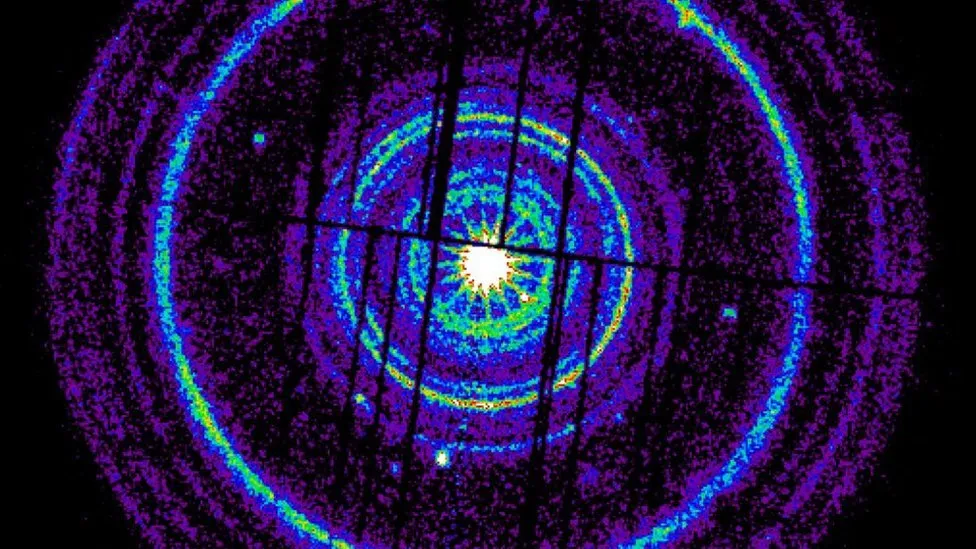
NASA satellites have detected the brightest gamma-ray explosion in space. The astounding outburst came from a galaxy situated 2 billion light-years away, making it the “BOAT”—the brightest of all time. The burst, officially known as GRB 221009A, was observed on October 9, 2022, and was found to be 10 times brighter than any previous explosion of this type.


The images captured have shown unprecedented details of GRBs
ESA/XMM-NEWTON/M. RIGOSELLI


Gamma-ray bursts (GRB) are the most violent explosions known to exist in the Universe, releasing more energy than the Sun would in 10 billion years. They result from cataclysmic supernova explosions as massive stars come to the end of their lives.

The experts, including academics from the University of Leicester, have released detailed analysis of the powerful explosion that illuminated much of the galaxy. Images of the rare and powerful cosmic phenomenon show a halo and “bullseye” like shapes. The burst was so bright that most gamma-ray instruments in space couldn’t measure its true intensity; they were literally blinded by the light.

The University of Sydney release notes that the brightness of this GRB means that scientists can collect much better data than usual and move beyond simple models of the GRB physics that are typically used, which just can’t explain these data. The burst will provide valuable information to help scientists better understand the nature and composition of gamma ray bursts.

Dr Andy Beadmore, who is also part of the Swift team at the University of Leicester, said: “These patterns are not just beautiful but are also useful scientifically. We’re seeing a significant amount of dust in our galaxy being lit up by the intense burst of light from the GRB – two billion light years away – like a torch shining through a cloud. This lets us study its nature and composition, which was found to extend to large distances from the Sun.”

Mach9 Unveils AI-Powered Geospatial Mapping Platform

Mach9, a North American company, has launched its first software platform, capable of producing 2D and 3D maps from mobile Lidar 30x faster than existing solutions.

The company utilises Artificial Intelligence (AI) and computer vision to produce 2D and 3D CAD and GIS engineering deliverables faster than ever before, according to Mach9.

“The organizations that own and manage our infrastructure are dependent on high-quality maps. New mapping technologies, like mobile Lidar, have transformative potential for engineering and construction firms, departments of transportation, electric utilities, railroads and other government entities. However, the high costs and long wait times required to generate mapping deliverables are hampering the broad adoption of these tools,” explained Alexander Baikovitz, co-founder and CEO.

Since the company’s foundation in 2021 at Carnegie Mellon University, Mach9 has been creating cutting-edge mapping and data collection systems. Its co-founders, Alexander Baikovitz, Haowen Shi, Michael Mong and Zachary Sussman, met during their time at CMU’s world-famous Robotics Institute. They realised that their combined experiences of developing complex robotic systems for autonomous mapping and mobility could be leveraged to help infrastructure organisations adopt technologies that ultimately improve everyday life.

“We leveraged our deep understanding of AI and computer vision capabilities to build a software solution that intelligently combines information from cameras, Lidar and other sources to create a holistic and comprehensive picture of the world. Ultimately, it is a very elegant solution to a complex problem that drastically reduces the time to create 2D and 3D maps,” commented Zach Sussman, head of software engineering.

Mach9’s launch comes amidst its pivot to a software-first business model, driven by the increasing demand for tools that accelerate geospatial data processing and analysis for infrastructure management. The rapidly growing geospatial technology industry has been driven by recent advances in data collection via reality-capture solutions such as 360-degree cameras, remote sensing on drones, and mobile Lidar. However, these massive datasets, which are often composed of both high-resolution imagery and Lidar point clouds, are highly complex and require labour-intensive and time-intensive processes to convert them into usable maps and digital twins.

To keep up with its future growth, Mach9 has upgraded its website, hired key engineering and sales leaders, moved into new headquarters in Pittsburgh’s Bloomfield neighbourhood, and established a presence in Silicon Valley. The platform is currently in beta with a select group of customers, but those interested can request a demo by completing a form on www.mach9.ai.

NASA Awards Firefly Aerospace Contract for Mission

NASA has announced a $112 million contract with Firefly Aerospace to deliver multiple payloads to the far side of the Moon using their advanced robotic Blue Ghost lander.

The first of the two payloads, the Lunar Surface Electromagnetics Experiment-Night (LuSEE-Night), aims to gain a deeper understanding of the moon’s radio environment and peer into the unobserved cosmic “dark ages.” LuSEE-Night will use its sophisticated instruments to collect data and conduct experiments, which will provide invaluable insights into the origins of the universe.

The second payload, the User Terminal (UT), will provide essential communication support for LuSEE-Night, allowing for seamless data transfer between the surface of the moon and Earth. This will enable real-time transmission of information, making it easier to study the lunar environment and enhance our understanding of the universe.

The launch itself will be an innovative two-stage operation, with the European Space Agency’s Lunar Pathfinder communications and navigation satellite being the first to be deployed. The satellite will be placed in an elliptical orbit around the moon, ensuring uninterrupted communication between Earth and the payloads on the surface.

Firefly Aerospace’s Blue Ghost spacecraft will then be deployed, safely delivering the LuSEE-Night and UT payloads to the far side of the moon. The spacecraft’s advanced technology will enable it to offer NASA and other customers multiple deployment options, making it an ideal solution for ongoing lunar operations and planetary exploration.

This is not Firefly Aerospace’s first successful project in space exploration. In 2021, the company was selected to put ten payloads on the near side of the moon. The Blue Ghost mission for the near side is set to launch on a SpaceX Falcon 9 rocket in 2024, further showcasing the company’s capabilities and expertise.

The Artemis program, of which the CLPS program is a part, is a major milestone in humanity’s exploration of the universe. The program aims to explore the lunar far side and understand some of the fundamental physics processes that occurred during the early evolution of the universe. This is a crucial step in our quest for knowledge and our understanding of the universe we inhabit.

The announcement of this contract for the CLPS program is a significant moment in the space industry. With the advanced technology and expertise of Firefly Aerospace, we can expect ground-breaking advancements and discoveries in space exploration in the coming years.

Starfish Launches Mission to Clean Up Space

Starfish Space, a startup founded in 2019 by former Blue Origin and NASA engineers, has raised $14 million in a funding round led by Munich Re’s venture capital arm.

The company plans to use the funds to develop its all-electric servicing spacecraft, Otter, which is slightly bigger than a mini-fridge. With the new investment, Starfish has raised more than $21 million.

This summer, Starfish plans to test its technology by launching a microwave-sized demonstrator that will attempt to dock with another test spacecraft in Low Earth Orbit (LEO), following an Orbital Transfer Vehicle (OTV) from small rocket developer Launcher. The spacecraft will use electric propulsion and an electrostatic capture mechanism to rejoin the space tug.

Starfish sees increasing demand for life extension services in the Geostationary Orbit (GEO) market. Once docked, the Otter will extend the lifetime of a GEO satellite by helping to keep it in its orbital slot for several additional years. Northrop Grumman is also targeting this market with much larger spacecraft currently attached to two Intelsat satellites.

The startup’s planned LEO debris removal service would work in a similar way. Once docked, the Otter would pull the satellite down close enough to the Earth to quickly de-orbit from there. The Otter would then detach from the client satellite and boost itself back up to LEO to conduct further servicing missions.

“The Otter as a platform is being designed to perform both missions with limited modifications, although each Otter vehicle would focus on serving customers in either GEO or LEO,” said Starfish strategy and operations lead Ari Juster.

Starfish aims to expand its workforce by 10-15 employees before the end of this year, hiring experts across a range of software, hardware, and business development disciplines. Additionally, the startup plans to launch its first commercial Otter vehicles in the coming years to meet the growing demand from customers.

Munich Re Ventures, the venture capital arm of insurance giant Munich Re, invested in the funding round, as did Toyota Ventures and existing investors PSL Ventures, NFX, and MaC VC. Munich Re Ventures also invested in Orbit Fab, a company that raised €5.5m ($5.8m) last year and is developing space traffic management software to help satellite operators save fuel.

Stephanie Deml, head of aviation and space at Munich Re, said, “In-orbit servicing such as active debris removal and life extension of satellites will play a key role in enabling a sustainable infrastructure in space. We are keen to contribute to the success of these missions by developing bespoke risk transfer solutions.”

Startups that offer solutions for removing orbital debris have been a bright spot for early-stage space investments this year, despite challenging macroeconomic conditions. Astroscale, a Japanese startup that plans to offer in-orbit servicing, raised $76m in a Series G funding round in February, bringing its total raised to date for its in-orbit servicing plans to more than $376m. Swiss debris-removal startup ClearSpace also raised around $29m in a Series A round, bringing its total to about $140m.

Space Scientist Dr Maggie Aderin-Pocock given Barbie Honour

Reminding young girls to ‘reach for the stars’.

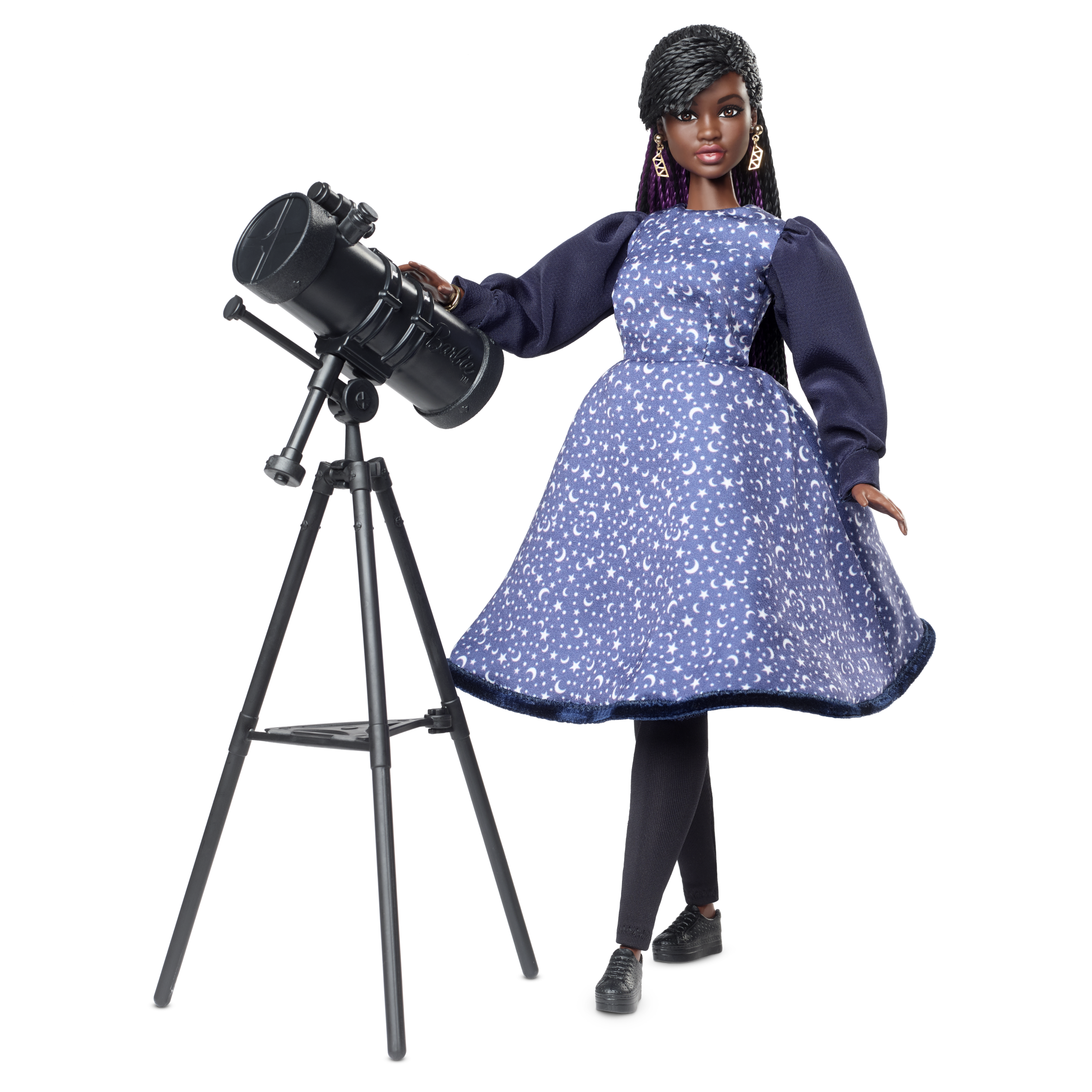
Maggie Aderin-Pocock, a well-known British scientist and former president of the British Science Association, has been recognized with a unique Barbie doll. The plastic toy was created by Mattel, a leading toy manufacturer, to honour Dr Aderin-Pocock’s contributions to making science and space more accessible to young girls.

“As a child growing up I played with Barbies, and I still do now with my daughter. When I was little, Barbie didn’t look like me, so to have one created in my likeness is mind-boggling. It’s such an honour to receive this doll that is celebrating my achievements… My daughter and I danced around the living room when we heard!”, she said.

The one-of-a-kind doll comes complete with a telescope accessory, a nod to Dr Aderin-Pocock’s work on the James Webb Space Telescope, the largest space telescope ever made. The Barbie is dressed in a starry outfit that is fitting of her astronomical achievements.

Dr Maggie Aderin-Pocock doll
Image: Mattel/Michael Bowles


As the newly appointed chancellor of the University of Leicester and the first black woman to win a gold medal at the Physics News Awards, Dr Aderin-Pocock has been an inspiration to many young women pursuing careers in science.

She was gifted the Barbie doll in honour of International Women’s Day and British Science Week.

Dr Aderin-Pocock added: “Since falling in love with the idea of space travel as a young girl, I have spent my career trying to show girls how fascinating space science can be”.

“I want to inspire the next generation of scientists, and especially girls, and let them know that STEM (science, technology, engineering, and mathematics) is for them. These subjects are just too important to be left to the guys because, through science, you can literally change the world,” she continued.

Barbie is also donating Dr Aderin-Pocock’s book Am I Made Of Stardust? to schools across the UK through partner charity Inspiring Girls.

Dr Aderin-Pocock hopes that her doll will encourage young girls to break down barriers and aim for the stars. “As a black woman, I’ve found that I don’t always fit some people’s perception of a scientist. We do often have these stereotypical images of what people do, and I like to smash those stereotypes whenever I get the opportunity,” she said.

Dr Maggie Aderin-Pocock
Image: Mattel/Michael Bowles


Mattel will expand its Barbie Career range with a marine biologist doll this spring, joining STEM figures including a doctor, a vet, a scientist, and an astronaut.

Mattel UK’s Marketing Director, Kelly Philip said: “We know that, globally, STEM is a field widely recognised as under-representing women, so, as a brand, Barbie is committed to showing girls more Stem careers”. With these initiatives, Mattel hopes to help inspire and encourage young girls to pursue Stem careers.


Congratulations Maggie!

Chile’s Wildfires: Monitoring Reveals Alarming Carbon Emissions

In recent days, central and southern Chile have been experiencing dozens of devastating wildfires.

The dry weather, high temperatures, and strong winds in the area have exacerbated the situation, leading to a spike in emissions into the atmosphere. As a result, a large smoke plume has been transported across the Pacific Ocean. According to local officials, the wildfires have caused at least 26 fatalities, almost 1,000 injuries, and have affected over 270,000 hectares of territory.

The Copernicus Atmosphere Monitoring Service (CAMS) has been closely monitoring the situation and assessing the impact on the atmosphere.

CAMS Senior Scientist Mark Parrington stated, “Drier and hotter conditions in the region have increased the risk of vegetation fires, which has resulted in a large number of fast-developing large-scale fires. The high intensity of these fires is reflected in the emissions and the size of the smoke plumes being transported out to the Pacific that we have been monitoring.”

CAMS has been using its Global Fire Assimilation System (GFAS) to provide data on the distribution, daily total intensity, and corresponding emissions to the atmosphere of the observed fire activity. CAMS has also been monitoring the evolution and transport of the large smoke plumes originating from the fires.

Chile wildfire
Credit: Warko via Flickr

The CAMS monitoring of wildfire carbon emissions reveals that between January and February of this year, almost 4 megatonnes of carbon were emitted, making it the second-highest level of wildfire carbon emissions in Chile for these months in the past 20 years. The regions of Bio-Bío, La Araucanía, and Ñuble have recorded the highest emission levels in the past 20 years, with carbon emissions in January and February amounting to over 2.5 megatonnes, 1.4 megatonnes, and 0.7 megatonnes, respectively. Emissions from Bio-Bío and La Araucanía are more than double their previous record levels, set in 2017 in Bio-Bío and 2008 in La Araucanía.

The CAMS monitoring of total fire radiative power (FRP) indicates a spike in FRP between 4-6 February, well above the mean of the 2003-2022 data and corresponding to the situation on the ground. The Global ECMWF Fire Forecast map of fire danger forecast shows extreme fire danger across a large area of Chile and Argentina. Satellite observations from the NASA Moderate Resolution Imaging Spectroradiometer (MODIS) sensors during the prior seven days show the fires in southern and central Chile occurring in areas with the highest fire risk.

The impact of the wildfires on the atmosphere is significant, with prevailing winds carrying a large smoke plume northwestwards from the affected area out into the Pacific Ocean, and a smaller plume being transported across central Argentina and out into the South Atlantic. The CAMS total aerosol optical depth 5-day forecast initialized on 7 February illustrates the extent of the impact.

The ongoing wildfires pose a significant threat to the environment, affected communities, and the atmosphere. Monitoring efforts by organizations like CAMS are critical in providing up-to-date information on the situation, assessing the impact of the fires, and assisting in efforts to combat and control the wildfires. As the situation continues to develop, ongoing monitoring and analysis will be essential in mitigating the impact of the wildfires on affected communities and the environment.

SpaceX Falcon 9 Launch Delayed by Rocket Ignition Issue

NASA and SpaceX were faced with a last-minute issue during the Falcon 9 launch of a commercial crew mission on February 27, causing a delay in the lift-off.

The launch was scheduled for 1:45 a.m. Eastern, but it was put on hold due to a problem with the ignition system that uses a chemical combination of Triethylaluminum Triethylborane (TEA-TEB).The launch director informed the four-person crew of the Crew Dragon of the issue a few minutes before the scheduled lift-off. According to a statement released by NASA two hours after the scrub, the launch was halted “to investigate an issue preventing data from confirming a full load” of TEA-TEB. SpaceX later confirmed in a tweet that it was a ground system issue.

In a show of appreciation for the safety measures, Bill Nelson, the NASA Administrator, commended the teams, saying, “I’m proud of the NASA and SpaceX teams’ focus and dedication to keeping Crew-6 safe. Human spaceflight is an inherently risky endeavor, and as always, we will fly when we are ready.”

This was the first time a technical issue caused a scrub in a SpaceX human spaceflight launch. Crew-6 is the ninth mission for SpaceX, following the Demo-2 test flight, five International Space Station crew rotation missions, and the Inspiration4 and Ax-1 private astronaut missions.

While NASA and SpaceX had a backup launch opportunity on February 28, they did not attempt a launch due to poor weather conditions. Mike McAleenan, the launch weather officer for the U.S. Space Force 45th Weather Squadron, said that although conditions at the launch site would remain good, there would be high winds and wave conditions along the ascent corridor up the East Coast.

Steve Stich, the NASA commercial crew program manager, stated that “The weather is not looking good at all for that particular opportunity,” during a pre-launch briefing on February 25. NASA previously stated that it would skip a March 1 launch because of an unfavorable trajectory.

The next three opportunities to launch Crew-6 start on March 2, with NASA choosing 12:34 a.m. Eastern on March 2 as the next launch attempt, pending resolution of the TEA-TEB issue. During the briefing, Stich commented that it was too early to predict the weather conditions for the upcoming March launch attempts.

In an interview, Stich said, “The teams are continuing to work the technical issue and we’re in a good position to fly the next opportunity on March 2.”

Stich added that the Crew-6 mission would transport NASA astronauts Stephen Bowen and Warren Hoburg, along with Roscosmos mission specialist Andrey Fedyaev and Emirati astronaut Sultan Alneyadi to the International Space Station. Bowen and Hoburg would have served as mission commander and pilot, respectively, during their approximately six-month stay on the ISS.

Although the Crew-6 launch was cancelled and will be rescheduled for a later date, the delay will not have any impact on the two other scheduled SpaceX Falcon 9 launches on February 27. The first Falcon 9 will launch from Cape Canaveral Space Force Station in Florida at 1:38 p.m. Eastern, carrying 21 “V2 Mini” Starlink satellites. These larger spacecraft have four times the capacity of previous Starlink satellites and will be placed in orbits authorized by the Federal Communications Commission for its Gen2 system. The second Falcon 9 will launch from Vandenberg Space Force Base in California at 2:31 p.m. Eastern, carrying 51 first-generation Starlink satellites.

Ancient Galaxies Discovered by NASA’s James Webb Telescope

NASA’s James Webb Space Telescope has made a ground-breaking discovery that could shatter our understanding of the universe.

NASA and the European Space Agency have shared an image featuring six potential massive galaxies captured around 500-800 million years after the Big Bang.
Copyright NASA via EVONA

The telescope has detected six ancient galaxies, dubbed “universe breakers”, dating back to when the universe was just 3% of its current age.

Equipped with infrared-sensing instruments capable of detecting light emitted by the most ancient stars and galaxies, the telescope has found galaxies far larger than what was presumed possible for galaxies so early after the big bang. The galaxies’ existence could upend current theories of cosmology.

Dr Erica Nelson of the University of Colorado Boulder, and a co-author, spotted a series of “fuzzy dots” that appeared unusually bright and red while sifting through images. These galaxies appeared to be roughly 13.5 billion years old, placing them about 500m-700m years after the big bang. These would not be the oldest galaxies observed by James Webb, as last year, scientists spotted four galaxies that date to about 350m years after the big bang. However, these were far smaller.

“The discovery of such massive galaxies so soon after the big bang suggests that the dark ages may not have been so dark after all, and that the universe may have been awash with star formation far earlier than we thought,” commented Dr. Emma Chapman, an astrophysicist at the University of Nottingham.

The existence of such massive galaxies close to the dawn of time would require scientists to revisit some basic rules of cosmology, as well as the theory that the first galaxies were seeded from small clouds of stars and dust. Existing models suggest that after a period of rapid expansion, the universe spent a few hundred million years cooling down enough for gas to coalesce and collapse into the first stars. Galaxies then began to form, leading to a period known as the dark ages.

The team is planning to obtain spectrum images, which can provide more accurate distance information and allow better estimates of mass. “A spectrum will immediately tell us whether or not these things are real,” said Joel Leja, an assistant professor of astronomy and astrophysics at Penn State University and a study co-author.

While the discovery has caught scientists off guard, further observations will be required to confirm the discovery before existing models can be abandoned.

NASA Confirms Half-Ton Meteor Crash in South Texas

A meteor, measuring two feet wide and weighing nearly 1,000 pounds, made a dramatic impact on Wednesday evening in South Texas.

NASA confirmed the meteor broke apart as it fell through the Earth’s atmosphere, before finally settling near McAllen, Texas, at about 6 p.m. The meteorite’s explosive entry into the atmosphere was captured by a Geostationary Lightning Mapper. Numerous eyewitnesses also reported seeing the space rock blaze through the sky.

“Although meteorites tend to hit Earth’s atmosphere at high speeds, they slow as they travel through the atmosphere, breaking into small fragments before hitting the ground. Meteorites cool rapidly and generally are not a risk to the public,” explained NASA in a statement.

Videos recorded from home security cameras by Fox station KDFW in Dallas show the meteor dramatically breaking apart as it fell, causing birds to scatter and creating a resounding sonic boom. The National Weather Service in Brownsville/Rio Grande Valley confirmed the sighting of a possible meteor in the sky west of McAllen, but there was no thunderstorm activity in the region at the time of impact.

Hidalgo County Sheriff Eddie Guerra also took to Twitter to announce that air traffic controllers in Houston had reported two aircraft sightings of the meteor near McAllen.

“The meteor seen in the skies above McAllen is a reminder of the need for NASA and other organizations to increase our understanding and protection of Earth, to combine scientific and engineering expertise to advance human space exploration, to integrate terrestrial and planetary research for furthering our understanding of the solar system, and to promote successful space missions by mitigating risk,” NASA commented.