
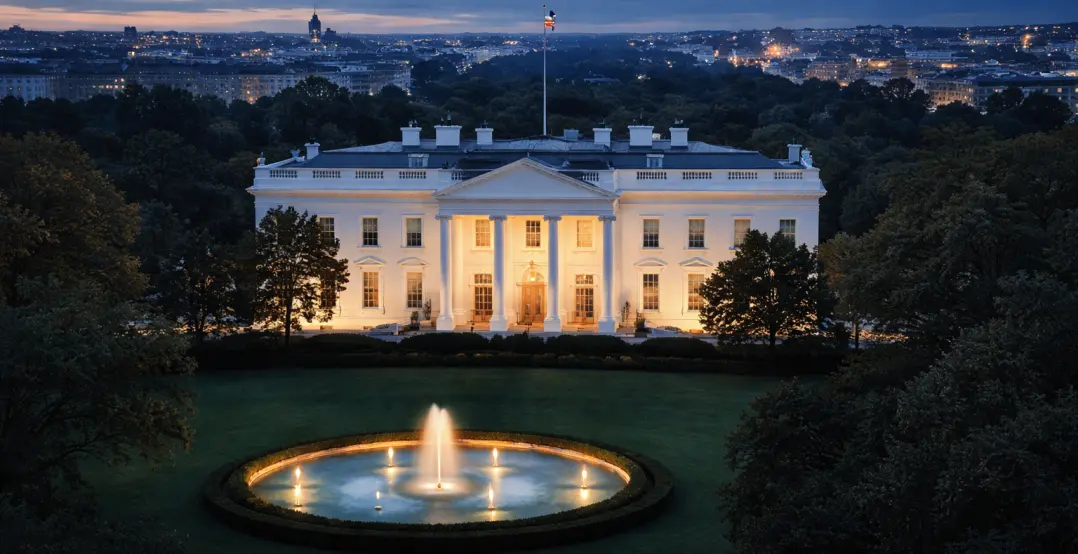
On April 3 – two days after Artemis II launched four astronauts toward the Moon – the White House released its fiscal year 2027 budget proposal. It calls for cutting NASA’s total budget by 23%, from $24.4 billion to $18.8 billion. The science directorate would lose 47% of its funding, falling from $7.3 billion to $3.9 billion (Via Satellite).
Exploration – the budget line that funds Artemis – would get a 10% increase to $8.5 billion.
Congress rejected nearly identical cuts last year, restoring science funding and explicitly protecting missions the White House had targeted for cancellation. The same pushback is expected this time. But for anyone trying to understand where the space workforce is heading, the signal matters even if the cuts never materialize.
The Two-Speed NASA
The budget proposal creates a clear divide within the agency. Human spaceflight and lunar exploration are politically protected and financially growing. Science, space operations, and technology development are being treated as expendable.
If this dynamic holds – even in a softened form after Congressional negotiation – the practical effect is a rebalancing of where NASA’s workforce concentrates. Programs that are growing attract and retain talent. Programs under threat lose people, not because they’re terminated, but because the engineers working on them start looking for stability elsewhere.
This is how talent redistribution works in practice. A propulsion engineer on a science mission facing an uncertain future doesn’t wait for the cancellation letter. They start taking calls from Artemis contractors, commercial space companies, and defense primes – all of whom are hiring. By the time Congress restores the funding, some of the people have already moved.
The result is a talent drain from science and Earth observation programs toward exploration and commercial programs, regardless of whether the budget cuts are ultimately enacted. The uncertainty itself does the damage.
What Gets Cut and Who It Affects
The proposal would terminate over 40 missions. While the detailed line items haven’t all been published, previous proposals targeted the Chandra X-Ray Observatory, OSIRIS-APEX, and a range of Earth science and astrophysics missions. The Earth Systems Explorers program, which selected two missions for development as recently as February, would be reduced to a single mission.
International Space Station operations would lose $1.1 billion. Space technology funding would be cut by nearly a third, with the remaining budget prioritizing lunar technologies and cutting what the White House calls “frivolous” projects, including in-space sustainability research. STEM education programs – $143 million in the current budget – would be eliminated entirely.
Each of these cuts represents a workforce impact. The engineers, mission planners, data scientists, and operations specialists working on these programs are among the most experienced people in the sector. If their programs are defunded or placed in sustained uncertainty, those people become available – and the companies and programs that are growing will absorb them.
The Commercial Space Implications
For commercial space companies, the budget dynamics create both opportunity and risk.
The opportunity is straightforward: if NASA science programs contract, experienced people who might otherwise have stayed in government-adjacent roles will enter the commercial market. A data scientist who spent eight years on an Earth observation mission becomes available for an EO startup. A mission operations engineer from a canceled planetary science mission brings experience that’s directly relevant to commercial lunar programs.
But there’s a risk embedded in the same dynamic. The ISS budget cut puts commercial station programs in limbo. NASA had planned to hand out multibillion-dollar contracts to companies building orbital destinations – Vast, Axiom, and others. The agency has now said it is reassessing that plan, considering instead a module attached to the existing station that would eventually spin off independently.
For companies that have been building business plans around NASA commercial station contracts, this introduces a layer of uncertainty that directly affects their hiring. If the contract structure changes, the timeline shifts, and the headcount plans that were built around a specific NASA commitment may need to be revised.
The SBIR and Small Business Effect
Buried in the broader budget conversation is a quieter impact on the small business and startup ecosystem. NASA’s technology development budget – which funds SBIR and STTR grants, among other programs – would lose nearly a third of its current funding.
For growth-stage space companies, SBIR grants often serve as critical non-dilutive funding that supports early hiring. A Phase II SBIR can fund two to three engineers for a year. When that pipeline contracts, companies that were counting on SBIR funding to support their next wave of hires may have to delay or restructure their plans.
This effect compounds. Fewer grants mean fewer early hires, which means slower technical development, which means a weaker position when competing for larger contracts or raising the next round. The talent implications of a technology budget cut ripple through the startup ecosystem long after the budget cycle ends.
What History Tells Us
Congress rejected the same scale of cuts last year. Lawmakers restored science funding, protected targeted missions, and added nearly $10 billion in earmarks for human spaceflight through 2032, including $2.6 billion for the Gateway lunar station – which the current administration has since paused in favor of a moon base.
The political dynamics suggest a similar outcome this time. Science programs have bipartisan support. Earth observation data underpins agriculture, weather forecasting, and climate monitoring that affects every Congressional district. And the Artemis program itself depends on a broad industrial base that includes many of the same contractors working on science missions.
But the annual cycle of proposed cuts followed by Congressional restoration creates its own workforce problem. Every year that senior engineers on science missions spend wondering whether their program will survive is a year in which some of them leave. The uncertainty tax on the workforce is real, even when the funding ultimately holds.
What Companies Should Watch
For space companies hiring in the US, three things are worth tracking as this budget cycle plays out.
Watch where the people go.
If science programs lose headcount – whether through cuts or through attrition driven by uncertainty – those engineers will move to Artemis, to commercial space, or to defense. Understanding that flow gives you a sourcing advantage.
Watch the ISS transition.
If commercial station plans shift, the companies building toward those contracts will adjust their hiring. That creates both talent availability and competitive shifts.
Watch the SBIR pipeline.
If technology funding contracts, the companies that depend on it for non-dilutive hiring support will need alternative strategies – and the ones that move first will have the pick of the talent that smaller programs can no longer fund.
The budget is a proposal, not a law. But the talent market responds to signals, not to final appropriations. The movement has already started.