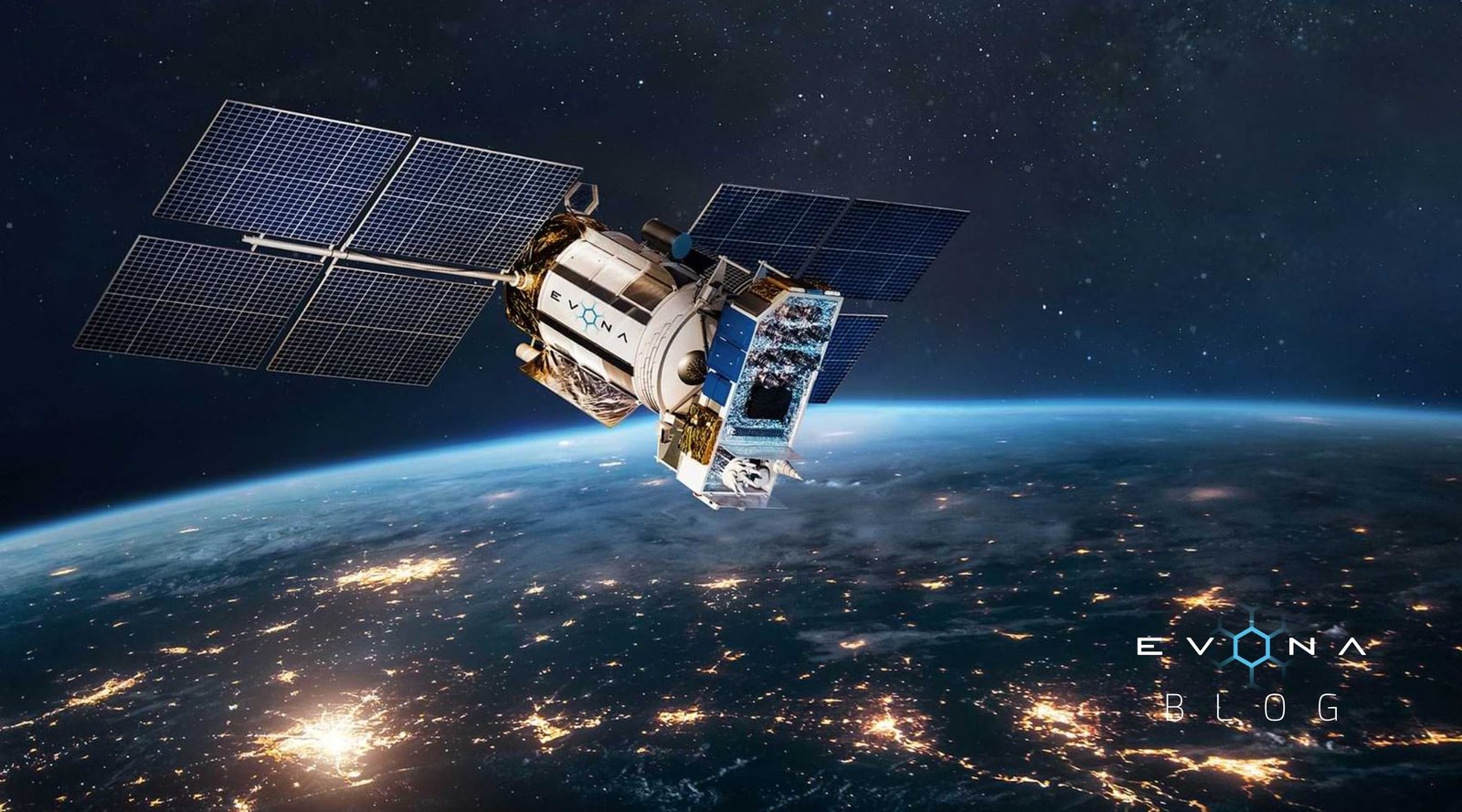
What Is… Asteroid Mining?

What is Asteroid Mining?

Asteroid mining is a proposed method of extracting raw materials from asteroids and other minor planets. Although hypothetical, asteroid mining poses a potential solution to Earth’s growing carbon pollution and resource depletion problems.


What Are the Benefits of Asteroid Mining?

The mining industry is responsible for pollution on a huge scale. It contaminates our air, water, and soil, destroying entire landscapes through the use of toxic chemicals such as chlorine, sulphuric acid and cyanide. In addition to producing harmful by-products, these processes are quickly adding to Earth’s resource depletion issue.

Even as we strive to become more sustainable through tools like solar panels and wind turbines, we’re creating additional needs for mining. These tools contain platinum, which requires harmful methods of extraction.

Whether we like it or not, rare and precious materials are a staple of modern life. They’re a key part of modern technology, medicine and aerospace. Currently, we seem to be stuck in a cycle of high demand, only satisfiable through harmful mining. However, we could potentially outsource these valuable elements from space.

While Earth has finite resources, there are over a million asteroids – that we currently know about – containing precious materials like platinum, gold, iron, magnesium and palladium. If we found a way to safely extract these materials, we could potentially satisfy humanity’s appetite for millions of years to come.

In the asteroid belt between Mars and Jupiter – where the majority of known asteroids orbit – some asteroids measure over 60 miles in diameter. NASA has estimated this belt to contain $700 quintillion of materials – that’s $100 billion for each person on Earth.

This amount of raw material could provide us with close to unlimited resources. However, while asteroid mining may seem simple in principle, there are some roadblocks that humans are yet to overcome.


What Are the Problems With Asteroid Mining?

One issue is cost – travelling into deep space is expensive. While there is little doubt about its benefits for sustainability, asteroid mining is not profitable enough yet. Regardless of how much an asteroid’s materials are worth on Earth, the price of getting to it and returning the resources could eclipse this figure. Considering the high initial investment cost, as well as the time it would take for a return on this, investors can be reluctant to get involved. To be truly profitable, space mining operations would need to be scaled up massively.

Another problem is deciding the best method of reliably identifying suitable asteroids, then securing them and safely extracting the materials.

In addition, sudden access to this number of materials would crash their markets back on Earth. Metal-rich asteroids could supply us with so many commodities that their prices would drop drastically.


How Would Asteroid Mining Work?

Firstly, we would have to identify resource-rich asteroids. This can be difficult to do from afar, so powerful telescopes may be the most effective way to do so.

Once identified, processing could be done by propelling the raw ore into near-Earth orbit for easy mining access. However, this would require a lot of fuel, so an alternative method could be mining them in space to return only the processed materials.

If we were to mine for materials on-site, robot prospectors could be used to automatically identify and mine specific targeted areas. Once identified, we could use heat to evaporate the desired elements with the help of giant mirrors, separating them from unwanted waste products to return to Earth.

Alternatively, ‘strip mining’ could be used. This would involve scraping away the asteroid’s surface, tunnelling into veins of materials and scraping off valuable substances. These resources would then float off the asteroid and be collected by a large canopy.


A Career in Asteroid Mining

  • Astronautical and space engineering: the design, creation, and testing of spacecraft and their components, aimed at asteroid mining missions.
  • Planetary science and exploration: examining celestial bodies, including asteroids, to comprehend their formation, makeup, and potential resources.
  • Robotics and automation: development of robotic systems and autonomous robots for use in asteroid mining.
  • Mining and extraction: the removal of minerals and resources, such as precious metals, water, and volatile compounds, from asteroids.
  • Business and finance: management of financial and business aspects of asteroid mining operations, including investment and revenue generation.
  • Marketing and communications: promoting and creating awareness about asteroid mining operations and the advantages of space resource utilization.
  • Policy and law: formulating and implementing policies, regulations, and laws regarding space resource exploration and exploitation, specifically asteroid mining.


Asteroid Mining Geographic Hotspots

  • US
  • Luxembourg
  • Japan
  • UAE
  • Russia
  • China

Asteroid mining could pave a path to a greener planet for all of us. Once the stuff of science fiction, this fascinating and innovative theory might just be the answer to some of Earth’s biggest problems. If this excites you, now is time to join this exciting and rapidly developing field.


Check out our space jobs page to take the first step in your space career journey.

What Is… a Satellite?

What is a Satellite?

A satellite is a device that is launched into space to orbit the Earth or other celestial bodies. From providing communication and navigation services to helping us observe the Earth, satellites have become an integral part of our lives. They are used to collect and transmit data and images, among many other types of information. Satellites are used for a variety of purposes, including communication, navigation, surveillance, monitoring of natural disasters, and weather forecasting.

Satellites have a wide range of applications in the modern world. They can be used for communication, navigation, surveillance, weather monitoring, scientific research, and much more. In addition to providing essential data about our planet and its environment, satellites have opened up new opportunities for space careers and jobs.

Satellites are essential for many of the services we rely on today. With advances in technology, satellites have become increasingly useful to humanity. From navigation systems to internet connections to environmental monitoring, satellites are helping us to connect and solve major world issues.


Why Do We Use Satellites?

Satellites are used to receive and transmit a wide range of data and information. Because they operate in space, satellites have the advantage of communicating and collecting data from virtually anywhere – without being hindered by terrestrial coverage limitations. They can “see” large sections of the Earth’s surface, collect data more quickly than instruments on the ground and provide services with an unmatched level of ubiquity. Here are just a few examples of the types of services provided by satellites:

  • GPS and navigation
  • Satellite telehealth
  • Emergency response and disaster relief
  • Satellite TV and radio broadcast
  • Mobile communications
  • Broadband connection
  • Remote sensing and imaging

Satellites play an important role in the exploration and utilisation of space. They are used to observe our planet, explore other planets and objects in space, monitor climate and weather patterns, communicate with spacecraft, and provide navigation assistance, to name a few.

Satellites help scientists and researchers gain better insights into what is happening in our atmosphere and beyond. They can measure temperatures, detect changes in the land, map out new routes and track the movement of stars and galaxies. Additionally, satellites are used to facilitate communication between space-faring nations and to track military assets.

Space professionals have built an array of different types of satellites for different purposes, such as communications satellites for global voice, data and video transmissions, Earth observation satellites for measuring the environment, navigation satellites for providing global positioning services, and science satellites for collecting scientific data.

The demand for space technology continues to increase and new jobs are being created for people who are passionate about space exploration. There are many career opportunities available in space related fields such as satellite engineering, satellite mission planning and operations, space research and analysis, space policy development, space law and many more. Whether you’re interested in building a satellite, using satellites to track activity in space or investigating the effects of space on Earth, there is a lot to learn about what satellites can do. Exploring the endless possibilities of satellites is an exciting way to make a career in the space industry.


Do Satellites Have Environmental Benefits?

Satellites play a critical role in monitoring and studying the Earth’s environment, and their benefits are numerous. With their advanced capabilities, satellites can provide us with valuable information on weather and climate conditions, as well as help us understand the impact of human activities on the planet.

One of the key benefits of satellites is their ability to measure and track environmental changes, such as pollution levels, deforestation, and changes in land use. This information helps researchers to gain a comprehensive understanding of the Earth’s environment and the ways in which it is evolving. Satellites are vital components in the study of climate change. Using sophisticated sensors, satellites can measure temperature, pressure, wind speed, and other meteorological phenomena, giving scientists valuable insights into how the Earth’s atmosphere, land surface, and oceans are changing over time. Additionally, satellites can track trends in global warming, ice melting, and rising sea levels, helping us to better understand the impact of our actions on the environment.

Satellites are also a valuable tool in times of natural disasters, such as hurricanes, floods, and forest fires. By providing real-time information and data, satellites help emergency personnel to respond quickly and effectively to these events, saving lives and reducing damage to property.

In addition to their environmental benefits, satellites have a wide range of practical applications, such as providing internet access to remote areas, surveying land for agriculture, and monitoring air pollution. With their versatility and high-tech capabilities, satellites have become an essential tool for safeguarding the future of our planet and improving the quality of life for people around the world.


Satellite Careers

If you’re looking to get involved in the space industry, there are a number of routes when it comes to a career in satellites. By understanding what a satellite is, what it does and why it’s used, you can begin to explore the possibilities that come with space careers and jobs related to satellites.

  • Satellite systems engineer: designs and tests systems for controlling and operating satellites.
  • Satellite communications engineer: creates and maintains communication systems between satellites and the ground.
  • Satellite propulsion engineer: designs and tests propulsion systems for manoeuvring satellites in orbit.
  • Mechanical engineer: creates mechanical components and systems for satellites and launch vehicles.
  • Electrical engineer: designs electrical systems and components for satellites and launch vehicles.
  • Satellite data analyst: analyzes satellite data using statistical methods and software.
  • Launch vehicle engineer: designs, tests, and operates rockets used to launch satellites.
  • Ground station operator: operates equipment for communicating with satellites and controlling their operations.


Satellite Salary Guidelines

  • Satellite systems engineer – $87,015
  • Satellite communications engineer – $93,000
  • Satellite propulsion engineer – $131,000
  • Mechanical engineer – $90,000
  • Electrical engineer – $104,439
  • Satellite data analyst – $82,000
  • Launch vehicle engineer – $75,478
  • Ground station operator – $78,058


Geographic Hotspots for a Career in Satellites

  • Washington DC-Baltimore
  • Los Angeles
  • New York
  • San Francisco Bay
  • London

No matter what your skill set is, you can find a way to get involved with satellites and use your skills to help our planet. If you want to pursue a career in space or make a difference with satellite data, start researching the field and exploring job openings. You could be part of the next generation of innovators helping advance our knowledge of space and benefit our environment!


Check out our jobs page to take the first step of your satellite career journey.

What Is… DevOps?

What is DevOps?

DevOps is a set of software development practices that bring together the processes of software development and IT operations. It’s designed to improve the collaboration, automation, and deployment of applications and services.

DevOps enables teams to work together to quickly develop, test, and deploy high-quality software in shorter cycles. By eliminating the barriers between development and operations, teams can respond quickly to changes in customer requirements and market conditions. A career in DevOps involves working with developers and other IT professionals to create efficient, agile systems that enable organizations to stay competitive in today’s fast-paced digital environment. With DevOps, teams can build better products faster and more cost-effectively than ever before.


How is DevOps Used?

DevOps is used to help organizations develop, deliver and maintain software faster and more efficiently. It is a combination of software engineering, operations, automation, and monitoring tools that allow teams to collaborate and automate processes. DevOps helps to improve the speed and quality of delivery, as well as reduce the cost of development.

One of the main problems solved by DevOps is inefficient and manual processes. Automation is at the heart of DevOps, helping to streamline processes and ensure consistent results. Automated tests are run regularly and teams can quickly identify potential problems in a short amount of time.

DevOps helps organizations to reduce their time-to-market, reduce errors, and improve the overall performance of the software. It also enables teams to quickly respond to customer feedback and deploy fixes in an efficient manner. In addition, it helps organizations to achieve greater efficiency by reducing manual work and automation of processes.


What Are the Different Phases in DevOps?

  1. Development: writing and developing code, including creating new features, fixing bugs, and improving existing code. Developers work in isolated development branches and continuously integrate their code with others.
  2. Continuous integration: integrating code with others and automatically building and testing it to identify and fix problems early.
  3. Continuous testing: executing automated tests to catch bugs, validate functionality, and ensure quality standards.
  4. Continuous deployment: automatically deploying code to production systems with no manual intervention required.
  5. Continuous monitoring: monitoring performance and availability of the application in production, including tracking response times, error rates, and resource utilization.
  6. Feedback loop: gathering feedback from users and incorporating it into development to continuously improve the application and meet user needs.


What is the Difference Between Agile and DevOps?

Agile and DevOps are two popular methodologies in software development that aim to improve the efficiency, speed, and quality of software delivery. However, there is often confusion about the differences between the two, as they are frequently used interchangeably.

Agile is a project management approach that emphasizes flexibility and collaboration in the software development process. The Agile methodology prioritizes customer satisfaction, teamwork, and continuous delivery of working software. Agile development teams work in short sprints, frequently reassess and adjust their priorities, and aim to deliver working software incrementally.

While Agile focuses on the development process and emphasizes flexibility and collaboration, DevOps focuses on the delivery process and aims to improve the speed and reliability of software delivery. Both Agile and DevOps are complementary and often used together to create a seamless software development process that prioritizes both speed and quality.


A Career in DevOps

A career in DevOps offers a unique opportunity for professionals to use their technical skills in a fast-paced environment.

For those who have a background in IT, DevOps may be a natural transition, as it is an extension of many existing technologies and practices. Those with no experience in either area can still find success by learning the fundamentals of both software development and operations. Some people decide to specialize in specific DevOps tools and technologies, while others broaden their skill set by developing expertise in multiple areas.

There are several different ways to get started, depending on what interests you the most. Start by learning the fundamentals, then move on to more specialized topics as your skills develop.

Some of the most common career paths within DevOps include:

  • DevOps engineer: responsible for automating and streamlining the development and deployment process, ensuring that software is delivered quickly and reliably.
  • Site Reliability Engineer (SRE): combines software engineering and systems administration to keep production systems running smoothly and reliably.
  • Cloud engineer: specializes in designing, deploying, and managing applications and services on cloud computing platforms such as Amazon Web Services (AWS), Microsoft Azure, and Google Cloud Platform (GCP).
  • Infrastructure as Code (IaC) engineer: focuses on using code to manage and provision infrastructure, making it easier to manage and deploy complex systems.
  • Continuous Integration/Continuous Deployment (CI/CD) engineer: responsible for setting up and maintaining the CI/CD pipeline, ensuring that software is delivered efficiently and with high quality.
  • Configuration management engineer: uses tools like Chef, Puppet, and Ansible to manage the configuration of systems and applications, ensuring consistency and reliability.
  • Network engineer: focuses on the design and implementation of network infrastructure, ensuring that systems and applications are securely connected and able to communicate with one another.
  • Security engineer: ensures that the software development and deployment process is secure, protecting against threats and vulnerabilities.


                                                                                                                        DevOps Salary Guidelines

  • DevOps engineer – $110,715
  • Site Reliability Engineer (SRE) – $125,801
  • Cloud engineer – $131,652
  • Infrastructure as Code (IaC) engineer – $137,404
  • Continuous Integration/Continuous Deployment (CI/CD) engineer – $120,635
  • Configuration Management Engineer – $80,900
  • Network engineer – $90,942
  • Security engineer – $146,240


Geographic Hotspots for DevOps

  • London
  • San Francisco Bay
  • New York City
  • Greater Paris Metropolitan Region
  • Dallas-Fort Worth Metroplex

A career in DevOps is a highly sought-after and rewarding path. The demand for these skilled professionals is only set to increase as technology continues to play a critical role in businesses across various industries. Companies are looking for individuals who can help them quickly and efficiently deliver software applications, while ensuring their reliability and security.


If the sound of a career in DevOps gets you excited, there’s never been a better time to pursue it. Check out our space jobs page to take the first step in your Devops career journey.

What Is… A Payload?

What is a Payload?

A payload is a term used to describe the portion of a spacecraft or rocket that is responsible for achieving the mission’s primary objectives. Payloads can be scientific instruments, communication equipment, or any other specialized equipment that is needed for the mission.

Payloads are an essential part of space exploration. They have contributed significantly to our understanding of the universe and allow us to explore the universe in ways that were previously impossible. Payloads have allowed us to study the characteristics of other planets, measure the properties of distant galaxies, and even search for signs of life beyond Earth.


What Are Payloads Used For?

One of the primary benefits of payloads is that they allow us to collect data and perform experiments in environments that are otherwise inaccessible to humans. By sending payloads into space, we can learn about other celestial bodies and the conditions that exist in the vacuum of space.

Payloads can be classified into several different categories, depending on their intended use and the specific requirements of the mission. Some common types of payloads include:

  • Scientific payloads: These payloads are designed to collect data and perform experiments in order to increase our understanding of the universe. Examples include telescopes, spectrometers, and other instruments used to study celestial bodies and phenomena.
  • Communication payloads: These payloads are used to establish and maintain communication links between Earth and spacecraft or between spacecraft and other celestial bodies. Examples include radio antennas, modems, and transponders.
  • Navigation payloads: These payloads are used to determine the position and orientation of a spacecraft or other object. Examples include star trackers, gyroscopes, and accelerometers.
  • Observation payloads: These payloads are used to gather imagery and other data about the surface of celestial bodies or other objects of interest. Examples include cameras, radar, and lidar.
  • Human support payloads: These payloads are designed to support the needs of humans in space, such as providing life support, thermal control, and waste management.
  • Cargo payloads: These payloads are used to transport supplies and equipment to the ISS or other space missions. This can include food, water, and spare parts for the spacecraft or scientific instruments.

In addition to their scientific applications, payloads have also been used for a variety of practical purposes. Communication satellites, for example, are used to provide a vital link for global communication and entertainment. These satellites are used for television, radio, and internet communications, and play a crucial role in our daily lives. Weather satellites are another type of payload that has had a significant impact on humanity. These satellites are used to monitor and predict weather patterns around the world, which has helped to improve the accuracy of weather forecasts and enabled us to better prepare for extreme weather events. Learn more about the ways satellites benefit humanity in What is… a Satellite?

On top of their direct benefits, payloads have also helped to drive technological innovation and economic growth. The development and deployment of payloads requires advanced technologies and expertise, which has contributed to the growth of many industries and has created jobs for skilled workers. The development, manufacture, and operation of payloads require a wide range of skilled workers, including engineers, technicians, and scientists.

Another way that payloads have contributed to technological innovation is by enabling the testing of new technologies in the space environment. The space environment provides unique challenges that cannot be easily replicated on Earth, such as extreme temperatures, radiation, and microgravity. By testing technologies in space, we are able to determine their capabilities and limitations, and make necessary improvements. This has led to the development of new technologies such as advanced materials, propulsion systems, and communication systems, which have had numerous applications on Earth.


Payloads has proven to be a valuable and essential tool for exploring and understanding the universe. As we continue to push the boundaries of space exploration and seek to answer some of the most fundamental questions about the universe, payloads will continue to play a vital role in advancing our knowledge and understanding of our world and the wider universe.


Image Credit: NASA via Picryl.com


UK Astronomers Discover Ultramassive Black Hole

A groundbreaking discovery has been made by astronomers – a ultramassive black hole, perhaps the largest one known to humanity, weighing in at an astonishing 33 billion solar masses.

The black hole is situated at the center of a galaxy located hundreds of millions of light-years away from our planet.

The gargantuan black hole was unearthed using a method known as gravitational lensing. By analyzing the magnification of the foreground object in a series of Hubble Space Telescope images, scientists were able to simulate how much light bends around the galaxy where the black hole is located. After testing thousands of black hole sizes, the team arrived at a solution that matched the observations.

“This particular black hole, which is roughly 30 billion times the mass of our sun, is one of the biggest ever detected and on the upper limit of how large we believe black holes can theoretically become, so it is an extremely exciting discovery,” said James Nightingale, an astrophysicist at Durham University in the U.K. and lead author of the new study.

What’s remarkable is that the black hole is not very active, meaning that it isn’t consuming large quantities of material and therefore isn’t producing significant X-ray radiation. This type of black hole is nearly impossible to study using other methods. However, gravitational lensing has opened up the possibility of studying inactive black holes. This discovery could enable scientists to detect more black holes beyond our local universe and reveal how these exotic objects evolved further back in cosmic time.

“Most of the biggest black holes that we know about are in an active state, where matter pulled in close to the black hole heats up and releases energy in the form of light, X-rays, and other radiation. However, gravitational lensing makes it possible to study inactive black holes, something not currently possible in distant galaxies. This approach could let us detect many more black holes beyond our local universe and reveal how these exotic objects evolved further back in cosmic time,” Nightingale said.

The black hole is situated in one of the galaxies of the Abell 1201 galaxy cluster and is the first discovered using this technique. The findings of the study were published in the Monthly Notices of the Royal Astronomical Society on March 29, 2023. This discovery could revolutionize our understanding of black holes and how they have evolved over time.

Space Scientists Discover the Brightest Gamma Burst

NASA Satellites Detect Gamma-Ray Burst 2 Billion Light-Years Away.

NASA satellites have detected the brightest gamma-ray explosion in space. The astounding outburst came from a galaxy situated 2 billion light-years away, making it the “BOAT”—the brightest of all time. The burst, officially known as GRB 221009A, was observed on October 9, 2022, and was found to be 10 times brighter than any previous explosion of this type.


The images captured have shown unprecedented details of GRBs
ESA/XMM-NEWTON/M. RIGOSELLI


Gamma-ray bursts (GRB) are the most violent explosions known to exist in the Universe, releasing more energy than the Sun would in 10 billion years. They result from cataclysmic supernova explosions as massive stars come to the end of their lives.

The experts, including academics from the University of Leicester, have released detailed analysis of the powerful explosion that illuminated much of the galaxy. Images of the rare and powerful cosmic phenomenon show a halo and “bullseye” like shapes. The burst was so bright that most gamma-ray instruments in space couldn’t measure its true intensity; they were literally blinded by the light.

The University of Sydney release notes that the brightness of this GRB means that scientists can collect much better data than usual and move beyond simple models of the GRB physics that are typically used, which just can’t explain these data. The burst will provide valuable information to help scientists better understand the nature and composition of gamma ray bursts.

Dr Andy Beadmore, who is also part of the Swift team at the University of Leicester, said: “These patterns are not just beautiful but are also useful scientifically. We’re seeing a significant amount of dust in our galaxy being lit up by the intense burst of light from the GRB – two billion light years away – like a torch shining through a cloud. This lets us study its nature and composition, which was found to extend to large distances from the Sun.”

Space Skills Focus – Python

Python has rapidly become the go-to programming language for space professionals, thanks to its exceptional adaptability and versatility. Its unique features make it an indispensable tool for analyzing, processing, and modeling space-related data. Python’s ability to handle large data sets, coupled with its powerful algorithms, has made it a crucial element in numerous space applications such as satellite design and testing, mission planning, and orbit calculations.

The widespread use of Python in the space sector has given rise to the development of numerous specialized libraries and tools, tailored to the unique needs of space professionals. These libraries and tools provide quick and easy access to specialized functionalities, making it easier for professionals to perform complex tasks with ease.

For those who are familiar with Python, the possibilities are endless. Python is an exciting career choice for anyone with a passion for coding, analysis, and digital transformation. To give you a leg up, we’re sharing our exclusive data to reveal prominent industry trends:


Python Gender Split

  • 25% female

  • 75% male

The gender split data shows that there is a significant gender imbalance in the Python space sector. Only 25% of professionals in this industry are female, which is considerably lower than the global workforce average of 47.7%. While this gender gap is consistent with the wider space sector, it does indicate a need for increased efforts to promote diversity and inclusion in this field.


Average Python Salary

  • Average – $156,600

  • Range – $57,300 – $264,200

The average Python salary data indicates that Python is a lucrative career choice for those with the required skills and experience. The average salary in the Python space sector is $156,600, with a range of $57,300 – $264,200. This shows that Python professionals are in high demand and are paid well for their skills and expertise.


Most Common Python Job Titles

  • Software engineer

  • Senior software engineer

  • Data scientist

  • Data analyst

  • Full stack engineer

This data shows that Python skills are in high demand across various roles within the industry. These job titles demonstrate the versatility of Python skills in various positions.


Fastest Growing Titles with Python

  • Junior software engineer (51% 1-y growth)

  • Assistant manager (49% 1-y growth)

  • Senior Data engineer (48% 1-y growth)

  • Python developer (48% 1-y growth)

  • Data analyst (48% 1-y growth)

  • Data engineer (45% 1-y growth)

This data highlights the increasing demand for Python professionals across various levels and areas of expertise. The fastest-growing job titles with Python are junior software engineer (51% 1-year growth), assistant manager (49% 1-year growth), senior data engineer (48% 1-year growth), Python developer (48% 1-year growth), data analyst (48% 1-year growth), and data engineer (45% 1-year growth). This indicates that there are a wide range of job opportunities available for Python professionals.


Top Universities for Python

  • Georgia institute of Technology

  • University of California, Berkeley

  • Savitribai Phule Pune University

  • Udacity

  • University of Mumbai

  • Kendriya Vidyalaya

  • University of Illinois Urbana-Champaign

  • University of Toronto

  • Vellore Institute of Technology

  • Visvesvaraya Technological University

These universities offer excellent programs in computer science, computational science, information technology, electrical and electronics engineering, and computer engineering, which are in high demand in the space sector.


Top Fields of Study for Python

  • Computer science

  • Computational science

  • Information technology

  • Electrical and electronics engineering

  • Computer engineering

These fields are in high demand in the space sector and other industries that require Python skills.


Hot Spot Locations for Python Candidates

  • Greater Bengaluru Area

  • San Francisco Bay Area

  • New York City Metropolitan Area

  • Greater Delhi Area

  • Greater Hyderabad Area

These locations offer excellent job opportunities and a vibrant technology ecosystem for Python professionals.


Top Hiring Companies for Python

  • Tata Consultancy Services

  • Amazon

  • Google

  • Accenture

  • Microsoft

These companies are leaders in the technology space and offer exciting career opportunities for Python professionals.


Competing Sectors

  • IT services

  • Computer software

  • Higher education

  • Banking

  • Management consulting

  • Research

  • Telecommunications

  • Financial services

  • Computer and network security

These sectors offer alternative career paths for Python professionals, highlighting the versatility of Python skills in various industries.


A career in Python offers exciting prospects and opportunities for skilled professionals looking for a rewarding career in the space sector and beyond. The increasing demand for Python skills across industries and its versatility and adaptability make it a valuable skill for anyone looking to excel in today’s job market.

Check out our Jobs Page to start your Python career.

The Unseen Impact of Satellites on Our Daily Lives

Satellites are the unsung heroes of modern technology, impacting our daily lives in countless ways that often go unnoticed. From the moment we wake up in the morning until we go to bed at night, we are surrounded by a network of satellites that enable us to communicate, navigate, and stay safe.

Satellites have become an integral part of our daily lives, playing a crucial role in a vast range of applications, from communication to navigation and weather forecasting. Despite their significance, many people are not fully aware of the extent to which satellites impact their daily lives.

Here are the ways satellites influence your daily lives without you even realizing it:


Weather Forecasting:

Satellites play a crucial role in weather forecasting, providing accurate and timely information about weather patterns and climate changes. They help meteorologists predict hurricanes, tornadoes, and other severe weather events, allowing people to prepare for and avoid potential disasters.

Weather satellites orbiting the Earth provide meteorologists with real-time data about weather patterns, temperature, precipitation, and other environmental factors. This information is used to create weather forecasts, which are crucial for planning daily activities and ensuring public safety. Without weather satellites, we would have less accurate and less reliable weather forecasts, which could lead to hazardous situations.


GPS Navigation:

GPS, or Global Positioning System, is one of the most significant applications of satellite technology.

Satellites play a crucial role in navigation, which we rely on in our daily lives, whether it’s for driving, flying, or even walking. GPS is a satellite-based navigation system that allows us to determine our exact location, speed, and direction. GPS is used in many applications, from navigation apps on our smartphones to guiding commercial aircraft. Without GPS, we would have to rely on traditional navigation methods such as maps, compasses, and landmarks, which are often less accurate and more time-consuming.


Communication & Internet Connectivity:

One of the most significant applications of satellites is communication. Satellites orbiting the Earth enable us to communicate with anyone, anywhere in the world, at any time. You may not realize it, but you likely use satellite-based communication services every day.

For example, mobile phones, television broadcasts, and internet services all rely on satellites.

This means that without satellites, we would not be able to make phone calls, send text messages, or access the internet.

Satellites are also used to provide internet connectivity in remote and rural areas where traditional infrastructure like cables and fiber-optic lines are not available. Satellites can beam internet signals to these areas, providing access to online resources and services that would otherwise be unavailable.


Television and Radio Broadcasting:

Satellites play a critical role in transmitting television and radio signals to your home. Without satellites, it would be nearly impossible to transmit signals from one location to another over long distances. Satellites orbit the earth at a fixed location, and their position allows them to receive signals from a ground station and then retransmit those signals back down to earth, which makes it possible for you to watch your favorite TV shows and listen to your favorite radio stations.


Banking and Financial Transactions:

Satellites enable secure and reliable communication for financial transactions, including online banking, stock trading, and credit card processing.

Financial institutions rely on satellite-based communication systems to transmit financial data securely and reliably. Satellites provide a secure, high-speed communication link that allows financial institutions to transfer large amounts of data quickly and efficiently. This ensures that financial transactions are processed quickly and securely, reducing the risk of fraud and error.


Military Surveillance:

Satellites are used extensively in military and defense applications, providing real-time information about enemy positions, troop movements, and other critical intelligence.

They provide critical intelligence, surveillance, and reconnaissance capabilities, enabling military forces to monitor enemy movements and gather information about potential threats. Satellites also play a role in communication and navigation, allowing military forces to stay connected and coordinated in even the most challenging environments.


Environmental Monitoring & Disaster Management:

Satellites are used in environmental monitoring, allowing us to track changes in the Earth’s climate, ocean currents, and other environmental factors.

This information is used to study climate change, predict natural disasters, and monitor the health of ecosystems. Satellites also play a role in monitoring air quality, helping us to understand and mitigate the impact of pollution on human health.

Satellites are also essential in disaster management. During natural disasters such as earthquakes, hurricanes, and floods, satellites provide real-time data and images of affected areas. This information is used to assess the extent of damage, plan rescue operations, and provide aid to affected communities. Satellites are also used in monitoring deforestation, illegal fishing, and other environmental issues that require constant surveillance.


Agriculture:

Satellites are used in agriculture to monitor crop growth and health, predict crop yields, and identify areas that require irrigation or fertilization. This data is used to optimize crop management, resulting in higher yields and reduced costs. This is particularly important in developing countries where agriculture is a major industry and food security is a concern.


Emergency Response:

Satellites provide critical support for emergency response efforts, including search and rescue missions, disaster relief, and recovery efforts. Satellites are used in emergency response situations to provide real-time information about the location of people and resources. This information is used to coordinate rescue operations and ensure that resources are allocated efficiently.

For example, during a natural disaster such as a hurricane, satellites can be used to locate people who require assistance and to assess the extent of damage.


Scientific Research:

Satellites are also used in scientific research to study the Earth’s climate, environment, and natural resources. They enable us to study everything from the composition of distant planets to the behavior of ocean currents, providing data that is used to develop models and make predictions about the future of our planet.


For example, satellites are used to monitor the Earth’s ice caps and study the effects of climate change on our planet.

Satellites provide a platform for conducting experiments and collecting data in environments that are too remote or too dangerous for human exploration. They also play a role in monitoring changes in the Earth’s magnetic field, studying the effects of solar flares, and mapping the structure of the universe.


It’s easy to take the presence of satellites in our lives for granted.

We rely on them for everything from entertainment and communication to navigation and weather forecasting, without even realizing it. Satellites have revolutionized the way we interact with the world around us, making our lives easier and more convenient than ever before.

As we continue to rely on technology more and more, the role of satellites will only become more crucial. So next time you enjoy a clear TV signal, get directions on your GPS or check the weather forecast, remember the unsung heroes making it all possible: satellites.

Mach9 Unveils AI-Powered Geospatial Mapping Platform

Mach9, a North American company, has launched its first software platform, capable of producing 2D and 3D maps from mobile Lidar 30x faster than existing solutions.

The company utilises Artificial Intelligence (AI) and computer vision to produce 2D and 3D CAD and GIS engineering deliverables faster than ever before, according to Mach9.

“The organizations that own and manage our infrastructure are dependent on high-quality maps. New mapping technologies, like mobile Lidar, have transformative potential for engineering and construction firms, departments of transportation, electric utilities, railroads and other government entities. However, the high costs and long wait times required to generate mapping deliverables are hampering the broad adoption of these tools,” explained Alexander Baikovitz, co-founder and CEO.

Since the company’s foundation in 2021 at Carnegie Mellon University, Mach9 has been creating cutting-edge mapping and data collection systems. Its co-founders, Alexander Baikovitz, Haowen Shi, Michael Mong and Zachary Sussman, met during their time at CMU’s world-famous Robotics Institute. They realised that their combined experiences of developing complex robotic systems for autonomous mapping and mobility could be leveraged to help infrastructure organisations adopt technologies that ultimately improve everyday life.

“We leveraged our deep understanding of AI and computer vision capabilities to build a software solution that intelligently combines information from cameras, Lidar and other sources to create a holistic and comprehensive picture of the world. Ultimately, it is a very elegant solution to a complex problem that drastically reduces the time to create 2D and 3D maps,” commented Zach Sussman, head of software engineering.

Mach9’s launch comes amidst its pivot to a software-first business model, driven by the increasing demand for tools that accelerate geospatial data processing and analysis for infrastructure management. The rapidly growing geospatial technology industry has been driven by recent advances in data collection via reality-capture solutions such as 360-degree cameras, remote sensing on drones, and mobile Lidar. However, these massive datasets, which are often composed of both high-resolution imagery and Lidar point clouds, are highly complex and require labour-intensive and time-intensive processes to convert them into usable maps and digital twins.

To keep up with its future growth, Mach9 has upgraded its website, hired key engineering and sales leaders, moved into new headquarters in Pittsburgh’s Bloomfield neighbourhood, and established a presence in Silicon Valley. The platform is currently in beta with a select group of customers, but those interested can request a demo by completing a form on www.mach9.ai.

Top CV Mistakes You Need to Avoid

A professional CV is crucial for anyone seeking employment. Your CV is the first opportunity to create a good impression on the potential employer, and it can either make or break your chances of getting an interview.

Regrettably, job seekers often make common errors on their CVs that can hurt their chances of success. In this article, we will highlight the top CV mistakes and provide expert advice on how to avoid them to increase your chances of landing your dream job.


  • Poor Formatting

The appearance of your CV is the first impression you make on a potential employer. If it is difficult to read or poorly presented, recruiters are likely to discard it quickly. To avoid this mistake, make sure your CV is well-organized, visually appealing, and easy to read. Use bullet points to break up text, use headings to differentiate sections, and use a consistent font and font size throughout the document.

Instead of presenting a lengthy, single-spaced document with dense text, consider using a clean, easy-to-read template with ample white space, such as those available on online platforms like Canva or Microsoft Word.


  • Lying

One of the biggest mistakes people make on their CV is lying. While it may be tempting to exaggerate your accomplishments or qualifications, it’s important to remember that recruiters are likely to verify the information on your CV. Lying on your CV can not only prevent you from getting the job, but it can also damage your reputation and future job prospects.

Instead of lying about your qualifications or accomplishments, focus on highlighting your relevant skills and experiences honestly. For example, if you have not worked in a specific industry before, highlight transferable skills and achievements that demonstrate your ability to learn quickly and adapt to new environments.


  • Typos and Grammatical Errors

Typos and grammatical errors are among the most common mistakes job seekers make on their CVs. These errors can make you look careless and unprofessional. They can show that the candidate is not detail-oriented, which is a critical skill in many professions. Ensure that you carefully proofread your CV before submitting it to avoid this mistake. Always proofread your CV and use tools like spell check and grammar check to catch errors. Consider reading it out loud to catch any errors you may have missed. It is also a good idea to have someone else review your CV to catch any mistakes that you may have missed.


  • Lack of Contact Information

CV MISTAKESFailing to provide contact information on your CV can make it difficult for recruiters to get in touch with you. Make sure to include your full name, phone number, email address, and any relevant social media links.

Instead of only providing a phone number or email address, include all relevant contact information on your CV, including your LinkedIn profile or personal website if applicable.


  • Using an Unprofessional Email Address

Using an unprofessional email address can hurt your chances of getting hired. Avoid using email addresses that are too casual or unprofessional. Instead, use an email address that includes your name or initials.


  • Failing to Tailor Your CV to the Job

Employers want to see that you are a good fit for the job they are offering. Tailor your CV to the job description and company culture. Highlight your relevant skills and experiences that match the job requirements.

Failing to tailor your CV to the specific job you are applying for is a common mistake. It’s essential to remember that each job is unique, and your CV should reflect the skills and experiences that are most relevant to the position you are applying for. Take the time to review the job description and tailor your CV accordingly.

Instead of submitting a generic CV, customize it by highlighting the skills and experiences that are most relevant to the job. For example, if you are applying for a project management position, focus on previous project management experience, and highlight relevant software skills.


  • Using Clichés and Buzzwords

Avoid using clichés and buzzwords that do not add value to your CV. Employers want to see concrete examples of your skills and achievements.

Overusing buzzwords can be a turn-off for recruiters. Instead of relying on buzzwords, focus on providing specific examples of your accomplishments and qualifications.

Instead of stating that you have “excellent leadership skills,” provide specific examples of how you have demonstrated these skills, such as leading a team to successfully complete a challenging project, mentoring new team members, or successfully implementing a new program or process.


  • Listing Your Responsibilities

Employers want to see what you accomplished in your previous roles, not just what your job responsibilities were. Highlight your achievements and how you added value to your previous company.

Rather than stating “Managed a team of five employees”, you could alternatively say: “Increased sales revenue by 20% by managing a team of five employees.”


  • Including Personal Information

Avoid including personal information such as your age, marital status, or religion. Employers are not allowed to ask for this information, and it can lead to discrimination.


  • Focusing on Tasks Instead of Results

Instead of focusing on your daily tasks, focus on the results you achieved. Employers want to see how you added value to your previous company and how you can add value to their company.

Rather than stating “Answered phone calls and responded to emails.”, alternatively say: “Improved customer satisfaction by responding to all phone calls and emails within 24 hours.”


  • Not Including Keywords

Many employers use applicant tracking systems (ATS) to scan CVs for relevant keywords. Make sure to include relevant keywords from the job description to increase your chances of getting noticed.

Failing to include these keywords can prevent your CV from making it through to the next round.

Review the job description and include any relevant keywords in your CV. For example, if the job description mentions a specific software program, make sure to include it in your skills section.


  • Writing Too Much or Too Little Your CV

Your CV should ideally be no longer than two pages. Writing too much can overwhelm the employer, while writing too little can make it seem like you lack experience.


  • Using Abbreviations

Using abbreviations can be confusing for the employer, especially if they are not familiar with the industry-specific jargon. Avoid using abbreviations and acronyms that are not commonly known.

Rather than saying “Managed the CRM for the B2B SaaS company.”, alternatively you could state: “Managed the Customer Relationship Management (CRM) system for the Business-to-Business (B2B) Software as a Service (SaaS) company.”


  • Using an Unprofessional Photo

Including a photo on your CV is not mandatory, but if you choose to include one, make sure it is a professional-looking photo. Avoid using selfies or photos taken at social events.


  • Including References

Avoid including references on your CV. Employers will ask for references if they need them.


  • Writing in First Person

Avoid using first-person pronouns such as “I” and “my” on your CV. Instead, write in the third person.

Rather than stating “I managed a team of five employees”, you could say: “Managed a team of five employees”.


  • Lack of Evidence

Make sure to include relevant experience that matches the job description. Employers want to see that you have the skills and experience required for the job.

Another common mistake people make on their CV is failing to provide evidence to support their claims. When highlighting your accomplishments and qualifications, be sure to provide specific examples of how you have contributed to previous projects or how you have demonstrated specific skills.

Instead of merely stating that you have excellent communication skills, provide specific examples of how you have used these skills to communicate effectively in the workplace. For example, you might explain how you facilitated meetings, created and presented reports, or communicated effectively with clients or team members.


  • Not Highlighting Transferable Skills

Transferable skills are skills that can be applied to different jobs and industries, such as communication, problem-solving, and time management. Make sure to highlight your transferable skills on your CV.


  • Writing in a Generic Tone

Avoid using a generic tone on your CV. Show your personality and enthusiasm for the job.

Instead of saying “Managed a team of five employees”, you could say “Successfully managed a team of five employees, utilizing effective communication and leadership skills.”


  • Not Including Continuing Education

Continuing education, such as online courses or workshops, can demonstrate your commitment to learning and showcase your skills. Make sure to include continuing education on your CV.


  • Failing to Include Actionable Information

Your CV should not only highlight your skills and experiences but also provide actionable information for employers. Include specific details on how you can add value to the company and contribute to its success.

Instead of simply listing your skills and experiences, provide specific examples of how you have added value in previous roles and how you can contribute to the company’s success in the future.


Avoiding these common CV mistakes can improve your chances of getting hired.

Remember to proofread your CV, tailor it to the job description, highlight your achievements, and include relevant skills and experience. Avoid using unprofessional email addresses, personal information, and clichés. Finally, customize your CV for each job application and showcase your personality and enthusiasm for the job. Good luck with your job search!


Click here for plenty more CV advice. EVONA is here to help with your job search, check out our jobs board to find your perfect role.