
Decoding the Divide: Why UK Lags Behind US in the Space Race

In the global space race, the US and UK present contrasting profiles.

While both nations are propelled by a shared vision of advancing scientific knowledge and capitalising on the commercial potential of space, their paths diverge significantly due to disparities in growth, resources, and working practices. This divergence is more than a mere observation – it’s a phenomenon that warrants a deeper examination.

At EVONA, our journey over the past five years has given us a unique vantage point to observe these differences. Since our inception in 2018, an overwhelming 80% of our work has naturally occurred in the United States, a fact that underscores the undeniable skew in the international global space landscape. This US monopoly on our operations isn’t an isolated incident – it seems to reflect wider industry patterns.

This disparity between the two nations raises intriguing questions. Why does the UK lag behind the US in terms of space industry advancements? Could the UK’s working practices be an unseen barrier to its growth? We’re compelled to explore these questions further.

GROWTH

When assessing the growth trajectory of the space sector in both the US and UK, the scale tilts significantly in favour of the former. The US, known for its innovative spirit and forward-thinking approach, has had an accelerated growth trajectory in space exploration and commercialisation. The US space industry has expanded at an impressive pace, driven by a combination of public and private investments, as well as the audacious goals set forth by NASA and companies like SpaceX and Blue Origin.

The UK, despite being home to some of the world’s top scientific minds and institutions, has not experienced the same pace of space industry growth. The country has, however, marked notable progress, especially in the field of satellite technology. The UK ranks as the second-largest manufacturer of satellites globally, with Scotland playing a critical role.

Yet, even while coming in a close second to California in satellite production, the UK is still missing a crucial piece of the puzzle: domestic launch capability. Without it, satellites built in the UK must journey overseas for their launches, casting a shadow over the country’s significant contributions to the industry. This necessity of outsourcing satellite launches could indeed obscure the visibility and impact of the UK’s achievements within the sector.

In terms of broader growth in the space sector, the UK’s pace remains slower than that of the US. The UK’s space industry is still maturing, navigating through rapidly evolving technological landscapes and increased global competition. The slower pace can be attributed in part to the UK’s more cautious, measured approach, which contrasts sharply with the US space sector’s growth fuelled by robust funding, visionary leadership, and a culture that embraces risk-taking.

To appreciate the scale of this difference, consider NASA’s ambitious Artemis program, which aims to return humans to the Moon and set the stage for further exploration to Mars. This daring endeavour embodies the spirit of the US space sector, its quest for breakthroughs, and its pursuit of daring goals. On the other hand, the UK’s space sector is steadily reinforcing its presence, leveraging its strengths, and aspiring to secure a more significant foothold in the international space race. It’s a slower, but steady ascent that carries its own unique potential and promise.

Regardless, the key question lingers – how can the UK accelerate its growth and establish a stronger presence in the space ecosystem? Is it through revising strategic focus, increasing funding, or modernising working practices? The unfolding journey in the global space race will ultimately reveal the answers.


RESOURCES & FUNDING

The resource and funding differences between the US and the UK space sectors underscore the scale of the Atlantic Divide. The significant disparity in financial muscle between the US and UK underscores the differing pace and scale of their space ambitions. As we delve deeper into their funding strategies, we can better understand the constraints and opportunities that shape each nation’s trajectories in space exploration and innovation.

The Biden-Harris Administration’s Fiscal Year 2024 budget includes substantial funding for NASA, fostering American space exploration and innovation.

  • The budget sets aside $8.1 billion for NASA’s Artemis I mission, laying the groundwork for a long-term human presence on the Moon and future Mars exploration.
  • An investment of $949 million is allocated for the U.S.-led Mars Sample Return mission, aiming to return rock and soil samples from Mars, enhancing understanding of the solar system.
  • Nearly $2.5 billion is devoted to Earth Science, including the Earth System Observatory, providing open access data on climate change and natural hazards.
  • Over $500 million is invested in technology innovations to reach net-zero carbon emissions in the aviation sector by 2050.
  • An additional $1.39 billion supports research and development of new technologies to advance space exploration and stimulate the growth of commercial space companies.
  • The budget allocates $158 million to NASA’s Office of STEM Engagement, with an aim to inspire the Artemis Generation and create opportunities for students from underrepresented communities.
  • The budget is designed to offset its own investments by reducing deficits over the next decade, demonstrating fiscal responsibility.

On the other side of the Atlantic, the UK Space Agency’s budget is a mere £469 million.

The UK Space Agency’s Corporate Plan 2022-25 outlined a strategic concentration of its resources on several key points. These initiatives are designed to stimulate investment into the UK’s space sector, execute missions that cater to the nation’s requirements, and broaden our comprehension of the universe. Additionally, they aim to promote the advantages of space-related activities to investors, clients, and future scientists and engineers.

In adhering to these priorities, the UK Space Agency plans to reinforce cross-government activities. This collaborative approach is expected to help fulfil the initial commitments laid out in the National Space Strategy’s 10 Point Plan:

While the UK’s investments are significant, its total budget spread over three years is less than the US’s single-year budget for its Artemis program alone. This difference showcases not only the financial might of the United States, but also exposes a potential shortfall in the UK’s space ambitions.

Despite operating on a comparatively leaner budget, the UK’s space strategy reflects balance and foresight. It underscores the nation’s commitment to a multi-faceted approach to space exploration, spanning sustainability, innovation, and socio-economic equality. Yet, a larger budget could be the boost the UK needs to remain competitive in the speed and extent of its space ambitions.

In June 2023, the UK Space Agency announced multiple funding programs to boost their domestic space industry. The UK Space Agency’s Enabling Technologies Programme, part of the National Space Innovation Programme, aims to support UK businesses pioneering technologies that can enhance spaceflight capabilities.

The total of £2.1 million is divided across nine projects. It will be followed by several funding rounds open to commercial entities, academic institutions, and not-for-profit organisations that promise to deliver groundbreaking technologies and elevate UK space capabilities.

The funded projects represent various aspects of space technology, including fields such as space-based solar power, extreme ultraviolet integral field spectroscopy, electrothermal propulsion, and optical communications.

Despite these efforts, the need for a more substantial budget is evident. The financial comparison between the UK and US paints a clear picture: strategic allocation is critical, but without a significant financial commitment, the UK risks being outpaced in the global space race.


WORKING PRACTICES

When you pull back the curtain on the employment practices in the US and UK, it’s evident that their distinctive approaches contribute significantly to the unique pace of their respective space industries.

In the US, job seekers in the space sector far outnumber available roles, resulting in a vibrant and fiercely competitive market. This density of talent points to an industry that’s brimming with energy and ambition. In contrast, the UK embodies a more harmonious balance between job seekers and openings, resulting in a less intense and more measured market landscape.

Hiring processes also differ significantly. While the US favours efficiency and rapid results, the UK leans towards a more meticulous, unhurried approach. These contrasting strategies are a reflection of broader cultural norms within the two nations. The US, driven by a culture of rapid growth and quick returns, tends to expedite the hiring process. The UK, with a more traditional business culture emphasising stability and long-term planning, takes a more meticulous approach. This difference in speed could be a factor in the UK’s slower industry growth.

When it comes to bringing in new talent, US companies tend to see recruitment agencies as a smart investment in their future growth. The UK, however, often views these services as an avoidable expenditure. This conservative stance could potentially stifle the rate of progress in the UK.

In the realm of employment conditions, there’s a stark contrast too. In the US, many employees work ‘at-will,’ meaning they can part ways with their employer, or vice versa, at any moment. This can foster a sense of urgency and diligence among workers who feel their position could evaporate overnight. Contrastingly, UK workers usually have greater job security and standard benefits, like the NHS, easing some of the pressures felt by their US counterparts.

Pay is another arena where disparities come to light. The US offers significantly higher salaries, reflecting robust financial backing for the industry and high value attributed to skilled workers. Conversely, in the UK, salaries can be considerably less, even for those possessing advanced degrees.

And finally, public engagement with the space industry differs significantly. In the US, space exploration is a source of national pride, thanks to their history of iconic achievements, like landing a man on the Moon. In the UK, however, public engagement with the space industry is less noticeable, particularly among those not directly involved in the industry. This could sway both industry investment and the morale of industry workers.

Ross Crosby, EVONA’s Head of Contract, shared his insights on this comparison, “The UK space sector has a unique balance and a steadfast commitment to quality – that’s our strength. But, we also see the need for a shakeup. We have to weave in some of that audacious spirit that we see in the US space industry. While holding on to our core strengths, we’ve got to speed up our hiring, cast our nets wider for global talent, and develop a bigger appetite for risk-taking. It’s time to cultivate an environment that champions ambitious space ventures, driven by a diverse and talented workforce.”

In sum, the US space industry presents a bold, brisk, opportunity-laden landscape, whereas the UK’s methodical, risk-averse approach, though steady, may need an injection of audacity to compete at the global level. The contrasting work ethics, pay scales, and levels of public engagement ultimately define the trajectories of these two nations in the space industry.


STEPS FORWARD

While the US has a firm footing in the space industry, the UK, despite its modest size, has a unique set of strengths and opportunities that can help narrow the Atlantic divide. Here’s a look at some potential ways forward for the UK:

  1. Enhance Funding: Boosting the investment in the UK’s space sector is a fundamental first step. Increased funding can fuel innovative research and development, facilitate the upskilling of the workforce, and promote the growth of domestic space companies. Government, private sector, and international collaborations can be explored to secure these additional funds.
  2. Develop Domestic Launch Capability: Building on its impressive success in satellite manufacturing, the UK can work towards developing its own domestic launch capability. This would not only bring added prestige and visibility to UK space activities but also create jobs and stimulate economic growth. To achieve this, fostering partnerships between academia, the government, and the private sector could be key.
  3. Cultivate an Entrepreneurial Ecosystem: The UK can learn from the US’s entrepreneurial spirit. Encouraging a risk-taking, bold approach in the UK’s space sector could fuel faster growth and progress. This might involve creating favourable policies for space startups, providing grants or tax incentives, and setting up incubators or accelerators dedicated to space technologies.
  4. Revamp Hiring Practices: Modernising the hiring process can attract more global talent and fresh ideas. Embracing efficient hiring strategies and viewing recruitment agencies as strategic growth partners, rather than an unnecessary expense, could be transformative. The UK could also consider attracting international talent through competitive salary packages and benefits, similar to the US model.
  5. Increase Public Engagement: Boosting public interest in the space industry could spur further investment and create a nurturing environment for the next generation of UK space scientists and engineers. This could involve initiatives such as public lectures, space exhibitions, school partnerships, and more extensive media coverage of the UK’s space achievements.
  6. Promote Collaboration and Innovation: Collaboration and innovation are key drivers of growth in any sector. The UK can prioritise joint initiatives with other countries, academia, and the private sector to speed up innovation. Also, research and development focused on the commercial applications of space technologies can stimulate growth and ensure the UK’s space industry stays competitive.
  7. Focus on Sustainability: As we look to the future, the sustainability of space activities is becoming increasingly important. The UK could lead the way in developing cleaner, more efficient space technologies and advocating for responsible practices in space, such as space debris mitigation.


Undeniably, the UK’s space sector has a compelling journey ahead. Although the scale of the industry may not match that of the US currently, it has the building blocks necessary for growth and the potential to evolve into a significant global player. It’s a dynamic landscape ripe for innovation and progress.

With increased investment, strategic alliances, transformative hiring practices, public engagement, and a focus on sustainability and innovation, the UK’s future in the global space race can be bright. This isn’t a sprint, but a marathon, and the UK, with its measured but steady strides, is demonstrating its commitment to shaping a sustainable and inclusive future for space exploration.
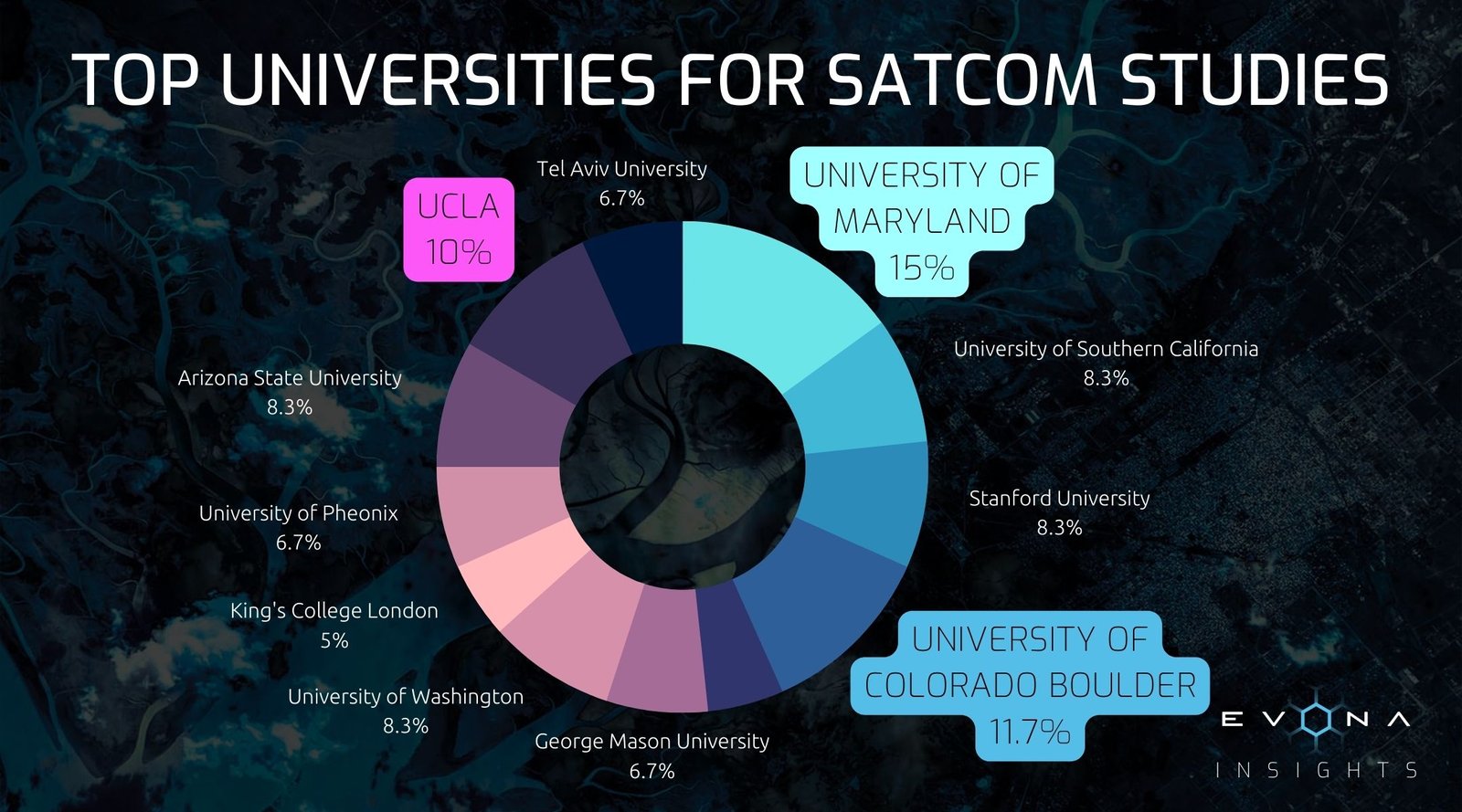
The Top Universities for SATCOM Studies

The Satellite Communications (SATCOM) sector is witnessing a remarkable surge in growth, fueled by groundbreaking advancements in technology and the emergence of private space companies.

This dynamic landscape is creating a wealth of opportunities, continually redefining and revitalizing this forward-thinking field. For those drawn to the allure of space exploration, the complexities of satellite communication, and the thrill of revolutionary technology, a career in the SATCOM industry might be a perfect fit.

Education serves as the springboard for a successful career in this rapidly evolving industry. Maintaining a competitive edge in SATCOM requires a keen eye on current trends, an ear to the ground for emerging talent, and an ability to adapt. For employers, identifying which universities are churning out the brightest minds in SATCOM offers a strategic advantage during recruitment processes. For students and those at the onset of their career, selecting the right university is a critical first step towards carving a successful career path in SATCOM.

EVONA recognizes the crucial role that education plays in crafting the future of SATCOM. With the industry’s rapid expansion, the need for highly educated, forward-thinking individuals in SATCOM is at an all-time high.

By analyzing employment data from leading SATCOM companies, we’ve identified a select group of universities that consistently produce the industry’s top talent. Interestingly, 90% of graduates landing jobs in the SATCOM sector graduate from American universities, with the University of Maryland leading the charge.


Top 10 Universities for SATCOM Studies by Industry Hires

  1. University of Maryland, US 
  2. University of Colorado Boulder, US 
  3. University of California (UCLA), US 
  4. Stanford University, US
  5. University of Southern California, US 
  6. University of Washington, US 
  7. Arizona State University, US 
  8. George Mason University, US 
  9. University of Phoenix, US
  10. Tel Aviv University, Israel 

When it comes to the world of SATCOM, the US stands as a dynamic hub of innovation, forging ahead with remarkable advancements in space exploration and technology.


The US: A Global Hub for SATCOM Education

The US has earned a global reputation as a leading hub for SATCOM education, a reputation that has been forged through its vigorous space programs, innovative research environments, and an influential network of world-leading institutions.

The Universities Space Research Association (USRA) lies at the heart of this educational framework. As a vital link, USRA connects universities, government bodies, and a wide spectrum of other organizations. By offering an expansive array of resources, driving research opportunities, and delivering expert technical insights, USRA fuels a collaborative atmosphere that nurtures innovation and growth. Its steadfast commitment to high-quality standards elevates the industry relevance of its member universities’ research, establishing a gold standard within the sector.

Also central to the US’s prominence in SATCOM education is the relationship between NASA and leading American universities. This partnership, enabled by regular funding for space exploration initiatives, creates a robust foundation for the sector’s development. NASA’s commitment to fostering academic programs focused on space-related studies accelerates progress in the SATCOM industry, effectively preparing students to navigate the constantly evolving opportunities and challenges within the field.


Tel Aviv: A Global Hub for SATCOM Education

While the United States dominates the SATCOM landscape, there are notable universities outside the US that excel in providing world-leading education in satellite communications. Situated in Israel, Tel Aviv University has distinguished itself as an international center for SATCOM education, drawing in students and researchers from across the globe.

With strong industry ties, research collaborations, and cutting-edge facilities, Tel Aviv attracts students and researchers worldwide. Its strategic location in Israel’s thriving tech ecosystem offers abundant opportunities for internships, collaborations, and networking with satellite communication companies and start-ups. The Department of Electrical Engineering, led by esteemed faculty, also provides rigorous programs covering wireless communications, signal processing, and satellite systems. Tel Aviv University fosters innovation and entrepreneurship, encouraging students to pursue groundbreaking ideas and contribute to SATCOM industry growth.


The Top Three Universities for SATCOM Studies


University of Maryland

  • Location: Baltimore, Maryland
  • Gender Split: 51% male, 49% female
  • Total Enrollment: Approx 41,200 students
  • USRA Membership: Yes
  • Funding: NASA allocated $32.5 million to extend its partnership with the University of Maryland, enabling continued management of data on small celestial objects—a field significantly advanced by UMD’s research
  • World Ranking for Space Science: 24th
  • Notable Collaborations: Partnerships with NASA’s Goddard Space Flight Center and the Joint Space-Science Institute (JSI)
  • Key Departments: Department of Astronomy, Department of Aerospace Engineering, and Maryland Robotics Center
  • Relevant Courses: Offerings include spacecraft systems and design, wireless communications, signal processing, space robotics, and spacecraft autonomy
  • Geographic Benefits: Proximity to Washington, D.C. offers numerous internship and employment opportunities with government agencies and private companies. Close ties with NASA’s Goddard Space Flight Center provide unique opportunities for research and learning.


University of Colorado, Boulder 

  • Location: Boulder, Colorado
  • Gender Split: 55% male, 45% female
  • Total Enrollment: Approx 37,000 students
  • USRA Membership: Yes
  • Funding: Top university recipient of NASA research awards
  • Notable Collaborations: Partnerships with NASA, National Oceanic and Atmospheric Administration (NOAA), and National Institute of Standards and Technology (NIST)
  • Key Departments: Ann and H.J. Smead Department of Aerospace Engineering Sciences, Laboratory for Atmospheric and Space Physics, BioServe Space Technologies Center, Department of Electrical, Computer, and Energy Engineering
  • Relevant Courses: Course offerings include space and satellite systems, wireless communications, signal processing, and control systems
  • Geographic Benefits: In the heart of the American aerospace industry, students benefit from a rich network of space research organizations and companies. Boulder also offers an excellent quality of life, fostering a positive learning environment.


University of California, Los Angeles (UCLA)

  • Location: Los Angeles, California
  • Gender Split: 40% male, 60% female
  • Total Enrollment: Approx 44,000 students
  • USRA Membership: Yes
  • Funding: Ranked as a top public university for securing federal funding, including for space-related research and SATCOMs
  • Notable Collaborations: Collaborative partnerships with NASA, NOAA, and Jet Propulsion Laboratory (JPL)
  • Space Missions: UCLA has participated in over 50 space missions
  • Key Departments: Department of Physics and Astronomy, Department of Electrical and Computer Engineering, Institute of Geophysics and Planetary Physics, UCLA’s Galactic Center Group
  • Relevant Courses: UCLA offers courses in astrophysics, space physics, signal processing, network communications, and wireless technologies.
  • Geographic Benefits: Located in the global hub of technology and entertainment, students enjoy access to a diverse range of industries. Proximity to companies in the Silicon Valley and renowned institutions like JPL offer excellent internship and job opportunities.


The influential role these leading universities play in shaping the SATCOM industry’s future is undeniable. They provide the knowledge, exposure, and hands-on experience necessary for the next generation of professionals to lead and innovate in this rapidly evolving field. For those aspiring to build a career in SATCOM, these institutions stand as a beacon, offering a combination of world-class education, research opportunities, and strong industry ties.

As the SATCOM landscape continues to expand and redefine itself, the question for prospective students and professionals is: how will you leverage these opportunities to forge your unique path in the industry?

Whether you’re an employer in search of top-notch talent, a student figuring out your academic trajectory, or a professional considering the next steps in your career, we’re here to give you guidance and advice. Your SATCOM journey starts with a conversation, so let’s talk.

The Top Fields of Study Shaping the Future of the SATCOM Industry

The Satellite Communication (SATCOM) industry is at the heart of our evolving digital world.

As the doors to space exploration open wider and communication technologies advance, SATCOM is blossoming, evolving, and expanding.

As your partner in space industry staffing, we’ve pinpointed nine key fields of study that are currently steering this change. Each field is unique, brimming with opportunities and new paths to explore. If you’re ready to dive into the SATCOM industry, these areas of expertise could be your ticket. Here’s why:


Electrical and Electronics Engineering

Listed as 21.8% of SATCOM companies’ top field of study, electrical and electronics engineering is the bedrock of SATCOM. Electrical engineers are the trailblazers who design, develop and manage the components essential to the operation of satellites. This includes power systems, telemetry devices, and other components, all of which are built to perform consistently in the harsh, unforgiving realities of space. Alongside them, electronics engineers masterfully craft miniature circuits and devices, optimising satellite weight and size while amplifying functionality. Together, this discipline forms a vanguard that consistently pushes technological boundaries in SATCOM.


Computer Science

Computer science, at 14.1%, is an indispensable cornerstone in the SATCOM industry. It’s computer scientists who design and optimise the intricate algorithms and data structures that satellites rely on for their operation. They work tirelessly to ensure secure and efficient communication between space and earth, maintaining the integrity and accessibility of the massive amounts of data satellites handle. With their expertise, satellites become more than hunks of metal in orbit—they become sophisticated instruments capable of advancing humanity’s reach and understanding.


Computational Science

With a substantial 9.8%, computational science – not to be confused with computer science – plays a pivotal role in the SATCOM industry. Computational science is an interdisciplinary field that uses computer science techniques, mathematical models, and simulations to solve complex problems in various scientific disciplines. It involves the practical application of computer science and mathematics to real-world problem solving. This discipline leverages the power of computational tools to simulate and solve complex physical problems associated with satellite communications. By creating models of intricate situations and systems, computational scientists offer invaluable insights into satellite design, performance optimisation, and risk mitigation. They are the analytical powerhouses who help us navigate the complexities of creating and managing advanced satellite systems.


Mechanical Engineering

Mechanical engineering, standing firm at 9.8%, brings pragmatism to the innovative world of SATCOM. These engineers concentrate on the physical systems within a satellite, focusing on aspects like thermal control and mechanical structures that maintain the satellite’s physical integrity. Their work ensures that satellites can withstand the harsh conditions of space for extended periods, thereby enhancing the longevity and reliability of our space-based communication networks.


Aerospace, Aeronautical, and Astronautical Engineering

Carrying a significant 9.5% of the weight, Aerospace, Aeronautical, and Astronautical Engineering builds the backbone of the SATCOM industry. These talented engineers design, construct, and test the spacecraft that eventually transform into our communication satellites. They are the bridge between theoretical designs and tangible, functioning satellites, their work allowing us to reach beyond the confines of our planet and into the celestial unknown.


Computer Systems Networking and Telecommunications

Holding 7.3% of the field, specialists in computer systems networking and telecommunications ensure that our planet remains interconnected. They design and implement the networks that facilitate seamless communication between satellites and earth stations. Their efforts transform a collection of individual devices into an integrated global web, keeping the world linked, no matter how remote the location.


Electronics

At 7.3%, specialists in electronics are indispensable to the SATCOM sector. These experts are responsible for the intricate electronic components that keep satellites functional. Through their meticulous work, they ensure that every signal, every byte of data, is transmitted and received correctly, enabling a symphony of seamless communication that spans the globe.


Industrial Engineering

Industrial engineers, also at 7.3%, bring a unique and practical perspective to the SATCOM industry. Their role is to enhance operational efficiency and cost-effectiveness within the sector. They ensure processes are streamlined, resources optimised, and that the production and operation of satellites remain economically viable. Their ingenuity in creating sustainable and efficient systems is a crucial contributor to the long-term growth and environmental responsibility of the industry.


Telecommunications Engineering

Finally, accounting for 7% of specialities, telecommunications engineering is vital to the efficient operation of SATCOM systems. These engineers manage the precious spectrum resources, promoting their efficient and effective usage. Their mastery prevents a chaotic scramble for bandwidth and ensures orderly, reliable communication channels.


Advancing Your Career with EVONA

Kick-starting your career in the exciting realm of SATCOM is an exhilarating prospect, and having EVONA as your partner can give you a significant advantage. As a leading specialist in space industry staffing, we have an intimate understanding of the industry and a deep network of connections with innovative organisations driving SATCOM evolution.

With EVONA, you gain more than just access to job listings. We work with you to understand your unique skills, passions, and career ambitions. Then, we connect you with opportunities that not only align with your expertise but also with your future aspirations, ensuring a fulfilling and impactful career.

Our commitment to you extends beyond the recruitment process. We firmly believe in the value of lifelong learning, and we provide continuous support through resources and guidance tailored to your professional development. With the SATCOM industry advancing at a rapid pace, we ensure you stay informed about the latest trends, technologies, and opportunities.

At EVONA, we’re dedicated to not just helping you find a job, but shaping your career and contributing to the future of the SATCOM industry. Begin your journey with us, and together, we will reach new heights in the ever-expanding universe of satellite communications.


The Gravity of Unconscious Bias in the Space Industry

The space industry thrives on the collaboration of diverse and exceptional minds, working together to push the boundaries of exploration and innovation.

However, despite its focus on breaking new frontiers, the sector is not immune to the pervasive influence of unconscious bias. These deeply ingrained beliefs and attitudes can unknowingly shape decisions and actions, creating challenges for underrepresented individuals and perpetuating harmful stereotypes.

According to a survey by Deloitte, over 60% of employees report experiencing bias in their workplace, leading to significant consequences in various aspects of their professional lives. Employees who perceive bias at large companies are nearly three times as likely to be disengaged at work, costing U.S. businesses an estimated $450 billion to $550 billion per year. In addition, those who perceive bias are more than three times as likely to plan to leave their current jobs within the year.

Unconscious bias can manifest in many forms, making it even more complex to understand and manage these cognitive behaviors.

Some common types of unconscious biases include:

• Gender bias: A preference for one gender over another, often stemming from deep-rooted beliefs about gender roles and stereotypes. • Affinity bias: An unconscious preference for people who share qualities or viewpoints with us or someone close to us. • Halo effect: The tendency to focus on one particularly strong positive trait about someone, overshadowing our judgment and preventing us from recognizing their negative traits. • Horns effect: Concentrating on one poorly perceived trait, which can cloud judgment of an individual's positive qualities. • Beauty bias: A social behavior that often adversely affects women in the workplace, such as viewing attractive women as less competent than their male counterparts or treating tall individuals as natural leaders. • Confirmation bias: Selectively seeking information to support an existing opinion without considering the bigger picture.

In severe cases, these biases can lead to workplace bullying, unlawful harassment, or discrimination, putting businesses at risk of reputational damage and financial costs.


The Impact of Unconscious Bias in the Workplace


Hiring Decisions

In recruitment, biases can lead to generalizations that determine the right candidate for a job based not on their skills, but on factors such as their name or nationality. A study by Raconteur found that white British applicants received a positive response from employers 24% of the time, compared to only 15% for ethnic minority applicants with identical CVs and cover letters. Another research showed that resumes featuring white-sounding names are 50% more likely to get an interview than ethnic-sounding names, even with identical qualifications. Gender biases are also common, with certain roles historically attracting one gender over another, such as female nurses or male engineers. This not only suppresses diversity but also impedes the industry’s capacity for innovation and problem-solving.


Team Dynamics and Productivity

The presence of unconscious bias within team dynamics erodes collaboration and productivity. Employees subjected to prejudice may feel alienated, leading them to withhold valuable ideas and solutions. This sense of exclusion can result in disengagement, which translates to considerable losses for organizations. In fact, a study by Coqual revealed that employees who perceive bias are 2.6 times more likely to report having withheld ideas and market solutions during the previous six months. Addressing and mitigating unconscious bias is essential to foster a supportive and inclusive environment where all team members can contribute effectively, ultimately driving the success of the organization.


Company Culture and Retention

A company culture pervaded by unconscious bias fosters an environment where stereotypes are perpetuated and specific groups are marginalized. Shockingly, 48% of African American women and 47% of Latina women have reported being mistaken for administrative or custodial staff, highlighting the prevalence of harmful stereotypes. Such bias also impacts employee retention, as those who perceive bias in the workplace are more likely to consider leaving their current job within the year. Moreover, the financial implications of workplace bias are substantial, as it contributes to the loss and replacement of over 2 million American workers annually due to unfairness and discrimination. Addressing unconscious bias is, therefore, crucial not only for promoting a diverse and inclusive work environment, but also for reducing the considerable financial burden it places on organizations.


Performance Evaluations and Career Advancement

Performance evaluations, promotion, and career advancement are areas where subconscious bias can have significant impacts on employees and employers. Biases may influence how employees are assessed, with some individuals being undervalued or overvalued based on factors unrelated to their actual job performance. A study published in the American Economic Review found that women received 14% lower performance ratings than men with similar performance in male-dominated occupations. This negatively impacted their promotion rates and career advancement opportunities. Additionally, the 2021 Women in the Workplace report by McKinsey & Company and LeanIn.Org found that women held only 38% of managerial positions in the United States, and women of color held a mere 12% of these positions, demonstrating barriers to career advancement for underrepresented groups.


Legal Implications

When subconscious bias results in discriminatory practices, employers may face legal repercussions. According to the U.S. Equal Employment Opportunity Commission (EEOC), the agency received 67,448 charges of workplace discrimination in the fiscal year 2020. Although this figure is lower than previous years, it highlights the ongoing presence of discrimination and bias in the workplace. In the same year, the EEOC secured $439.2 million for victims of discrimination through voluntary resolutions and litigation. This underscores the significant financial and reputational risks for organizations that fail to address subconscious bias and discriminatory practices.


Strategies for Companies to Mitigate Unconscious Bias

Addressing unconscious bias in the space sector is crucial for fostering an inclusive and innovative industry. Here are several strategies companies can implement:


  • Working with a Space Industry Staffing Specialist: Partnering with a staffing agency that specializes in the space industry can help mitigate unconscious bias. These agencies have a deep understanding of the unique needs and challenges within the sector and can provide access to a diverse pool of qualified candidates. By leveraging their expertise, companies can ensure a more objective and inclusive hiring process that minimizes the impact of unconscious bias.
  • Training and Awareness: Regular training and workshops on unconscious bias can help employees recognize and confront their own biases. By encouraging self-reflection, employees can make more equitable decisions in recruitment, team management, and workplace interactions.
  • Objective Hiring Practices: To minimize unconscious bias in hiring, companies can employ objective evaluation methods, such as standardized assessments and blind résumé reviews. Additionally, promoting diversity in recruitment panels and leveraging diverse candidate sourcing can help ensure a more equitable selection process.
  • Inclusive Policies and Practices: Companies should establish inclusive policies, including flexible work arrangements, mentorship programs, and targeted initiatives for underrepresented groups. These practices not only create a more inclusive work environment but also demonstrate a commitment to diversity and equal opportunity.
  • Leadership Accountability: Leaders in the space sector must be held accountable for cultivating an inclusive culture. This can entail setting diversity goals, regularly assessing progress, and addressing unconscious bias at all organizational levels.
  • Empathy and Open Communication: Fostering empathy and open communication within the organization can help break down barriers and challenge biases. Encouraging dialogue and providing safe spaces for employees to share their experiences can lead to a deeper understanding of the impact of unconscious bias and promote allyship among colleagues.
  • Metrics and Continuous Improvement: Tracking diversity metrics and evaluating the success of implemented strategies is essential for continuous improvement. By monitoring progress and adjusting initiatives as needed, companies can stay committed to building a more inclusive workplace.


Addressing unconscious bias in the space sector is vital for unlocking the full potential of a diverse and groundbreaking industry. By actively embracing strategies that combat biases, companies can cultivate an inclusive environment where every individual, regardless of background, can flourish. As we embark on the quest for new frontiers, it is crucial that we harness the wealth of diverse talent and innovative ideas, ensuring a dynamic and boundless future for the space sector.


Thinking Differently: Unleash the Power of Invisible Diversity (Project IDD Part 3)

Welcome back to Project IDD, where we’re giving organizations the tools and insights they need to build a truly diverse team.

Following on from parts 1 and 2, we’re redefining perceptions of diversity and inclusion from a new perspective. In Project IDD Part 3, we’re exploring the power of invisible diversity.

Inclusion is the key to diversity, and diversity is the key to innovation. While many have made progress in promoting the importance of diversity, most still overlook the role of inclusion in the plight for true equality.

Diversity isn’t achievable in any organisation without inclusion. Companies must create an inclusive environment before even thinking about creating a diverse organisation. Those companies focused directly on diversity face indirect discrimination by hiring individuals based upon their ‘diversity criteria.’


Invisible Diversity

The attributes that can contribute to diversity are practically endless. Not all of these characteristics can be readily observed.

Diverse characteristics include things we can see, such as gender, race, or age, as well things we can’t, like skills, values, experience, personality, background, culture and neurodiversity. Alongside visible diversity, non-visible characteristics are a key element of a diverse workforce and a dynamic, innovative and forward-thinking team. If you’re only measuring diversity by visible differences within your organisation, your workforce won’t be truly diverse.

Often, people assume that if a workforce is visibly diverse, then it must also be diverse in other ways, such as in skills, experiences, and values. However, this is not always the case. It is important to recognize that visible diversity, such as race and gender, is not the only aspect of diversity in the workplace. It is essential to be inclusive of all characteristics, both visible and invisible, to build a truly diverse and inclusive workplace.

When we value and embrace diversity in all its forms, we open ourselves up to new ideas, perspectives, and ways of thinking. People with diverse backgrounds, skills, and experiences bring a wealth of knowledge and understanding to the team. Each individual’s unique identity, shaped by a multitude of factors, allows them to approach things from a unique angle.

Someone with a different educational background or professional experience may approach a problem in a way that is different from their colleagues. Similarly, individuals with different perspectives and experiences can bring new ideas to the table, encouraging the team to think outside of the box. These unique mindsets allow teams to consider all possible solutions and arrive at the best solution.

When it comes to disability inclusion, It’s important to understand not all disabilities are visible. They can range from mental health conditions to chronic pain or learning disabilities, which are often misunderstood or overlooked in the workforce.

In Project IDD Part 2, we spoke to Eric Ingram, CEO and co-founder of SCOUT, about the importance of disability inclusion. Eric is a passionate ambassador of disability inclusion, and the ways different perspectives, backgrounds and experiences can take space organisations to the next level. We also speak to Danni, EVONA’s digital and direct marketing manager, about her advice to organizations as a disabled person herself.


We spoke to space industry trailblazers, SkyFi, get their take Skyfi logoon diversity and inclusion in the sector.

SkyFi are a group of explorers, scientists, engineers, and analysts charting new territory and bringing the farthest corners of the world closer to home. They believe that everyone should have access to the benefits of space technology, and are passionate about democratizing space to make this a reality.

On top of driving technological innovation, SkyFi are passionate about making the space sector a more inclusive and welcoming place for all. Their unwavering dedication to their mission and commitment to diversity and inclusion make them a leading force in the space sector.


How have your teams’ individual characteristics, background, skills, experiences, contributed to the success of your company?

“As a user-focused space company, we recognize that individuals with unique experiences and expertise can bring various perspectives and fresh ideas to our projects. We cast a wide net to find the best talent, bringing in individuals with broad experience who are able to connect with customers on a human level. Our employees have independence and ownership over their work and everyone plays a crucial role in building our company into what we know it can be. We are also a fully global team, with teammates across 6 time zones, which allows us to share cultures, viewpoints, and ideas that others may not have considered. Our goal is to provide the most up-to-date imagery and data about planet Earth to everyone on Earth (and beyond!). To do so, it only makes sense that our team represents everyone on Earth as well.”


How does your organization create an inclusive workplace environment for individuals with invisible diverse characteristics?

“At SkyFi, we’re passionate about making Earth observation accessible to all, and this goal is at the heart of everything we do. We aim to foster a culture of acceptance and gratitude, where every team member is recognized for their unique contributions to our shared mission. By encouraging open communication, promoting inclusive policies and practices, and providing support and resources, we make sure that our employees can focus on growing as individuals and as leaders. Every day we make a concerted effort to ensure that all voices are represented, heard, and have a true seat at the table.”


Neurodiversity Inclusion

The essence of diversity lies in embracing and valuing different perspectives and approaches. In today’s fast-paced business landscape, companies are recognizing the benefits of diversity to unlock innovation, gain fresh insights, and better adapt to change.

Neurodiversity (ND) is a prime example of how companies are broadening their definition of diversity. In simple terms, ND refers to natural variations in the way a person’s brain processes information. Some examples of ND are Autism or Asperger’s Syndrome (AS), Attetion Deficit Hyperactivity Disorder (ADHD) or Attention Deficit Disorder (ADD), dyscalculia, dyslexia, and dyspraxia.

According to the Office of National Statistics 64% of employers still admit to having ‘little’ or ‘no’ understanding of neurodiverse conditions. 20% of the population is considered to be ND. The unemployment rate for people with autism is 85%. Average or above-average IQ scores (over 85) occur in 44% of people with autism

By welcoming and supporting neurodiverse individuals, companies can tap into a diverse pool of talents, skills, and perspectives. ND employees add enormous value to any organization, bringing strengths like pattern recognition, memory , mathematics, attention to detail, outside-the-box thinking, and focus. They can see things from different angles, and they can come up with solutions that others may not have considered.

Unfortunately, many organizational structures don’t allow neurodiverse individuals to thrive. Both within hiring processes and role structures, there are exclusive processes and procedures that are hindering this talent.


Theo Smith author of Neurodiversity at WorkWe spoke to Theo Smith, author of Neurodiversity at Work: Drive Innovation, Performance and Productivity with a Neurodiverse Workforce, about the barriers neurodiverse individuals face in the workplace, and how organizations can provide support.

Theo is a pioneering champion for neurodiversity, driven by his own personal experiences as a neurodiverse individual. Recognizing the lack of awareness around this topic, Theo founded Neurodiversity At Work LTD, an organization dedicated to raising awareness about the importance of neurodiversity in the workplace. As a sought-after diversity and inclusion speaker, Theo encourages audiences to embrace neurodiversity and understand the benefits of creating inclusive and welcoming environments for all individuals.


What are some of the specific challenges that neurodiverse individuals face in the workplace?

“If we look into the workplace, the barriers the ND people are facing are systems and processes that have not been built with them in mind. It’s very simple, the diagnostic model, right? What happens is, if you’ve got questions as part of an interview process that are not clear, they’re ambiguous, because of the way some of our brains work, we may overanalyze what is being asked. Therefore, if it’s not clear, we may start to second guess what the question may be. So, what we’re starting to do is work three times harder trying to answer that question than somebody else. It’s because the question, in the slight nuanced way that it’s being asked, is confusing to us.

If you imagine an interview process, how many questions do you have an interview process? How much thought and consideration is being put into them? Are your job adverts clear, accurate and up to date? How many points of information, communication, of contact have you got that may be confusing? We know this has an impact on women, and it has a greater impact on ND talent more broadly. These people have been questioned so much more, they’ve been misunderstood for so long, and they’ve been challenged around their so-called problems and why they need to be fixed, which they don’t.

So there’s a lot of self reflection and self doubt, and rumination of thoughts and ideas and concepts that give us very, very busy brains. If stuff isn’t clear and concise, it takes us too much time to be able to respond, and therefore we can look a bit odd in an interview situation. We either don’t speak, speak too much, or go off on tangents and for the person interviewing, if you’ve got a scoring mechanism, like in a lot of bigger organizations where it’s very structured, this is the problem that you have, because the there is no room to go off piece.”


How can we support neurodiverse individuals in both their professional and personal development?

“If we’re thinking about supporting employees, you’ve got to understand that employees and managers often do not know their challenges and strengths. Young people certainly have that challenge. Young people, often coming out of university or college, generally have a lack of focus around what their strengths are and where they should go from here.

My wife, because she was academically brilliant, went into law. But quite quickly realized after a couple of years, it was the worst place in the world for her to be because of the way that her brain works, it just was not right for her. But because of the lack of support, it meant that she ended up making some poor early choices. That makes it really difficult to go back on yourself and rewind. So, the sooner we can let individuals within the organizations better understand their strengths and their challenges and how they’re aligned, the more power we can give to those individuals.

That then translates to managers being more informed and having greater power around supporting their workforce. That combination is critical and key, but often we don’t think about it. We say managers must become more inclusive, managers must understand people on the autism spectrum better, but the problem is if the manager comes along and goes, “Hey, I wanna be really inclusive. How can I help you?” And the employee just goes, “I have no idea. I’m kind of okay today, but tomorrow when I’m crashing and burning, I still won’t know what to tell you.” Therefore, there’s the disconnect, but you can’t put all the onus on the managers to go and find out each individual.

You’ve then got to empower the individual to be able to better understand their strengths and their challenges. And that’s where organizations need to really start to double down on. And I’m telling you that won’t just help the organization in their performance, if you can get in early enough with individuals, you could literally be transforming that individual’s future pathway, right throughout their life. They become more productive, have more self-worth and value, way beyond that moment. Because often we make too many poor decisions too early, that means we’re fighting against the tide for too long. And if you’ve got a CV that looks like it’s got three or four mistakes, you might be working really hard to then get organizations to take you seriously.”


As Theo explains, to attract and retain neurodiverse talent, you need to analyze your company’s structure and processes. Inclusive advertisement and recruitment strategies are a key part of this.

We cover this from a broader perspective in Project IDD Part 1 and Project IDD Part 2, but for now, we’re keeping the focus on neurodiversity.


Chris Bell, senior technical recruiter - EVONAWe spoke to Chris Bell, EVONA’s senior technical recruiter, about his unique perspective on ND inclusive recruitment.

Chris was diagnosed with Asperger’s Syndrome (AS) aged four. Although it’s something he has rarely spoken about in the past, he wants to use his position as part of the 16% of people with AS in full time work to make a difference.

Based on your experience in the recruitment industry, as well as experiences as a neurodiverse candidate yourself, what advice can you give to companies looking to be more inclusive of neurodiverse individuals during the recruitment and new starter process?

“For me, it’s about creating an environment where people feel comfortable to talk about their own personal ND. It’s easy to speak generically about it, but without giving the people it affects the space to talk and make an impact, there will be no change.

During the new starter process, really listening to the individual is vital. Everyone is different, so for example, don’t tar everyone with AS with the same brush. The spectrum is vast and what is a struggle for one person may not be for another. In these cases, inclusion means:

Having clear, concise, and accurate communications. Not asking ambiguous or unclear questions. Asking what accommodations you can make so they can work comfortably and efficiently, e.g. providing noise cancelling headphones, allowing hybrid working

To improve the hiring process for ND candidates, employers should rethink typical interview processes. While ND individuals can excel in specific areas, some may struggle with performing well in interviews that rely on social cues. For instance, people with AS may find it challenging to maintain eye contact or communicate verbally. To combat this, employers may want to consider using “work sample” tests, specifically designed to assess a candidate’s abilities and skills related to the role they are applying for by having them complete tasks relevant to the job. This approach provides a more accurate assessment of a candidate’s potential, particularly for an ND individual.”


What advice would you give to a neurodiverse individual for the job application and interview processes?

Hmmm I should be able to give a good answer considering I am one of these people….

I would recommend that candidates ask questions around what the company are doing in terms of inclusion in general, as well as their stance on neuro-inclusion. It’s about finding a company who doesn’t just accept the neurodiversity – this is the bare minimum. It’s about embracing it and having people with different backgrounds to come together to achieve great things… or recruit in my case!

Personally, I believe it’s completely up to each individual if they wish to disclose or not. From experience, I know how daunting this prospect can be. A load of things run through your head, including how it could affect way people could see you, how you could be treated at work, will declaring this mean I won’t get the job…

There are different opinions when it comes to disclosing during the hiring process. Some people strongly believe in being upfront about it right from the start, while others feel it’s only necessary if they need a special accommodation during the interview. At the end of the day, it’s really a personal decision, and everyone should do what feels right for them based on their own needs, preferences and comfort level.”


A truly inclusive workplace is one that recognizes and embraces all elements of diversity.

Inclusivity is unique to each individual. To achieve genuine workplace inclusion, it’s essential for your company to establish a structure that not only attracts, but nurtures and retains talented staff from all walks of life. With this fresh approach, your business can unlock a range of untapped potential that will drive success and innovation.

Throughout the Project IDD trilogy, we’ve covered all bases of diversity and inclusion. We’ve shown companies exactly how to reassess and restructure their processes, flipping their old understanding of D&I on its head.

Using these tools, we know you’ll soon understand the true value of inclusion first-hand. We truly hope you use these facts, figures and insights to drive meaningful and long-lasting change through the incredible work you do, with the backing of a strong, dynamic, and innovative team.

Business Case for Diversity and Inclusion in the Space Industry

The space industry is a driving force for innovation, economic growth, and human advancement.

As the sector continues to drive progress, it’s crucial for space organizations to understand not only the moral case, but also the substantial business benefits of diversity and inclusion. Embracing these values is the key to unlocking the collective power that will propel the industry to even greater heights.

Research consistently demonstrates that diverse teams are more innovative, productive, and ultimately, more profitable. We’re drawing on these staggering statistics to inspire space organizations to take the lead in fostering diversity and inclusion. By harnessing the full spectrum of talents, backgrounds, and perspectives, we can overcome the immense challenges that lie ahead and create a sustainable, prosperous future in space.


Increased Revenue and Profitability

  • A 2021 by McKinsey found that corporations identified as more diverse and inclusive are 35% more likely to outperform their competitors.
  • Diverse companies are 70% more likely to capture new markets, according to the Harvard Business Review.
  • According to a study by the Boston Consulting Group in 2018, companies that had a higher level of overall diversity experienced a 19% increase in innovation revenues and a 9% rise in EBIT margins on average. This finding is especially significant in the space industry, where success largely depends on innovation and the use of state-of-the-art technology.
  • Research conducted in 2020 revealed that companies having over 30% female executives performed better than those with 10-30%. Additionally, companies in the top quartile of racial and ethnic diversity outperformed fourth-quartile companies by 36% in terms of profitability.
  • Clear Company reported that companies with an equal representation of men and women in their workforce have the potential to generate up to 41% higher revenue. Additionally, according to McKinsey, gender-diverse companies have a 15% greater likelihood of achieving higher financial returns.
  • Throughout 2022, 55% of the companies that became inactive on the Fortune 1000 had either one or no women serving on their boards. In contrast, 45% of the companies on the index had at least 20% of their board seats held by women.
  • According to a research study carried out by Accenture in collaboration with Disability:IN and the American Association of People with Disabilities, companies that prioritize hiring individuals with disabilities generally tend to outperform others. Profit margins are around 30% higher, net income 200% higher, and 28% higher revenues.


Enhanced Collaboration, Engagement, and Decision Making

  • According to a report by People Management, teams with diverse backgrounds and experiences are 87% more effective at making decisions. The report indicates that gender-diverse teams make better business decisions 73% of the time, while teams consisting of individuals from different age groups and geographic locations make better decisions 87% of the time.
  • According to a projection released by Gartner for 2022, organizations that cultivate a diverse and inclusive culture in their frontline decision-making teams were expected to surpass their financial targets in 75% of cases. They added that gender-diverse and inclusive teams outperformed those that were less inclusive and gender-homogeneous by 50%.
  • McKinsey conducted a study that found employees who feel included in their organization are three times more likely to feel excited and committed to the organization’s mission compared to their peers who do not feel included.


Strengthened Reputation and Market Position

A company’s reputation and market position can be significantly influenced by its commitment to diversity and inclusion. Today’s consumers are increasingly conscious of the values held by the organizations they support, and many prefer to align themselves with businesses that prioritize inclusivity. A diverse and inclusive workforce can help a company appeal to a broader customer base, ultimately boosting brand loyalty and market share. By championing diversity, space organizations can enhance their reputation and solidify their position as industry leaders.

Governments and regulatory bodies are paying closer attention to diversity and inclusion within the business sector. As a result, companies that prioritize these values are more likely to receive favorable treatment in the form of grants, contracts, and other opportunities. In the space industry, where public-private partnerships are increasingly common, this can be a significant advantage.


Preparing for the Future

As the space industry continues to grow and evolve, it must adapt to the changing global landscape. Demographic shifts, technological advancements, and new market demands are all shaping the future of the industry. By embracing diversity and inclusion, space industry companies can better understand and respond to these changes, ensuring they are well positioned to thrive in the coming years.

As we explain in the Project IDD trilogy, diversity is the goal, and inclusion is the key. Research shows that job candidates are drawn to companies where they feel aligned with the organization’s values. A sense of belonging leads to higher retention and satisfaction, while a lack of alignment results in homogeneity and increased employee turnover.

It’s not about building a visibly diverse workforce for the sake of ticking boxes. Space organizations need to understand that creating a truly inclusive work environment is the only way to both attract and retain talent from all walks of life. Unlock the true power of inclusion in Project IDD.


Embracing diversity and inclusion is no longer simply a moral imperative – it is a business necessity for the space industry. The statistics outlined in this article provide an undisputable case prioritizing these initiatives, demonstrating that diverse teams are more innovative, productive, and profitable.

By fostering a diverse and inclusive workforce, companies in the space industry can unlock new heights of innovation, gain a competitive advantage, and ultimately secure a sustainable and prosperous future in space. The time is now for the space industry to take a bold step forward and champion diversity and inclusion, propelling us toward a brighter future for all.

Project Inclusivity Drives Diversity: Part 2

Welcome back to Project IDD, where we’re giving space companies the tools they need to build a truly inclusive organisation.

We’re picking up where we left off in Part 1, challenging and reframing perceptions of diversity and inclusion to enable positive change across the space sector.

In Project IDD Part 1, we explored issues of diversity and inclusion from a gender perspective. We gave exclusive insights from two of our principle recruiters who achieved a 50/50 gender split in their placements, and told you how to attract and retain talented women in your organisation. In part 2, we’re delving into the complexities surrounding visible diversity in the space sector, and the vital role that inclusion will play in shaping the industry’s future.

We’ve said it before, and we’ll say it again – diversity isn’t achievable in any organisation without inclusivity. Inclusion needs to come first. It’s the driving force behind diversity. Too many companies are focused on ‘diversity’ purely on a surface level. Hiring candidates solely for their ‘diversity criteria’ is not a quick fix. You need to work out how to retain these individuals and value them for their unique contributions. In order to build a truly diverse workforce, companies need to first deal with issues of inclusion.

An inclusive workplace is essential to retain talent from all walks of life. If you’re bringing people into an workplace where they feel excluded, without a sense of belonging, pockets of isolation will form. These pockets are causing companies to miss out on retaining highly qualified individuals.

Having a workforce with different backgrounds and experiences bring new perspectives, ideas and skills to the team. These new perspectives lead to innovative new ideas and approaches to problem-solving, while helping organisations to better serve diverse customer bases.


The Business Case for Diversity

In case you’ve forgotten the business case for an inclusive workplace, here’s a reminder:Companies with racial and ethnic diversity are 36% more likely to outperform their peers. 73% of companies that employ gender equality practices are more profitable and productive than their counterparts. Companies that actively hire disabled employees have been found to have profit margins around 30% higher, net income 200% higher, and 28% higher revenues. 75% of inclusive companies exceed their financial target goals.

This isn’t new information. Across the space sector, companies that truly understand the benefits of a diverse workforce are outperforming their competitors. Those who don’t share this vision will be left in the dust. Organisations need to go past compliance with the Equality Act to build a working environment that welcomes, supports and retains talent from all walks of life.

Shelli Brunswick - COO - Space FoundationWe spoke to Shelli Brunswick about the true value of inclusion in her broad and deep understanding of the space sector.

Shelli Brunswick, COO of Space Foundation, is a passionate advocate of this message. She’s a leading role model in the space sector, and an active diversity and inclusion champion. Shelli received the 2021 Global Technology Leader award and was honoured as the 2020 Diversity & Inclusion Officer and Role Model.

What role will inclusion play in shaping the future of the space sector?

Inclusion equates to innovation. When we bring diversity to the table, that’s when we’re going to be more innovative, bring new ideas to market faster with better results, and optimize resources. We face major challenges here on Earth with climate change, and many of the potential solutions are rooted in space technology.

We have seen how space technology from the Apollo era — more than 60 years ago — has helped us here on Earth. We have benefited from formulated food, fire-retardant clothing, telecommunications, and healthcare innovations based on space technology. It’s critical that we continue to look to space innovation and the Artemis generation and how they can improve the quality of life on Earth now and for the next 60 years.

At $469B, the global space ecosystem is a healthy market to join. We need to keep inspiring the next generation of space contributors to explore space careers, and we need to keep promoting diversity among gender, geographies and generations for both STEM and non-STEM career opportunities available. Only then will we be able to attract the talent and accelerate the solutions needed to explore the universe and better life on Earth.”


What are the long-term consequences if we ignore issues of diversity and inclusion?

We can’t talk about solving our greatest challenges on Earth unless we invite diversity — genders, geographies, and generations — to the table. The best solutions are going to require time and an investment of resources, and those resources need to embrace a diversity of perspective and experience that comes from bringing everyone to the table to work together.

I had the privilege of meeting a 13th-generation Samurai woman at Dubai Expo 2020 during Space Week. She attended my session on “Space in Our Daily Lives.” After my presentation, she presented me with a pearl necklace. However, this wasn’t a typical pearl necklace; it was all irregular pearls with one pearl made of gold. The necklace’s message was that we are all imperfect until we come together and form a perfect union. Without diversity and inclusion at our tables, it will be difficult to form that perfect union that can solve our planet’s greatest challenges.”


No inclusive workplace was built in a day. It requires honest introspection and careful planning for companies to understand where the problems lie in their unique organisation. We’re helping you take this first step. From here, you can work towards building a culture of equality and inclusion that will take your company to the next level.


Visible Diversity

A diverse workplace isn’t necessarily an inclusive one. While many companies think the first step towards inclusion is building a visibly diverse team, this logic further contributes to feelings of isolation within the workplace. If you’re bringing people into an environment where they do not feel a sense of belonging, they will leave and take their talent to an inclusive organisation. This is known as tokenism.

Tokenism – the practice of making only a perfunctory or symbolic effort to do a particular thing, especially by recruiting a small number of people from under-represented groups in order to give the appearance of sexual or racial equality within a workforce.

Limiting people to and defining them by visible characteristics like race, ethnicity, gender, disability and age is far from inclusive. These assumptions stem back to unconscious bias, which is a huge roadblock on the road to inclusion.

Unconscious bias happens without our knowledge. It can influence how we make decisions, interpret events, and interact with others, even when we think we are being fair and objective. It often involves associating certain characteristics with certain groups, which can have a huge impact on creating an inclusive workplace.

Stereotyping people based on their physical appearance leads to a lack of understanding and appreciation for the distinctive skills, talents, and perspectives that each individual brings to the table. This not only hinders the growth and development of the individual, but it also limits the potential of the organisation as a whole. It’s essential for companies to create a culture of inclusivity and respect, where individuals are valued for their unique contributions and not judged based on their physical characteristics.

In a US inclusion survey: 64% of employees witnessed or experienced workplace bias in the last year. 62% had witnessed or experienced workplace bias at least once a month. 83%categorised this bias as subtle or subconscious.


Unconscious bias often creeps in during talent acquisition processes. People can create false preconceptions of a candidate based on something as simple as a name, instantly deeming them unfit for a role.

We spoke to two of our senior recruiters, Glen and Mike, about how companies can tweak their processes to ensure equity and inclusion.

Mike - Senior Principal Recruiter - EVONA

“Talent acquisition processes are a huge driver of diversity and inclusion issues. Without carefully planned recruitment strategies, a workforce can become increasingly homogeneous. Selection processes should be blind. You need to take preconceptions and stereotypes out of the equation if you want to build a strong team of talented and unique individuals.

Some recruitment processes can actually be counter inclusive. For example, within a non-diverse organisation, employee referrals often contribute to ethnicity, nationality and gender-related homogeneity. Traditionally, these referrals make up a third of hires. While being undeniably effective and convenient methods of recruitment, they can unintentionally create a diversity imbalance that increases over time.

To combat this, consider tracking your referrals to determine whether they sway towards a particular demographic. If they do, it’s time to consider how you can attract candidates from other underrepresented groups. Alongside this, you can cap employee referrals, or reassess and redistribute your recruitment budget towards more inclusive hiring methods.”


Glen - Senior Space Business Partner, EVONA

Employee benefits massively impact inclusion. It’s important for employers to tailor packages with a modern and holistic approach. By incorporating working practices, external responsibilities and personal wellbeing, your offering will appeal to and support a wider range of talented individuals.

Flexible working is a massively popular benefit that has a huge impact on the range of candidates you attract. By allowing your employees to work in a way that suits their needs, lifestyle and responsibilities, your company will appeal to a wider range of demographics.

A recent study found that over 60% of employees feel a 9-5 structure no longer allows them to maintain an healthy work-life balance. 53.16% said they felt reassured to know their employer would understand if they had to fit work around a personal matter. 68.57% said they would be more productive if they could work at times that suit them.

Flexible working can take many forms, such as ‘flexi-time’, which allows employees to choose their start, finish and break times, and remote or hybrid working. When it comes to remote working:

In a survey of employees with remote working benefits: 78% said it improved their work-life balance. 53% said they had fewer distractions. 52% were able to complete tasks faster. 'Remote jobs' is searched over 18,000 times per month in the UK on google - this is a 410% increase over the last 5 years.

Remote working also massively increases opportunities for people with disabilities.


Disability Workplace Inclusion

It’s important to remember that not all disabilities are visible. We’ll explore invisible disabilities in Project IDD Part 3, but for now, let’s discuss visible disabilities.

Despite repeated statistic proof that employees with disabilities are more reliable, loyal and punctual than non-disabled workers, some employers are quick to disability as a barrier. In some cases, it can automatically disqualify a candidate in their mind. These misconceptions cause companies to miss out on hiring skilled professionals who could make significant contributions to the space sector, as well as wider STEM industries. It’s a harmful and narrow-minded mentality that needs to be addressed.

Visible disabilities have been historically discriminated against. Even as part of the team, these employees are often overlooked and under-supported.

Disabled people are almost x2 as likely to be unemployed as non-disabled people & x3 as likely to be economically inactive. In the US, workers with a disability earn on average just 76% of their peers' salary. Research shows companies that hire and support talent with disabilities have: 20% higher revenue, 30% higher net income and 200% higher margins


Eric Ingram, CEO and co-founder of SCOUTWe spoke to Eric Ingram, CEO and co-founder of SCOUT, about the importance of disability inclusion.

Eric is a passionate ambassador of disability inclusion, and the ways different perspectives, backgrounds and experiences can take space organisations to the next level. He’s a board member of the Space Frontier Foundation and an ambassador and organising team member for Mission: AstroAccess, promoting disability inclusion in space exploration by paving way for disabled astronauts in STEM.

How does a diverse and inclusive workforce drive innovation?

The value in having a diverse team is that you get different perspectives, and those unique perspectives bring a myriad of new ideas and unique approaches to solving problems. Fostering creativity is the premise to drive the innovation we seek in the workplace, and that all starts with having the diverse backgrounds and experiences of an inclusive workforce. People with diverse backgrounds go through experiences in their lives that others will never encounter. Engaging these experiences and perspectives in the workplace enables negative experiences to be solved before there are problems, and more positive experiences to be integrated earlier on.”


·What is the current landscape for people with disabilities in the space sector, and what can companies do to build a truly inclusive environment?

“I regularly talk to people with disabilities who think the space sector isn’t for them. The concept of having “The Right Stuff” has proliferated for decades, and that archetype is pervasive for those outside of the space industry. At least 15% of the world’s population has a disability, so that’s up to 15% of the workforce that feels like they don’t belong and are being excluded as candidates. When there is conversation about diversity in the workplace, disabilities are regularly excluded, and this is detrimental to the incredible workforce we could all be building. We need to get to the point where seeing something like “wheelchair” or “blind” on a resume doesn’t lead to an automatic disqualification by the hirer. Job descriptions need to exclude disclaimers that discourage people with disabilities from applying. We need to be proactive in communicating inclusivity in our hiring practices and back words with action.”


Companies can hire and retain people with the skills they need, while demonstrating their value through inclusive practices and policies. In order to achieve this, organisations must ensure that all qualified applicants and employees have equal opportunities to succeed.


Danni - Digital and Direct Marketing Manager, EVONAEVONA’s digital and direct marketing manager, Danni, is living proof of the importance of disability inclusion.


Danni is an incredibly talented individual and a daily driving force behind EVONA’s success. After joining us on a placement year from university, the skills and experience she brought to the business were abundantly clear. We’ve made every possibly accommodation to ensure Danni has every opportunity to succeed and grow as part of the team.

“As somebody with a disability, I never thought I’d be able to maintain a professional career. I thought it would be a barrier to entry and something that would prevent me from staying in full-time employment. When I first joined EVONA on my university placement, it was clear how much they valued me and my contributions to the team. Every step of my experience here has been so accessible, that my disability has never been a barrier to my success.

In order to be truly inclusive, your company needs to be structured in a way that will welcome and support any qualified applicant that comes your way. Your company should be so inclusive that there are no possible barriers to entry. You need to embed accessibility into every step of the recruitment process. Only include core criteria in your job adverts, so leave out holding a driver’s licence if it’s not totally necessary, and clearly reference your equal opportunities policy. You should also make adjustments to the interview process where necessary. Advertise your office as accessible, provide flexible working options and promote disability inclusion in your company ethos. You can also provide access to internal and external support systems, as well as funding for reasonable adjustments.”


In today’s space ecosystem, the organisations that are visibly committed to fostering inclusion as a driving force for diversity are thriving. These companies serve as shining examples of how corporate entities can make a positive impact. There can be no excuses for not making diversity and inclusion a top priority in this day and age. The rest of the industry must followed suit in adopting these inclusive practices if they want to stay ahead of the curve.

EVONA is leading the space sector in building diversity through inclusive practices.

In Project IDD Part 3, we’re delving into the often-overlooked subject of invisible diversity. Our experts will examine the intricacies surrounding this aspect of diversity and demonstrate how embracing it can lead to truly transformative business innovation. With a fresh perspective, we’ll show how thinking differently about diversity can unlock untapped potential and drive business success.

Join us next time as we demonstrate the immense power that lies in embracing the full spectrum of diversity.


Project Inclusivity Drives Diversity: Part 1

Diversity and inclusion.
It’s a scalding hot topic.

The business case for inclusion is concrete. A diverse workforce is beneficial for businesses through increased innovation, creativity, communication, and consumer influence. This case has been statistically proven time and time again. Inclusive organisations perform better and are more likely to achieve their goals. Diversity drives innovation, and you can’t argue with the statistics:

Companies of ethnic diversity at executive level are 33% more likely to outperform peers. Senior leadership teams that are at least 30% female see a 15% increase in profitability. Companies that hire and support talent with disabilities have a 20% higher revenue, 200% higher net income and 30% higher margins.

The issue of diversity across stem can be attributed to many sources, not least the existing phenomenon of an ever-increasing homogenous workforce.

Research suggests that potential candidates are attracted to companies depending on how they perceive themselves to fit into the organisation. Those who have aligned values with the workforce are likely to feel accepted within the wider team, creating a sense of belonging that leads to higher employee retention and job satisfaction. Those who do not feel this way will leave, resulting in the gradual homogeneity of the organisation.

IF THIS IS TRUE, THEN THE SPACE SECTOR IS IN TROUBLE.

Within the space sector, as in other STEM industries, those from more advantaged socio-economic backgrounds are over-represented.

The US STEM workforce is 89% white and 72% male. Only 1 in 5 identify as female in the space sector and only 2% have a disability.

With such a staggering white male monopoly, it’s no surprise people from other demographics are feeling alienated. It’s clear that in order to create a more diverse industry, we need to take a new approach to diversity and inclusion.

To us, the phrase ‘diversity and inclusion’ is back-to-front. Diversity isn’t achievable in any organisation without inclusivity – inclusion needs to come first. This is our philosophy. At EVONA, we first address inclusivity with the companies we work with. Only then will they be able to solve issues of diversity.

According to Forbes, the main driver for leaving an organisation, by a staggering 62%, is company culture. Another study showed that almost half of black employees have left their jobs because of issues with diversity.

We question what the driver of this is. Did this happen because of a lack of diverse employees at the company, or because those who were hired were left isolated and without a sense of belonging?

A global study named workplace belonging as the number one driver linked to engagement and wellbeing. This surpassed ability for career growth and trust in leadership. Of those that felt a sense of belonging 91% were engaged in their work, in comparison to 20% of those who felt no sense of belonging. Those with a higher sense of workplace belonging also showed a 167% increase in their employer promoter score (their willingness to recommend their company to others). They also received 18 times more promotions and double the raises.

The problem is that companies are focused solely on ‘diversity’ from a skewed perspective. They hire individuals based upon their ‘diversity criteria’, BUT they’re recruiting employees into a workforce where they’ll ultimately feel alienated. This isn’t going to solve the issue.

70% of senior executives would leave their company for one that values diversity But what does ‘value diversity’ mean? It doesn’t mean numbers. It doesn’t mean statistics. It means understanding employees’ needs and providing equity across the organisation. It means inclusion.

THIS IS WHERE OUR ARGUMENT COMES IN.

The phrase ‘diversity and inclusion’ has become hollow in parts of the industry. It’snot just about tokenism, scratching the surface of diversity and thinking the job’s done. If you create an inclusive work environment, that appeals to and not only attracts, but retains people from all walks of life, diversity will increase organically. It’s not a quick fix to hire ‘diverse candidates’ – you need to work out what will make them want to stay.

So where do you start? There are many methods employers can implement to drive equality and inclusion in the existing workplace – a great place to start is measuring your workplace diversity. This will identify areas of concern, highlighting where your efforts are needed most allowing you to make a plan. The next logical step is to look at your recruitment and selection processes.


Inclusive Recruitment and Selection Processes

Some of the main drivers of diversity and inclusivity issues are hidden within talent acquisition procedures. With no measures in place to prevent discrimination during the selection process, homogeneity breeds. While many will be quick to exclude themselves from this lot, it is argued to be a subconscious process. Research shows that:

“People who identify with their group have an emotional stake in its preservation and view those who differ will be viewed as a threat to the continuation of that group.”

This suggests that we are naturally inclined towards what we feel represents us. If this is truly an innate inclination, a lot of companies will need to tighten up their recruitment processes. 

Unbiased recruiting is where inclusion starts. It’s easy to sell an organisation, but not everyone knows how to embed inclusivity into their pitch. Many companies think they know how to recruit, but they’re often subconsciously introducing bias to the workforce. Without the right training and experience, you won’t find the right candidates. This takes time, and not everyone has the benefit of an internal HR department. You need a trained professional to get the job done right.

If you’ve read anything about diversity in the space sector, it’ll focus on visible diversity – gender disparities specifically. It’s an easy issue to address. So, let’s start on gender differences in the space sector.


EVONA Female Placement Case Study

Two of our principal recruiters have achieved a 50/50 gender split in their placements.

In a sector where only 1 in 5 identify as female, this is a significant achievement, standing as testament to our crew’s passion and expertise.

We caught up with Alice and Chloe to discuss their own recruitment strategies, how the companies they place with operate, and their own expert take on diversity in the space sector.

Alice - Principal Recruiter - EVONA


Have you noticed an increased number of organisations in the sector looking to hire more women?

Definitely! More organisations are realising the importance of an inclusive workforce and the value that can bring. Companies are seeing first hand how more diverse organisations can excel because of the new and varied ideas their teams can bring to the table. These diverse perspectives take businesses to new heights because it allows them to tackle issues in adaptive ways.”


What do female candidates look for in an organisation?

Representation and the possibility of progression are really important. Having women in leadership has a huge impact on this. Seeing people like themselves allows potential employees to visualise their career path through a prospective company, showing them that investing their time would be worthwhile and that they would be respected. We regularly speak to female candidates about the other women in a company, as well as women in senior positions and on boards to give real-life success stories. It’s a good idea to get women on the interview panel, or have a woman in a team at a similar level to have an informal chat with candidates.

Candidates will often check your website when considering a role, so pictures that capture your truly diverse and inclusive team at work can make an enormous difference.

Benefits packages also have a huge impact on the talent you attract. Among the many options out there, flexible working is very popular with women (and men) in my experience.

In a UK survey: 55% of women wanted more flexible working hours. 63% of those women said it would provide a better work-life balance. 54% wanted flexibility to reduce stress. 56% believed it would help with childcare responsibilities. 35% wanted it for higher job satisfaction.

Giving the option to start early or finish late to accommodate around other responsibilities is really valuable. If a woman has children, the option to work from home if their child is sick, or to work a four-day work week (incorporating the same hours as a five-day week), can be a deciding factor in them accepting your job offer. The same goes for women with any kind of personal responsibility. It’s an outdated mindset to think flexibility equals a lack of productivity. The option to be flexible around other commitments has actually been proven to boost morale and have a positive impact on work output. As long as they’re working their contracted hours, it pays to let employees decided on their own structure.

It’s important for women to believe a company truly values flexibility and understands its benefits, so you can’t just offer flexibility for the sake of it – you have to truly believe the value. Women are just as motivated and capable of making a valuable contribution as their male counterparts, and this understanding needs to be reflected throughout your entire organisation. Women look for a company with a strong vision, values and culture, so it’s important to communicate this from a recruitment perspective, but also to follow through with promises in order to retain women once they have joined.”


Have you heard first hand of the impact of increased female hires in the organisations you’ve worked with?

We regularly speak to female leaders and CEOs in the space sector who are really passionate about the ways diversity has benefitted their organisation. Diversity brings new ideas to the table, increasing innovation as well as profitability. It also impacts productivity and motivation because if women feel happy, heard and respected in the workplace, their enthusiasm and quality of work will increase. It definitely impacts future female hires as well – if you have women within your company, more women will want to join. Female candidates regularly ask me about other women and female leaders within businesses when considering a role.”


Chloe - Team Manager & Principal Recruiter, EVONA

How do you sell an organisation to a female candidate?

I really focus on company culture. Does the organisation have a supportive culture? Is the workforce diverse? Will womens’ ideas be heard? Will they be allowed flexibility, or will they be penalised for having a work-life balance? These are all important questions that I’m asked regularly by female candidates, so I outline these areas first when determining if a company is the right fit for them. If there’s something that isn’t currently being done by a business, we can work with them to see what can be improved to help attract and retain female talent.

Success stories of other women within the organisation are always a great selling point too. If a woman can see herself represented within a company, through other successful female employees, this can help them to visualise their own success and progression if they were to join the business.”


Is there a skew towards the kinds of companies you recruited into?

No, I wouldn’t say so. From my experience, there’s not one particular area of the space sector that tends to hire more women. All different sorts of organisations are realising the benefits of inclusivity and a diverse workforce. There aren’t any limits for a women in the space sector in terms of roles and what they can achieve in them. I’ve placed women into all areas of the industry including geospatial, space hardware, research and development, and everything in between.”


What does it take to ensure female hires are attracted to space organisations?

To attract and retain female talent, think carefully about your job adverts. Words like “analyse”, “leader”, “expert” and “competitive” have been found to be masculine-focused, while words such as “collaborative”, “adaptive” and “responsible” appeal to women more. It’s vital that any roles advertised appeal to a range of qualified applicants, so be mindful of what language you’re using to sell your company.

In the US benefits are huge, much more so than in the UK. Having a good paid time off offering to enable work-life balance is important. For the US market in particular, full medical, vision and dental cover for an employee, their spouse and dependents, without having to pay a huge premium, is always a huge selling point.

Maternity (and paternity!) packages are also important. A modern view of parenting can make a huge difference to the candidates you attract. Whoever decides to have a child, whoever decides to stay at home and whoever wants to go back to work, your benefits packages need to give them the option to shape their family in a way that suits them. I’ve seen both women and men turn down jobs because of a poor maternity or paternity package.

If a woman decides to have a child, make sure they’re supported in their return to work, whether that be with a workplace mentor or by easing them in on shorter hours while they adapt. Flexibility is still key here, so if a mother has to do the school run at 8:30, don’t have a rigid 9:00 start time.

Something I’ve seen make a big difference is giving women the option to work a role fully remotely, as opposed to asking them to relocate. If they’re rooted and settled somewhere, especially with a family or children in school, relocating could make a qualified female candidate turn down a role without a second thought.

Another common barrier for women is the motherhood gap – a gap in their CV from having children. This is a very negative reinforcement that is made by a lot of companies, and it’s definitely holding them back from hiring talented candidates.

Delayed paternity leave in support of mothers, to be used within a year of a child’s birth or adoption, is an increasingly popular benefit that I’ve come across. Childcare initiatives are also a great way to lighten the load of parenthood and attract women with children to your company.”


If space companies had the right tools, this 50/50 split could be mirrored across the entire sector.

Currently, you can actively pinpoint the organisations in the industry who are putting inclusion first, using it as a force to drive diversity. In 2022, there’s no excuse for the rest of the sector not to follow in these companies’ footsteps.

With help from the experts, diversity can be achieved through inclusion, one adaptive and open-minded organisation at a time. EVONA are committed driving this shift in the industry.

We’re not stopping here. We’re determined to push our message to ensure a bright future for the space sector. That’s why this is the first piece in our ongoing Inclusivity Drives Diversity (IDD) content series. In Project IDD, we’re exploring the true impact of inclusion in the space sector, as well as the challenges and barriers that prevent diversity from being achieved. With real-life case studies and input from our own crew of experts, as well as our strategic advisers and other space industry leaders, we’ll share crucial insights and personal experiences that could transform your organisation.


Learn from NewSpace leaders whose stance on inclusivity took their companies to the next level in Project IDD Part 2.

Space Skills Focus – Python

Python has rapidly become the go-to programming language for space professionals, thanks to its exceptional adaptability and versatility. Its unique features make it an indispensable tool for analyzing, processing, and modeling space-related data. Python’s ability to handle large data sets, coupled with its powerful algorithms, has made it a crucial element in numerous space applications such as satellite design and testing, mission planning, and orbit calculations.

The widespread use of Python in the space sector has given rise to the development of numerous specialized libraries and tools, tailored to the unique needs of space professionals. These libraries and tools provide quick and easy access to specialized functionalities, making it easier for professionals to perform complex tasks with ease.

For those who are familiar with Python, the possibilities are endless. Python is an exciting career choice for anyone with a passion for coding, analysis, and digital transformation. To give you a leg up, we’re sharing our exclusive data to reveal prominent industry trends:


Python Gender Split

  • 25% female

  • 75% male

The gender split data shows that there is a significant gender imbalance in the Python space sector. Only 25% of professionals in this industry are female, which is considerably lower than the global workforce average of 47.7%. While this gender gap is consistent with the wider space sector, it does indicate a need for increased efforts to promote diversity and inclusion in this field.


Average Python Salary

  • Average – $156,600

  • Range – $57,300 – $264,200

The average Python salary data indicates that Python is a lucrative career choice for those with the required skills and experience. The average salary in the Python space sector is $156,600, with a range of $57,300 – $264,200. This shows that Python professionals are in high demand and are paid well for their skills and expertise.


Most Common Python Job Titles

  • Software engineer

  • Senior software engineer

  • Data scientist

  • Data analyst

  • Full stack engineer

This data shows that Python skills are in high demand across various roles within the industry. These job titles demonstrate the versatility of Python skills in various positions.


Fastest Growing Titles with Python

  • Junior software engineer (51% 1-y growth)

  • Assistant manager (49% 1-y growth)

  • Senior Data engineer (48% 1-y growth)

  • Python developer (48% 1-y growth)

  • Data analyst (48% 1-y growth)

  • Data engineer (45% 1-y growth)

This data highlights the increasing demand for Python professionals across various levels and areas of expertise. The fastest-growing job titles with Python are junior software engineer (51% 1-year growth), assistant manager (49% 1-year growth), senior data engineer (48% 1-year growth), Python developer (48% 1-year growth), data analyst (48% 1-year growth), and data engineer (45% 1-year growth). This indicates that there are a wide range of job opportunities available for Python professionals.


Top Universities for Python

  • Georgia institute of Technology

  • University of California, Berkeley

  • Savitribai Phule Pune University

  • Udacity

  • University of Mumbai

  • Kendriya Vidyalaya

  • University of Illinois Urbana-Champaign

  • University of Toronto

  • Vellore Institute of Technology

  • Visvesvaraya Technological University

These universities offer excellent programs in computer science, computational science, information technology, electrical and electronics engineering, and computer engineering, which are in high demand in the space sector.


Top Fields of Study for Python

  • Computer science

  • Computational science

  • Information technology

  • Electrical and electronics engineering

  • Computer engineering

These fields are in high demand in the space sector and other industries that require Python skills.


Hot Spot Locations for Python Candidates

  • Greater Bengaluru Area

  • San Francisco Bay Area

  • New York City Metropolitan Area

  • Greater Delhi Area

  • Greater Hyderabad Area

These locations offer excellent job opportunities and a vibrant technology ecosystem for Python professionals.


Top Hiring Companies for Python

  • Tata Consultancy Services

  • Amazon

  • Google

  • Accenture

  • Microsoft

These companies are leaders in the technology space and offer exciting career opportunities for Python professionals.


Competing Sectors

  • IT services

  • Computer software

  • Higher education

  • Banking

  • Management consulting

  • Research

  • Telecommunications

  • Financial services

  • Computer and network security

These sectors offer alternative career paths for Python professionals, highlighting the versatility of Python skills in various industries.


A career in Python offers exciting prospects and opportunities for skilled professionals looking for a rewarding career in the space sector and beyond. The increasing demand for Python skills across industries and its versatility and adaptability make it a valuable skill for anyone looking to excel in today’s job market.

Check out our Jobs Page to start your Python career.