
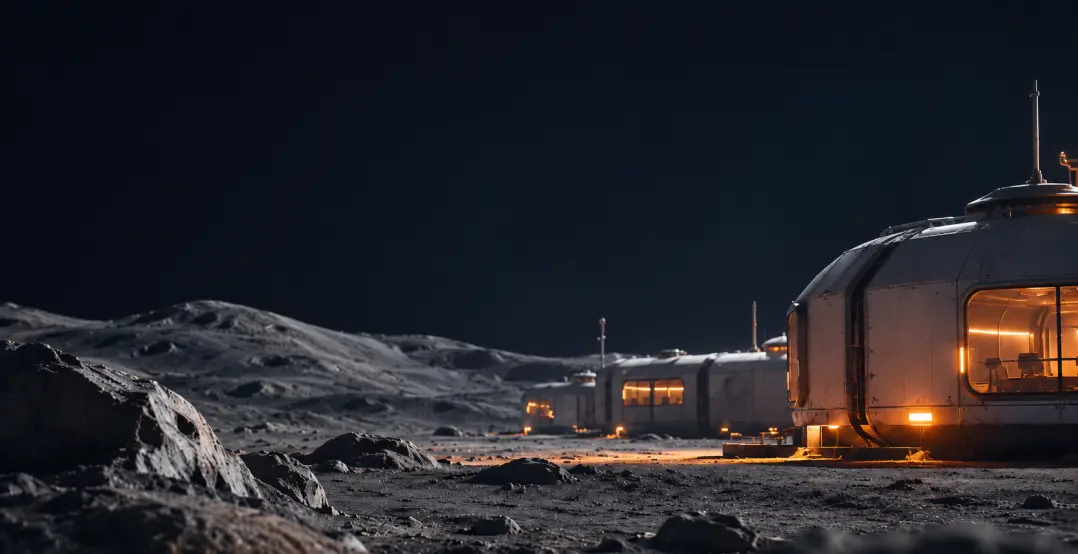
NASA wants astronauts back on the surface of the Moon in 2028, and this time, they’re sticking around. The planned Moon base is turning lunar work into a sector of its own, with lunar jobs that didn’t exist a decade ago.
Lunar is one of several emerging space sectors where investment is growing. Lunar companies raised more in 2026 than in any year since 2021, as NASA shifted to a permanent Moon base. Across emerging sectors, companies raised a combined $4.6 billion in the first nine months of 2026, nearly double their previous record for a full year, according to Space Capital.
Below, we look into the companies NASA is bringing in, the skills they need, as well as how lunar roles compare with other jobs in space.
The Moon Base and the New Space Race
China plans to land its own astronauts on the Moon by 2030, and NASA wants to get there first. NASA Administrator Jared Isaacman sees China as “a real geopolitical rival” in space.
“America will never again give up the moon,” Isaacman said, according to Fast Company.
The last Apollo crew left the Moon in 1972. This time, NASA wants a permanent base where astronauts can live and work and crewed landings about every six months.
Staying means living off the land. NASA wants to dig up ice and soil near the south pole and turn them into water, oxygen and rocket fuel, so astronauts can pack light. Doing this will mean new hardware, and companies to build it.
And the Moon is only the first stop. NASA calls the region “a proving ground for what comes next”: Mars.
The Companies Building NASA’s Moon Base
NASA is budgeting about $20 billion over seven years to build the Moon base, according to Spaceflight Now. It’s already paying private companies to build and deliver the hardware:
- Astrolab and Lunar Outpost: about $220 million each to finish the rovers astronauts will drive
- Blue Origin: $234 million for each rover its Blue Moon lander delivers to the surface
- Firefly Aerospace: a $75 million subcontract to carry NASA’s MoonFall scouting drones to the Moon
- Intuitive Machines and Astrobotic: landers for the first Moon Base missions
Other companies are working on the permanent infrastructure that comes later. ICON, best known for 3D-printing houses, is developing a NASA-funded system to build landing pads and roads from lunar soil.
How Lunar Jobs Compare With Other Space Roles
A decade ago, hardly anyone was hiring engineers to design a Moon rover for astronauts. Now NASA is paying two companies, Astrolab and Lunar Outpost, to build one each. The engineering disciplines are familiar, but the job site has moved to the Moon, where rovers swap asphalt for moondust and commuters for astronauts.
- Systems engineers do the same core work they would do on any spacecraft, managing requirements and test plans. Lunar rovers carry astronauts, which most satellites and probes never do, so they have to meet the stricter safety standards for crewed vehicles.
- Test engineers still put hardware through lab and field tests. Lunar companies also look for people who know off-road vehicles or spacewalk (EVA) operations.
- Human factors engineers are rare on satellite programs but central here. They design rovers for astronauts in stiff, pressurized gloves, where even pressing a small switch takes effort.
- Mechanical engineers build structures and moving parts for vehicles that drive on the Moon’s surface, rather than hardware that sits in orbit.
- Mission operations engineers do work similar to running a satellite. On lunar programs, they also support astronauts on the surface and run a communications network around the Moon.
Most lunar job postings we reviewed ask for experience in the discipline, with NASA or spaceflight experience listed as a bonus. Many also require applicants to be U.S. persons because of export rules on space technology.
Where Lunar Jobs Go From Here
The Moon base is years from finished, but the companies building it are hiring now. If you’re weighing an offer from a company in this space, read our guide to telling whether a space startup is a safe bet.
This is part 1 of our series on emerging space sectors. Next, we look at the companies racing to replace the International Space Station.
In the meantime, read about who could work in asteroid mining, or the space roles companies struggle to fill most. Curious where you’d fit? Take a look at the space roles we’re hiring for right now.