The SpaceX IPO Talent Effect: What Happens When 13,000 Engineers Can Finally Cash Out

SpaceX’s S-1 filing went public today. For the first time in 24 years, we can see the actual numbers behind one of the most important companies in the space sector.

  • $18.7 billion in revenue last year.
  • 10.3 million Starlink subscribers across 164 countries.
  • A targeted valuation of $1.75 trillion.
  • A planned raise of up to $80 billion – which would make it the largest IPO in history, more than doubling Saudi Aramco’s 2019 record.

The headline most people will see is that this IPO could make Elon Musk the world’s first trillionaire. He owns approximately 42% of SpaceX, and at a $1.75 trillion valuation, his stake alone would be worth over $700 billion – pushing his total net worth past the trillion-dollar mark when combined with his Tesla holdings. It’s the kind of number that’s easy to scroll past as spectacle.

But look at what it actually represents. A space company – a company that builds rockets and runs a satellite internet network – is about to become one of the most valuable public companies on Earth. That says something about where this industry is heading and what it’s worth.

Every founder in the sector is watching, every investor is recalculating what a space company can become, and every engineer is rethinking what it means to hold equity in a company building the infrastructure of the space economy.

The trillionaire headline is sensational – the signal underneath it is not. The space sector just proved it can produce wealth at a scale that was previously reserved for software and oil. That changes how capital flows into the sector, how companies are valued, and how aggressively they hire to capture the opportunity.

The financial story will dominate the headlines, but the talent story is the one that will reshape the space sector for the next two years.

What the Numbers Tell Us

The S-1 reveals a company that’s really three businesses under one roof.

Starlink is the money machine.

$11.4 billion in revenue last year, $1.2 billion in profit last quarter alone. 10.3 million subscribers, up from 5 million just twelve months ago. This is the business that justifies the valuation and funds everything else.

The space division

Launches, Starship, crew missions – generated $4.1 billion in revenue last year but lost $657 million. Starship is the long-term bet: designed to put 100+ metric tons in orbit, it launched its V3 variant for the first time on May 19, and it’s the vehicle NASA is counting on for Artemis lunar landings.

The AI segment

xAI and X (formerly Twitter) – is burning cash at an extraordinary rate. $7.7 billion in capital expenditure in Q1 2026 alone, most of it going toward GPU clusters, data centers, and infrastructure. SpaceX has said it plans to deploy data centers in space as early as 2028.

Three businesses: all of them hiring, all of them competing for engineers with slightly different but overlapping skillsets.

The Liquidity Event

SpaceX employs more than 13,000 people. Many hold equity that until now has been valuable on paper but not accessible as cash. The company ran periodic tender offers – most recently at $421 per share in late 2025 – but those were limited in scope.

An IPO changes that completely.

Once shares trade publicly on the Nasdaq under the ticker SPCX, every employee with vested equity can sell. For engineers who joined five or more years ago, when SpaceX’s valuation was a fraction of $1.75 trillion, that could be a life-changing amount of money.

And when engineers have financial security, their career thinking changes.

What Happens Next

The pattern from previous large tech IPOs is well-documented. After a major liquidity event (when equity becomes cash), a portion of the workforce starts looking at what else is out there. Not everyone though, as SpaceX’s mission is unusually compelling, and many will stay regardless. But a meaningful percentage will, for the first time, be in a position to take career risks they couldn’t afford before.

Some employees will leave to start companies.

SpaceX alumni have already founded dozens of space startups – Relativity Space, Impulse Space, Varda, Stoke Space, and many others. An IPO gives more people the financial runway to do the same.

Some will move to smaller companies where they can own more.

A principal engineer who’s been one contributor on a massive program might be drawn to a Series A company where they can lead the whole thing.

Some employees will take a break.

After years at one of the most demanding workplaces in aerospace, a subset will step away for six to twelve months. When they come back – and most do – they’ll re-enter the market with SpaceX on their resume and a clear sense of what they want next.

Why This Matters to Every Other Space Company

SpaceX is the sector’s primary talent development engine. Launch, satellite operations, human spaceflight, and now AI infrastructure – the breadth of experience a SpaceX engineer picks up in three to five years is hard to match anywhere else.

That makes SpaceX alumni the most sought-after candidate pool in commercial space. Every growth-stage company wants them, but few can compete on compensation, mission scope, or brand.

But the IPO changes the dynamic in a way that favors smaller companies.

Before the IPO, a SpaceX engineer considering a move had to weigh the cost of leaving before their equity was liquid. That calculation kept a lot of people in place even when they were interested in other things. After the IPO, that anchor goes away, the equity is monetized, and the decision becomes about what they want to do, not what they can afford to do.

For companies that have been trying to recruit from SpaceX and getting nowhere, the six to twelve months after the IPO may be the best window in years.

What We’re Seeing at EVONA

The SpaceX IPO isn’t happening in isolation. It’s one data point in a sector that has seen one of the biggest shifts we’ve seen.

The funding that’s entered the sector – Vast’s $500M, Sierra Space’s $550M, the Space Force budget doubling to $71.2 billion, Starship V3 proving out the most capable rocket ever built – is translating directly into hiring urgency. Companies in the US and across the world are coming to us to grow their teams across all departments.

The excitement for the industry is growing, but so is the competition for talent, and we’re seeing that firsthand. When multiple well-funded companies are all hiring for similar roles at the same time, the candidates have options they didn’t have 12 months ago. The companies that move fast, pay better, and tell a clear story about why someone should join are the ones closing. The ones still operating at previous speeds are losing people to competitors who figured it out.

The SpaceX IPO will accelerate all of this. More engineers with options, more financial freedom to take risks, and more movement in a market that’s already the most active we’ve seen.

What SpaceX Alumni Want

When SpaceX engineers do enter the market, their priorities tend to cluster around a few things.

Ownership.

At SpaceX, you contribute to enormous programs but rarely own one end to end. The engineers who leave want to lead a mission, build a team, or define a technical direction.

Pace with purpose.

They’re used to moving fast and they don’t want to slow down. But they want the speed pointed at something they feel personally invested in.

Equity that could mean something again.

Having been through one liquidity event, they understand what early equity can be worth. A Series A company with a credible growth path is offering something SpaceX can’t — the chance to do it again, earlier.

A different kind of challenge.

Building a spacecraft from scratch at a 50-person company is a fundamentally different problem than optimizing a subsystem on the 300th Falcon 9 mission. For engineers who want to stretch, that’s compelling.

How Space Companies Can Prepare for the SpaceX IPO Talent Window

If you’ve been watching SpaceX thinking “we’ll never compete for those people,” the IPO may change that. But only if you’re ready.

Build relationships now.

The engineers who leave post-IPO won’t be browsing job boards. They’ll go to companies they’ve already heard of, people they’ve already talked to, and opportunities already on their radar. If your first outreach is in August, you’re late.

Know what you offer that SpaceX doesn’t.

You can’t compete on brand or scale. You can compete on ownership, trajectory, flexibility, and the chance to be early at something meaningful. Be specific about what that looks like.

Move fast.

SpaceX engineers approach career decisions the same way they approach engineering problems — clear framework, defined criteria, compressed timeline. If your process takes eight weeks, they’ll have accepted somewhere else.

The Bigger Picture

The SpaceX IPO is a once-in-a-generation event for the space sector. It will create wealth, create movement, and create opportunity – for the engineers who cash out and for the companies ready to receive them.

The talent effect won’t be immediate or uniform. But over the next six to eighteen months, the space sector’s talent market will be more fluid than it’s been at any point in the commercial era. The companies that prepare now will build the next generation of teams from the strongest talent pool the sector has ever produced.

Vast Just Went From Space Stations to Satellite Buses. Here’s What That Tells You About Where Space Hiring Is Heading

This morning, Vast announced a new product line: high-power satellite buses built for communications, Earth observation, national security, and orbital data centers. The first offering is a 15 kW-class bus with a dry mass of 700 kg, capable of hosting payloads of at least 350 kg. They’ve already signed a confidential customer for four satellites, with an option for 200 more. First batch launches are planned for late 2027.

Vast raised $500 million earlier this year to build commercial space stations and they have over 1,000 employees in Long Beach. Haven-1, their first station module, is targeting a 2027 launch. And now they’re entering the satellite bus market.

That pivot tells you something important about where the space sector is heading – and what it means for the people working in it.

The Pattern: Diversify Early, Hire Twice

Vast isn’t the first space company to expand beyond its original product. Rocket Lab started as a launch company and moved into satellite manufacturing. SpaceX went from launch to Starlink to Starshield. Blue Origin is building engines, rockets, and lunar landers simultaneously.

The pattern is consistent: successful space companies diversify earlier than most people expect, and each new product line creates a new wave of hiring.

What Vast’s CEO Max Haot said is worth paying attention to: every successful space company with heritage is diversified. The only questions are when and what. For Vast, the answer is now, and the answer is satellite buses – because nearly all the technology they’ve built for Haven-1 translates directly.

The avionics, power systems, flight computers, sensors, flight software, and GNC – all of it was already developed in-house for the station program and flight-tested on Haven Demo last year. The only major new pieces are deployable solar arrays and electric propulsion, both of which were already in development for Haven-2.

That means the initial engineering team can cover the satellite bus work without a completely separate hiring effort. But here’s where it changes: if the option for 200+ satellites gets exercised, Vast needs to build a production operation. And manufacturing satellites at volume is a fundamentally different workforce challenge than building a one-of-a-kind space station.

From Prototype to Production: The Hiring Shift

Building a space station is a craft operation. Small teams of experienced engineers designing, assembling, and testing a single complex vehicle. The skills that matter most are depth of expertise, the ability to solve novel problems, and comfort with ambiguity.

Building 200 satellites is a manufacturing operation. Production lines, quality systems, supply chain management, and the ability to build the same thing reliably at rate. The skills that matter shift toward manufacturing engineering, production planning, quality assurance, test automation, and supply chain coordination.

This is the transition that every space company faces when it moves from building one of something to building many. And it’s the transition that catches companies off guard if they don’t plan the workforce for it.

The engineers who designed the satellite bus are not the same people who will run a production line building 50 of them a year, but both of these groups are essential. However, the manufacturing and production workforce is the one that needs to be hired, and they’re in short supply across the entire industry.

We’ve seen this pattern across space companies scaling from prototype to production. The engineering talent that gets a company to its first flight is deep but small. The workforce that gets a company to its fiftieth unit is broader and harder to assemble, because manufacturing engineers, production managers, and quality specialists with space hardware experience are one of the tightest candidate pools in the sector.

The Defense Connection

There’s a second angle to this story that’s easy to miss. Vast is positioning these satellite buses for national security applications alongside commercial ones. And they’re entering the market at a moment when the defense sector is struggling with exactly this problem.

Earlier this year, the SDA’s director said that satellite buses – which were supposed to be a commodity – turned out to be one of the biggest challenges in the first tranche of the proliferated constellation. The constraint wasn’t the design. It was building and checking out enough of them at the pace the program needed.

A company like Vast – with over a billion dollars in capital, 1,000+ employees, and an in-house manufacturing facility in Long Beach – entering the bus market is directly relevant to that supply chain gap. If Vast can produce reliable, high-power buses at volume, they become a credible supplier for both commercial constellations and defense programs.

That dual-use positioning means the hiring will reflect both markets. Engineers who can build hardware to commercial timelines and engineers who can work within defense program requirements – and ideally, people who can do both.

The AI Layer

One detail from the announcement that stands out: Vast is offering an optional NVIDIA Vera Rubin Space-1 module for orbital data centers, AI edge compute, and autonomous space operations.

That’s not a standard satellite bus feature; it signals that Vast sees its platform as infrastructure for compute-heavy missions, not just traditional comms or EO payloads. The engineers who build and integrate AI processing systems for space applications sit at the intersection of two talent markets – space hardware and AI/ML – and they’re among the hardest profiles to find because the combination barely existed as a career path five years ago.

As more space companies add AI and edge compute capabilities to their platforms, this crossover talent pool will become one of the most contested in the sector.

What This Tells You

Vast’s move from stations to satellite buses is one company’s announcement. But it reflects something bigger happening across the sector.

Space companies are diversifying faster, leveraging technology they’ve already built to enter adjacent markets. Each expansion creates new hiring demand – sometimes for the same engineers, sometimes for entirely different ones. And the companies that plan their workforce around both the current product and the next one are the ones that scale successfully.

For engineers: the companies worth watching aren’t just the ones building one thing well. They’re the ones that are about to build the next thing. That’s where the new roles open up, the teams are forming, and the opportunity to get in early is real.

For companies: if your product roadmap includes a second product line in the next 18 months, the workforce plan for it should start now. The manufacturing, production, and quality engineers you’ll need aren’t sitting on job boards. And by the time you announce the product, the companies that planned ahead will have already hired them.

What Space Sector Candidates Ask About Before They’ll Even Take a Call

Something has shifted in how engineers in the US space sector evaluate opportunities, and it’s happening before the first conversation even starts.

Two years ago, a strong outreach message from a recruiter – the right role, the right company, the right location – was usually enough to get a response. The candidate would take the call, learn more, and then decide whether to proceed. The evaluation happened during the process.

That’s not how it works anymore. Across the searches we’re running right now, the evaluation is happening before the candidate ever replies.

The Pre-Call Filter

Engineers who receive recruiter outreach are doing their homework before they respond. The pattern is consistent enough to describe.

They check the company’s funding.

Not just whether it exists, but the specifics – when was the last round, how much was raised, who led it, and what the runway looks like based on the team size and burn rate they can estimate from LinkedIn headcount. A candidate who can’t find clear funding information doesn’t decline the opportunity – they simply don’t respond. Silence is their answer to uncertainty.

They look at the team.

Who’s on the engineering leadership page? Are there senior people they recognize or respect? Is the team growing (visible through recent hires on LinkedIn) or stagnant? A company that’s had the same headcount for 18 months reads differently than one that’s added 20 engineers in the last quarter.

They check Glassdoor.

The reviews don’t need to be perfect – candidates are sophisticated enough to discount outliers. But a pattern of reviews mentioning long hours, poor leadership, or broken promises will stop a candidate from engaging. And companies with no reviews at all create a different kind of concern: nobody cared enough to say anything.

They ask their network.

Space is a small sector. An engineer considering a role at a company will message a former colleague who works there, or who interviewed there, or who knows someone who left. The information that travels through these informal channels carries more weight than anything on the company’s careers page.

By the time the candidate decides whether to respond to a recruiter’s message, they’ve already formed an impression. The outreach doesn’t create interest from zero – it either confirms an impression that was already forming or gets filtered out because the impression wasn’t strong enough.

What This Means for Space Companies

The practical implication is that employer competitiveness in the space sector is no longer about the offer. It’s about what the candidate encounters before the offer ever exists.

Companies that are visible in the market – that produce content, that have leaders who share perspectives publicly, that show up in news coverage when they raise a round or win a contract – get higher response rates to recruiter outreach. Not because candidates follow every company closely, but because when the outreach arrives, the name triggers recognition rather than a blank.

Companies that are invisible – that have a bare-minimum website, no content, no leadership presence, and no signal of what it’s like to work there – get lower response rates regardless of how strong the role or the compensation might be. The candidate never gets far enough to learn about the role because the company didn’t clear the pre-call filter.

This doesn’t mean every space company needs a content marketing operation. But it does mean that the signals candidates look for need to exist somewhere. A VP of Engineering who posts occasionally about the technical problems the team is solving. A funding announcement that gets shared with context about what it means for growth. A careers page that says something specific about the work environment rather than listing generic values.

These are not expensive to produce. But their absence is expensive to compensate for, because it means every recruiter conversation starts with a candidate who has low conviction rather than one who’s already interested.

The Takeaway

The best engineers in the space sector are not passively waiting for opportunities. They’re actively filtering before they engage. The companies that pass that filter are the ones that have invested – even modestly – in being knowable. The ones that haven’t are competing with one hand tied behind their back, and most of them don’t realize it because they never see the candidates who decided not to respond.

The Space Force Just Added $4.4 Billion to Its Space Surveillance Program. Here’s What That Means for Hiring.

The Space Force just raised the contract ceiling for its Andromeda program from $1.8 billion to $6.2 billion. That’s an additional $4.4 billion for a program that builds the next generation of satellites designed to watch what’s happening in space.

Andromeda replaces two existing programs: GSSAP, the “neighborhood watch” satellites that inspect objects in geosynchronous orbit, and the classified SILENTBARKER space surveillance constellation. The Space Force described the expansion as a response to an escalating threat environment projected for 2030 and beyond.

Fourteen companies are eligible to compete for task orders under the contract. The list includes defense primes like Lockheed Martin, L3Harris, and Northrop Grumman alongside growth-stage companies like Anduril, True Anomaly, and Quantum Space.

What Andromeda Actually Needs

Space domain awareness

Knowing what’s in orbit, where it’s going, and whether it’s a threat – is one of the fastest-growing mission areas in defense space. Andromeda is the biggest single investment in that capability.

The satellites this program builds will need to do things that are technically demanding: detect and track objects at extreme distances, maneuver close to other spacecraft, process sensor data in real time, and operate in orbits where servicing isn’t an option. That translates to specific engineering disciplines.

Sensor and payload engineers

Sensor and payload engineers who can design and build the optical and infrared systems that detect objects in space. These are the eyes of the satellite, and the performance requirements for a space surveillance mission are different from a standard Earth observation payload. The targets are smaller, farther away, and sometimes deliberately trying not to be seen.

GNC engineers

GNC engineers who can design maneuver and proximity operations capabilities. If Andromeda satellites need to inspect other objects – which the GSSAP replacement mission implies – they need GNC systems that can safely approach, station-keep near, and characterize another spacecraft. That’s a skillset that overlaps directly with satellite servicing, debris removal, and the Golden Dome interceptor prototypes.

Orbital mechanics analysts

Orbital mechanics analysts who can plan and optimize the observation campaigns. Where does the satellite need to be, when does it need to be there, and how do you maximize coverage of the objects you’re tracking? This is applied math at a level that requires years of experience.

Systems engineers with clearances

Systems engineers with clearances who can integrate all of this into a functioning spacecraft that meets defense reliability standards. The systems engineering role on a classified space surveillance program is one of the hardest hires in the sector – you need someone who understands the full spacecraft, has experience with defense program management, and holds an active clearance. That combination narrows the pool significantly.

Flight software and autonomy engineers

Flight software and autonomy engineers who can build the onboard processing systems. A surveillance satellite that has to detect, track, and respond to threats in real time needs software that makes decisions faster than a ground operator can. The autonomy requirements for Andromeda are likely more demanding than for most commercial missions.

Fourteen Vendors, One Talent Pool

The vendor list is what makes this interesting from a hiring perspective.

Lockheed Martin, L3Harris, Northrop Grumman, and Raytheon have deep benches of cleared engineers. They’ll compete for task orders with existing teams, supplemented by targeted hires for specific technical gaps.

The growth-stage companies on the list – Anduril, True Anomaly, Quantum Space, and others – are in a different position. They’re competing for the same work but with smaller teams. Winning a task order means they need to staff up, often quickly, for a program that requires clearances, specific technical expertise, and defense program experience.

And here’s the squeeze: all fourteen vendors are drawing from the same candidate pool. A mid-career systems engineer with a TS/SCI clearance and space vehicle experience is relevant to every company on this list. That person is also relevant to the Golden Dome interceptor program, the SDA’s proliferated constellation, the Artemis supply chain, and the commercial companies building satellite servicing vehicles.

The demand for this profile was already intense. Adding $4.4 billion to a single program makes it tighter.

The Space Domain Awareness Career Path

For engineers thinking about where to build a career in defense space, space domain awareness is worth paying attention to.

Five years ago, SDA (the mission area, not the agency) was a niche within a niche. A handful of GSSAP satellites, some ground-based radars and telescopes, and a relatively small workforce managing it all. The career path was limited and mostly lived inside a few prime contractors.

That’s changed, and the Andromeda expansion to $6.2 billion is one data point. The Golden Dome program – which depends on knowing what’s in orbit before you can intercept anything – is another. The SDA’s proliferated constellation, which includes space domain awareness sensors alongside its communications and missile tracking payloads, is a third. And the commercial sector is building its own SDA capabilities, with companies like LeoLabs, ExoAnalytic, and others offering tracking services to both government and commercial customers.

The combined investment in knowing what’s happening in space is now measured in tens of billions of dollars. The workforce that supports it needs to grow accordingly.

For engineers with clearances and experience in sensor systems, orbital mechanics, GNC, or spacecraft autonomy, this is a sector where demand will be sustained for the foreseeable future. The programs are funded, the threat environment is driving urgency, and the number of companies competing for the work – and for the people – is growing.

The Takeaway

$6.2 billion for a single space surveillance program is a sign of where defense space is heading. The Space Force is investing at a scale that reflects how seriously the US government takes the space domain as a contested environment.

For the fourteen companies on the Andromeda vendor list, the opportunity is significant. For the engineers those companies need, the market just got more competitive in their favor. And for anyone hiring cleared space professionals in 2026, Andromeda is one more program pulling from a pool that was already stretched thin.

How to Build a Cleared Engineering Team From Scratch in the Space Sector

When a commercial space company wins its first classified contract, the excitement doesn’t last long. Pretty quickly, someone asks the question nobody has answered before: how do you build a team with security clearances when nobody on staff has one?

It’s one of the most common turning points for growth-stage space companies. Get it right and you open up a whole category of government revenue. Get it wrong and you spend 12 months burning through budget while the contract sits understaffed.

The Timeline Nobody Plans For

The first thing most companies underestimate is how long clearances actually take.

A Secret clearance: four to eight months. Top Secret: eight to fourteen months. TS/SCI with a polygraph: over 18 months.

You can’t speed this up. No amount of money, urgency, or pressure from leadership changes the timeline. The investigation takes as long as it takes. For a company that just won a contract with a six-month performance period, the math is simple: if the team doesn’t exist yet, you’re already behind.

That’s why the companies that handle this well start planning the cleared workforce before the contract is awarded. If you’re bidding on classified work, the clearance pipeline should be part of the proposal, not something you figure out after you win.

Sponsoring vs. Requiring

You need cleared people, so you hire cleared people. The problem is that the pool of engineers who already hold clearances, have the specific technical skills you need, and are willing to move to your company is tiny. For a niche discipline like propulsion, GNC, or flight software, that pool might be fewer than 50 people in the entire country.

By requiring an active clearance, you’re filtering out hundreds of engineers who are technically qualified and could get cleared – they just haven’t been through the process yet.

The alternative is to sponsor clearances. Hire engineers who are eligible (US citizens with clean backgrounds) and start the clearance process as part of onboarding. It’s slower for the individual role, but it opens up a much bigger candidate pool.

The approach that works best is a mix: hire two or three people who already have clearances to anchor the classified program, and at the same time, sponsor clearances for a larger group of strong engineers who can work on the unclassified parts while their investigations process. By the time their clearances come through, they already know the company, the tech, and the program. They just get access to the classified layer.

The Facility Comes First

Here’s something that catches a lot of companies off guard: you need an approved secure facility before cleared engineers can actually do classified work.

A SCIF or cleared workspace needs approval from the Defense Counterintelligence and Security Agency (DCSA), and that process takes six to twelve months on its own. If you’re hiring cleared people but don’t have an approved space for them to work in, those clearances just sit there.

The companies that do this well run the facility accreditation in parallel with the first wave of clearance sponsorships. The engineers and the building are ready at roughly the same time. The ones that do it in sequence – facility first, then people – add six to twelve months to their timeline.

Not Everything Is Classified

This is the part that a lot of first-time defense entrants miss. A classified program doesn’t mean every task on that program is classified.

Most programs have big chunks of unclassified work: software development environments, simulation tools, design work that doesn’t involve classified inputs, testing infrastructure. All of that can be done by uncleared engineers.

The smart move is to structure the program so that as much work as possible can be done in the open, with classified access limited to the people and tasks that actually need it. This keeps the program moving while clearances are in process, and it means you need fewer clearances overall — which saves time and money.

If your program architecture requires every engineer to touch classified data, you’ve created a bottleneck. If you compartment the classified work to specific roles and interfaces, you can build a bigger team faster with a smaller cleared core.

Where the Cleared Work Happens

Classified work happens in specific places. If your company is based somewhere without defense infrastructure – no SCIFs, no cleared talent pool, no proximity to the agencies you’re serving – you’ll need to think about where the classified team actually sits.

A lot of commercial space companies solve this by opening a second office in a defense hub: Colorado Springs, the DC corridor, Huntsville, or parts of Southern California. It’s a real investment, but it solves two problems at once – facility access and local talent.

The Denver and Colorado Springs corridor is becoming the default for space companies entering classified work. The Space Force is headquartered there, there’s a deep pool of cleared talent, and the defense-adjacent company ecosystem makes it structurally easier to build a cleared team than starting from scratch somewhere that doesn’t have that infrastructure.

The Takeaway

Building a cleared engineering team isn’t the same as building a commercial team on a longer timeline. It’s a different challenge that needs parallel planning across people, facilities, and program structure.

The companies that do it well treat the clearance pipeline as infrastructure – something you build and maintain, not something you scramble to create every time a contract needs it. They sponsor clearances early, structure programs so uncleared engineers can contribute from day one, and make facility decisions early enough that the space is ready when the people are.

The ones that treat it as a hiring problem to deal with after the win – posting “active clearance required” and waiting – end up 12 months into a contract with a team that’s still half-built and a customer that’s running out of patience.

$31 Billion in 30 Days: What Space and Defense Funding Tells Us About Who’s Hiring Next

In March 2026, the space and defense sector saw a concentration of capital that would have been unthinkable five years ago.

Vast raised $500 million to build commercial space stations. Sierra Space closed $550 million at an $8 billion valuation. The White House proposed $71.2 billion for the Space Force – more than double the current year. Starfish Space raised $100 million for satellite servicing. Portal Space Systems closed $50 million for orbital transfer vehicles. SpaceX filed confidentially for what would be the largest IPO in history.

In total, more than $31 billion in funding – combining commercial venture rounds with the proposed Space Force budget increase – flowed into or was allocated to the US space and defense ecosystem in a single month.

Every one of those dollars comes with an implied commitment: we will hire the people needed to execute.

How Capital Converts to Headcount

Not all funding creates hiring on the same timeline. Understanding the relationship between the type of capital and when the hiring happens is what separates companies that are prepared from those that are caught off guard.

Venture capital rounds create immediate hiring demand.

When a space company closes a Series A or B, approximately 60-70% of the capital goes toward people. A $50 million round typically translates to 30-50 new hires over 18 months. A $500 million round like Vast’s creates a headcount expansion that touches every department – engineering, operations, manufacturing, and leadership.

The hiring wave typically begins within 30 days of closing and peaks three to six months later. Companies that haven’t built their talent pipeline before the round closes find themselves entering the market at the same time as every other recently funded competitor who’re all looking for the same pool of experienced engineers.

Defense budget allocations create sustained, multi-year demand.

The $71.2 billion Space Force budget doesn’t translate into hiring the same way venture capital does. Defense spending flows through contract awards to prime contractors and their subcontractors, with hiring timelines that stretch over quarters and years rather than weeks and months.

But the scale is enormous. When the Space Force allocates $6.8 billion to missile warning and tracking, that creates sustained demand for EO/IR engineers, signal processing specialists, and systems integrators across multiple contractor teams for the next three to five years. When $6.7 billion goes to satellite communications, the RF and comms engineering workforce needs to scale accordingly – not for a single program, but across dozens of concurrent efforts.

An IPO creates a different kind of hiring event.

SpaceX’s anticipated IPO won’t directly create new positions at SpaceX. But by providing liquidity to 13,000+ employees, it will create movement in the talent market as a portion of those engineers explore new opportunities for the first time. The companies that benefit will be the ones already positioned to absorb that talent.

What the Funding Map Tells Us About Demand

When you map where the capital is flowing, the hiring implications become specific.

Commercial space stations are absorbing a disproportionate share of venture funding

Vast ($500M), Axiom ($350M earlier this year), and the companies in their supply chains are all scaling toward operational milestones in 2027-2028. The roles they need – life support, mission operations, human factors, station systems engineering – draw from a candidate pool that has historically lived almost entirely within NASA and its contractors. That pool is not growing fast enough to serve multiple commercial station programs simultaneously.

Defense-adjacent space is the biggest single source of new demand.

The Space Force budget, combined with the SDA’s proliferated constellation program and the Golden Dome initiative, is creating demand for cleared engineers across every technical discipline. The challenge is compounded by the fact that many of these programs require TS/SCI clearances, which take months to obtain and cannot be accelerated.

Satellite servicing and in-space logistics is emerging as a funded vertical for the first time.

Starfish Space’s $100 million round and companies like Astroscale and Turion Space are building toward operational satellite servicing missions. The engineering skillsets – proximity operations, robotic systems, orbital mechanics – are niche even by space sector standards.

Launch continues to expand.

Blue Origin’s New Glenn is now operational with reusable capability. Stoke Space raised $510 million. Firefly is scaling. Each of these programs requires manufacturing engineers, test engineers, and operations staff at an increasing scale as flight rates grow.

The Concentration Problem

The most important thing about the March 2026 funding surge isn’t the total dollar amount. It’s the simultaneity.

When multiple companies in the same vertical raise large rounds in the same month, they all enter the hiring market at the same time. When the government proposes doubling the Space Force budget while commercial programs are also scaling, the combined demand hits the same finite candidate pool from both directions.

This is what turns a talent challenge into a structural constraint. It’s not that qualified engineers don’t exist – it’s that the number of companies competing for them has grown faster than the pool itself.

In the next 12 months, the companies funded by March 2026’s capital surge will all be hiring for similar roles: systems engineers, flight software developers, GNC specialists, RF engineers, program managers with defense experience, and senior leaders who can build organizations, not just teams.

The candidates who fill those roles are already employed. Many are already in conversations with other companies. And the window between “we’re ready to hire” and “the candidate we wanted accepted elsewhere” is getting shorter.

What This Means

Capital is a leading indicator of hiring. When $31 billion flows into a sector in 30 days, the talent market that follows will be tighter, faster, and more competitive than anything the industry has experienced.

The companies that treat this as a signal – and start building a pipeline, revising compensation benchmarks, and accelerating their processes now – will build the teams they need. The ones that wait for the headcount plan to be approved before thinking about talent will discover that the candidates they want were hired three months ago by someone who started sooner.

Starship V3 Launches Next Week. Here’s What It Means Beyond the Spectacle

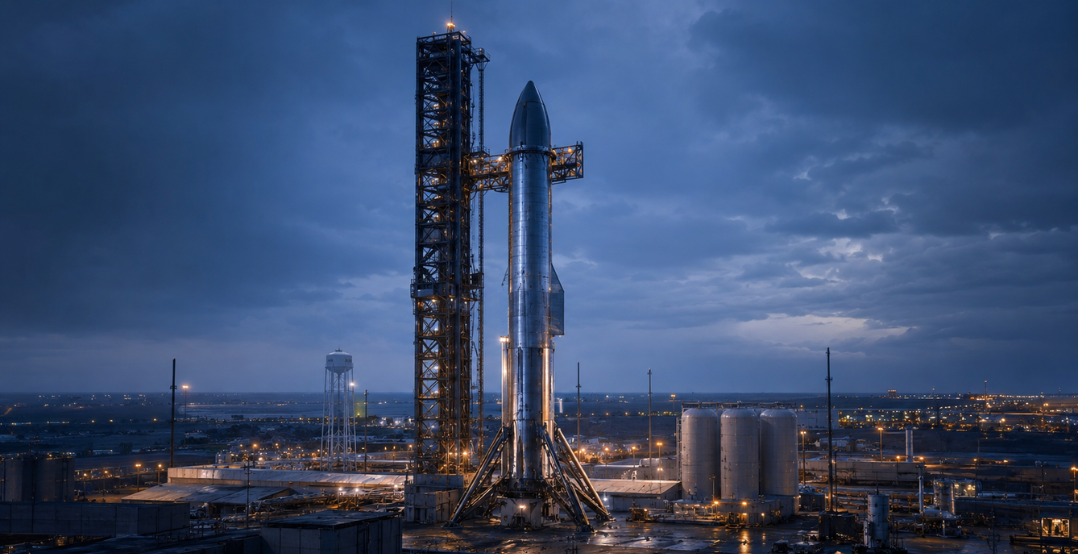
SpaceX is aiming for May 19 for the first flight of Starship Version 3 – a bigger, more powerful version of the rocket that NASA is counting on to land astronauts on the Moon.

The numbers are hard to ignore. V3 can carry over 100 metric tons to low Earth orbit while being fully reusable. That’s nearly three times what earlier Starship versions could do, and it’s more than NASA’s Space Launch System. The rocket stands 124 meters tall, runs on new Raptor 3 engines, and completed a full propellant loading test on May 11 with over 5,000 metric tons of fuel.

It’s the twelfth Starship flight overall, but the first from a brand new launch pad at Starbase and the first time V3 hardware flies. No booster catch is planned – both stages will splash down – but if the vehicle performs, it validates the platform that nearly everything else in SpaceX’s roadmap depends on.

The launch will get a lot of attention, but the workforce story behind it won’t. But it should.

Why V3 Changes the Hiring Picture

Every version of Starship creates engineering jobs – that’s been true since the first test flights. But V3 is different because of what it enables downstream.

Starship V3 doesn’t just improve on what came before; it opens up missions that weren’t practical with smaller rockets: Deploying next-generation Starlink satellites three times faster per launch, sending more fuel to lunar orbit ahead of Artemis missions, carrying payloads heavy enough to make space stations, in-space manufacturing, and Mars cargo flights realistic rather than theoretical.

Each of those applications needs people. Not just at SpaceX, but across the companies building payloads, systems, and infrastructure designed around what Starship can carry.

A satellite company that can now launch hardware three times heavier needs engineers who can design at that scale. A commercial station builder whose modules no longer have to be squeezed into a smaller fairing can rethink their entire architecture – and needs the systems engineers to do it. A lunar program that can deliver more supplies per mission changes its surface operations plan and needs the operations team to match.

The SpaceX Workforce Itself

SpaceX employs over 13,000 people, and V3 introduces new demands across nearly every engineering discipline.

Raptor 3 engines are a significant redesign – higher thrust, lower weight, integrated sensors and controllers, a new ignition system. The propulsion engineers who developed and tested these engines at McGregor, Texas, represent some of the most specialized talent in the sector. Scaling Raptor 3 production for the flight rate SpaceX is targeting means that the team needs to grow.

The new launch pad (Pad 2 at Starbase) is an entirely separate infrastructure build – launch mount, propellant systems, catch tower, ground support equipment. Ground systems engineers, pad technicians, and facilities specialists are all part of the workforce that makes a new pad operational.

The thermal protection system has been redesigned based on lessons from previous flights. Every reentry generates data that the thermal engineers use to refine the heat shield for the next vehicle. As V3 flies more frequently, that team’s workload scales with the flight rate.

And flight software – the code that manages 33 engines on the booster and 6 on the ship, controls autonomous landing sequences, and handles the new docking and propellant transfer systems – is being written and tested by a software team that is perpetually hiring.

The talent pressure at SpaceX compounds because the company is simultaneously operating Falcon 9 (which launches roughly every three days), building Starlink satellites, supporting NASA crew missions, and now ramping V3 production. Each program draws from the same internal engineering pool.

The Artemis Connection

Starship is NASA’s selected Human Landing System for the Artemis program. The plan is for a modified Starship to carry astronauts from lunar orbit to the surface and back. V3’s increased performance is directly relevant – more payload capacity means more margin for crew systems, surface equipment, and the propellant needed for lunar descent and ascent.

But here’s the workforce detail that often gets missed: the Artemis HLS contract doesn’t just create jobs at SpaceX. It creates jobs at every company in the supply chain that supports the modified lunar Starship – from the life support systems that keep astronauts alive during descent to the surface hardware they’ll use on the Moon.

As V3 proves out the platform, the downstream Artemis work gets closer to reality. And the companies that are part of that ecosystem need to start staffing for it now, not after the first lunar landing attempt.

What This Means for the Rest of the Sector

For companies that aren’t SpaceX, V3 matters for two reasons.

First, it raises the bar on what’s possible.

When the most capable rocket in history is available for commercial and government customers, the missions people are planning get more ambitious. More ambitious missions need more engineers. The companies designing payloads, stations, and lunar systems for a V3-enabled future are hiring now for hardware that won’t fly for two or three years.

Second, SpaceX’s growth absorbs talent from the broader market.

Every engineer SpaceX hires for V3 production, Raptor 3 manufacturing, or pad operations is an engineer who isn’t available to other space companies. In a market where experienced propulsion, flight software, and ground systems engineers are already scarce, SpaceX’s expansion makes the pool tighter for everyone else.

For candidates, V3 is a reminder that SpaceX remains the highest-tempo engineering environment in the sector. If you want to work on hardware that flies frequently and at a scale nobody else is attempting, it’s hard to compete with what SpaceX offers. But the companies building around Starship’s capability – designing the payloads, the stations, the lunar systems – offer something SpaceX doesn’t: the chance to own the mission, not just the ride.

The Takeaway

Starship V3 launching next week is a technical milestone. But the bigger story is what it unlocks – for SpaceX, for the Artemis program, and for every company planning missions around a rocket that can put 100 tons in orbit and do it again.

The teams building that future are being hired right now. The question for companies and candidates is whether they’re paying attention to what V3 makes possible – and moving fast enough to be part of it.

Hybrid, Remote, or On-Site: What Space Companies Are Actually Offering in 2026

There’s a common assumption in the space sector: because the work involves hardware, everything is onsite. Candidates assume it. Companies assume candidates assume it. And neither side checks whether it’s actually true.

We did. Based on placement data from the past 60 days across the US space sector, here’s how work arrangements are actually breaking down.

The Numbers

44% hybrid. 38% on-site. 18% remote.

The hybrid number is the one that surprises people. In a sector built around clean rooms, secure facilities, and classified programs, nearly half of all placed roles offer some flexibility on where the work gets done.

Why Hybrid Works in Space

Most space companies building hardware need engineers physically present for certain things – lab work, integration, testing, and program reviews. But not for everything, and not every day.

The design work, the simulation, the documentation, the code reviews – that can happen from anywhere. A flight software engineer might spend three days in the lab during integration and work from home during the design phase. A systems engineer might be onsite for a week-long review and flexible the rest of the month.

The companies that have figured this out are the ones getting the best candidates. Instead of applying a blanket “everyone in the office” policy, they ask a simpler question: what does this person actually need to be in the building for?

That distinction matters. The companies making it are filling roles faster than the ones that aren’t.

The 38% That Has to Be Onsite

Some roles just can’t be done remotely. A manufacturing engineer on a satellite assembly line needs to be in the clean room. A test engineer running vibration or thermal vacuum campaigns needs to be at the facility. Anyone working on a classified program in a SCIF has no remote option regardless of what their day-to-day work involves.

These aren’t policy choices. They’re structural requirements. Hardware and classified information don’t leave the building.

The difference between companies that handle this well and those that don’t comes down to honesty. The ones that explain why a role is onsite – what the facility requirements are, what a typical day looks like, whether there’s any flexibility once you’re established – keep candidates engaged. The ones that just list “onsite required” with no context lose people before the first conversation.

And companies that advertise “flexible work” for a role that requires daily SCIF access damage their credibility with candidates who can spot the mismatch immediately.

The 18% That’s Growing

Fully remote roles in space tend to cluster in a few areas: software engineering that doesn’t touch flight systems directly (DevOps, cloud infrastructure, data engineering), business development and sales, and senior advisory positions.

18% is smaller than what candidates from broader tech would expect. But it’s bigger than it was two years ago, and it’s growing. As more space companies build software platforms alongside their hardware, the share of roles that don’t need physical presence is expanding.

For candidates coming from pure software backgrounds who are curious about space, remote roles are often the way in. For companies, offering remote on roles that genuinely support it means hiring from the entire US talent pool – not just the engineers who happen to live near your facility. In a market where the local candidate pool for some disciplines is measured in dozens, that geographic reach makes a real difference.

What This Means If You’re Looking for a Role

Don’t assume hybrid means onsite in disguise

A lot of the 44% hybrid roles offer real flexibility. Ask early in the process what the arrangement actually looks like – the answer varies more than most people expect.

If you’re willing to be onsite, say so

In a tight market, your willingness to be physically present – especially for clearance-required or hardware roles – gives you an edge over candidates who lead with flexibility demands.

If you need remote, the options exist, but they’re specific

Software roles, BD, and certain program management positions can work remotely. Be realistic about which roles structurally support it and which don’t.

What This Means If You’re Hiring

Look at your on-site policy role by role

If you’re applying the same rule to every position, you’re probably losing candidates for roles that don’t actually require full-time physical presence. The 44% hybrid number tells you most of your competitors have already made this distinction.

Be specific in your job postings

“Hybrid” means different things to different companies. Three days onsite with real flexibility, or four days onsite with one remote Friday? The more specific you are, the fewer candidates drop out because of mismatched expectations.

Treat remote as a hiring advantage, not just a perk

For roles that can genuinely be done remotely, offering that flexibility opens up the entire national candidate pool. That can be the difference between filling a role in four weeks and searching for four months.

The Takeaway

The space sector is more flexible than its reputation suggests. “Space equals onsite” is outdated. The reality – nearly half hybrid, a growing remote segment – creates opportunity for companies and candidates who understand what the market actually looks like right now.

The US Just Created a Licensing Path for Satellite Servicing, Debris Removal, and In-Space Manufacturing. Here’s What That Means for Hiring.

The Department of Commerce just released a draft licensing framework for commercial space activities that have never had a clear regulatory home. On-orbit refueling. Satellite servicing. Debris removal. In-space manufacturing.

These are things companies have been building toward for years. But until now, there was no defined process for the US government to say “yes, you can do this.” The FAA licenses launches. The FCC licenses spectrum. NOAA licenses remote sensing. Nobody licensed “approach another satellite and fix it.”

That gap just closed. The new framework creates a voluntary licensing process with a presumption of approval and deadlines for the government to respond. Industry reaction has been positive, with some arguing it could bring $50 billion in new investment into US space markets.

For the talent market, the effect is simpler: when investors feel confident the government won’t block an activity, they fund it. And when they fund it, companies hire.

Why This Matters

It might seem like a regulatory filing shouldn’t affect hiring. But for space companies working on new kinds of missions, regulatory clarity is one of the biggest things investors look at before writing a check.

Think about it from an investor’s perspective. A company builds a vehicle that can approach a dead satellite and deorbit it. The engineering works. The business model makes sense. But when the investor asks “is this legal?” the answer until now was “probably, but there’s no formal process to get approval.” That’s not good enough for a Series B decision.

The Commerce Department framework gives those investors a real answer. There’s now a process, a timeline, and a presumption that the license will be granted. That changes the risk calculation, which unlocks capital, which funds teams.

Who This Affects

The companies that benefit most are the ones working on what the industry calls ISAM – in-space servicing, assembly, and manufacturing. A few years ago, this was mostly PowerPoint; now it’s funded and building hardware.

Satellite servicing is the most developed category

Companies like Starfish Space (which just raised $100 million), Astroscale, and others are building spacecraft that can approach, inspect, refuel, or repair satellites already in orbit. The skills involved – flying one spacecraft close to another, grabbing onto it, doing something useful – are technically demanding, and very few people have done it operationally.

Debris removal is closely related

Capturing a piece of space junk and bringing it down safely requires many of the same skills: orbital mechanics, GNC, robotic systems. The difference is that debris doesn’t cooperate – it’s tumbling, uncontrolled, and not designed to be grabbed.

On-orbit refueling is being pioneered by companies like Orbit Fab

They’re building fuel depots in space – which means propulsion engineering, fluid systems, and spacecraft integration in environments where nothing is easy.

In-space manufacturing is the earliest stage

Companies exploring making things in microgravity – pharmaceuticals, fiber optics, advanced materials – now have a licensing path they didn’t have before.

What It Means for Hiring

Each of these categories needs people. And the talent pools are small.

Proximity operations engineers

The people who figure out how to fly one spacecraft right next to another without crashing into it – are already one of the hardest hires in the sector. Multiple satellite servicing companies are now funded, and this framework gives them a path to actually operate. Demand for this skillset is going up.

Robotic systems engineers

Who can design arms, grapple mechanisms, and capture systems are needed across servicing, debris removal, and assembly programs. This is a niche within a niche, and the candidate pool is mostly coming from NASA’s robotics programs and a handful of defense contractors.

GNC and orbital mechanics engineers

Are relevant across every ISAM application. Approaching another object in orbit, matching its speed and trajectory, and executing a controlled interaction – that’s GNC work, and it’s directly transferable to defense programs, commercial station docking, and the Artemis architecture.

Regulatory affairs professionals

With space expertise are the less obvious hire that’s about to get much more important. Companies navigating this new framework – and eventually whatever mandatory version follows it – need people who understand both the policy side and the technical details. That’s a very small talent pool.

The Bigger Picture

This framework doesn’t exist in a vacuum. Starfish Space just raised $100 million. The Golden Dome contracts include companies with satellite servicing capabilities. The defense sector is investing heavily in space domain awareness, which overlaps with the same proximity operations skills that ISAM companies need.

The $50 billion investment figure is speculative. But the direction is clear. The US government is actively creating conditions for these activities to scale – through the executive order that mandated this framework, through defense spending that values these capabilities, and through bipartisan support for commercial space.

For the companies that have been building this technology ahead of the regulatory framework, the timing is good. They have the tech, they’re getting the funding, and now they have the licensing path. What most of them don’t have yet is enough people.

The Takeaway

Regulation isn’t usually the most exciting space news. But this one matters because it removes a barrier that was sitting between funded technology and operational reality.

The companies working on satellite servicing, debris removal, refueling, and in-space manufacturing are moving into a growth phase. The engineers who’ve been building skills in proximity operations, robotics, and orbital mechanics are about to be in higher demand than ever. And the companies that start hiring for these roles now – before the framework is finalized and the investment wave peaks – will be the ones with teams in place when the work arrives.

The Broadband Space Race Just Got a Second Lane – and It Needs Thousands of Engineers

Last week, an Ariane 6 rocket launched 32 Amazon Leo satellites into low Earth orbit from French Guiana. It was the seventh Ariane 6 flight, the second using the heavy-lift four-booster configuration, and the second launch dedicated to Amazon’s broadband constellation.

Three days earlier, an Atlas V launched another 29 Amazon Leo satellites from Cape Canaveral. Two launches in four days. Over 300 production satellites now in orbit.

Amazon is building a 3,200-satellite constellation to compete with SpaceX’s Starlink, which already operates more than 10,000 spacecraft. The gap is enormous. And Amazon is under pressure – the FCC requires half the constellation to be deployed by July 2026, and they’re nowhere close to that number yet.

What that means for the space talent market: two mega-constellations are now building simultaneously, on aggressive timelines, and they need a lot of the same people.

The Scale of What’s Being Built

Amazon has booked 18 Ariane 6 launches, 38 Vulcan Centaur flights, and multiple Atlas V missions – over 80 launches total to complete the constellation. Each launch requires satellite manufacturing, integration, testing, and mission operations support. Multiply that across years of sustained production and you get a workforce requirement that looks more like automotive manufacturing than traditional space.

Starlink, meanwhile, isn’t slowing down. SpaceX has launched more than 10,000 Starlink satellites and continues to add capacity. The company recently proposed a million-satellite data center network. Whether or not that number materializes, the operational scale of Starlink already requires a manufacturing and operations workforce measured in thousands.

Two constellations of this size running in parallel creates demand across every stage of the satellite lifecycle: design, manufacturing, testing, launch integration, on-orbit operations, and ground segment development.

Where the Talent Pressure Shows Up

The engineering disciplines that mega-constellations need overlap heavily with the rest of the space sector – which is the problem.

RF and communications engineers are at the top of the list

Both Amazon Leo and Starlink are broadband networks. The satellites are communications payloads first, and the engineers who design, test, and optimize RF systems for LEO broadband are a small and heavily contested group.

Satellite manufacturing and integration engineers are the production backbone

Building 3,200 satellites isn’t a one-at-a-time operation. It requires production lines, quality systems, and manufacturing engineers who can maintain output at rates the space sector has never sustained before. Amazon’s satellite production facility in Kirkland, Washington is built for this kind of volume, but staffing it at scale means competing with every other hardware company in the region.

Ground segment software developers build the systems that manage the constellation

Tracking, telemetry, command, spectrum management, and the customer-facing network infrastructure. This is where the line between space company and tech company blurs completely. The engineers doing this work could just as easily be at a cloud provider or a telecom company, and the competition for them reflects that.

Mission operations and launch integration roles grow with every launch

Eighteen Ariane 6 missions alone require sustained operations support in French Guiana – a location that adds its own recruiting challenge. Launch cadence at this scale needs dedicated teams, not ad hoc support.

The Competitive Landscape for Engineers

If you’re an RF engineer, a satellite systems engineer, or a manufacturing specialist, the Amazon Leo buildout changes your market position. There’s now a second well-funded program competing for your skills alongside Starlink, the SDA’s military constellation, and the commercial communications companies that were already hiring.

Amazon brings something to the competition that most space companies can’t match: big tech compensation. Amazon’s total compensation packages – base salary, RSUs, signing bonuses – are benchmarked against the broader tech market, not against aerospace averages. An RF engineer who might earn $160,000 at a traditional space company could command $200,000 or more at Amazon, with stock that trades publicly.

That pulls the entire market upward. Space companies competing for the same engineers have to either match the numbers or offer something Amazon doesn’t – mission variety, technical ownership, smaller team dynamics, or roles that involve more than a single subsystem on a production line.

For candidates weighing the choice, it comes down to what kind of work you want. Amazon Leo is a production environment – high volume, standardized systems, optimized for throughput. The engineering challenge is in scaling and reliability, not in designing something from scratch. Starlink operates similarly. If you want to build one thing really well at a massive scale, these programs are compelling.

If you want to design a novel spacecraft, work on a first-of-its-kind mission, or own a technical problem end-to-end, the growth-stage companies in the sector offer something the mega-constellations don’t. The tradeoff is real, and it’s worth thinking through before you take the call.

The Ariane 6 Side of the Story

There’s a secondary talent story in this launch that’s easy to miss. Ariane 6 is Europe’s new heavy-lift rocket, and its launch cadence is ramping quickly. Seven flights in less than two years, with 18 more Amazon launches booked. Arianespace needs to scale its launch operations workforce – mission planners, range engineers, integration specialists, and the operations teams at the Kourou spaceport.

For engineers in Europe, this is one of the most significant launch programs on the continent. For US-based engineers, it’s a reminder that the space talent market is increasingly global – the companies building and launching the satellites may be American, but the rockets carrying them come from Europe, and the workforce serving those rockets is growing accordingly.

The Takeaway

The broadband space race now has two well-funded lanes running at the same time, on timelines that don’t wait for the talent market to catch up. Amazon needs to get from 300 satellites to 1,600 in a matter of months to meet its FCC deadline. Starlink is building toward a scale that dwarfs anything the sector has seen.

The engineers who can build, test, and operate communication satellites at production volume are some of the most in-demand professionals in the space sector right now. The question for companies and candidates alike is straightforward: who’s offering the work you want to do, and who can move fast enough to get you there?