Golden Dome’s Biggest Winner: SpaceX Just Picked Up $6.45 Billion in Defense Contracts in One Week

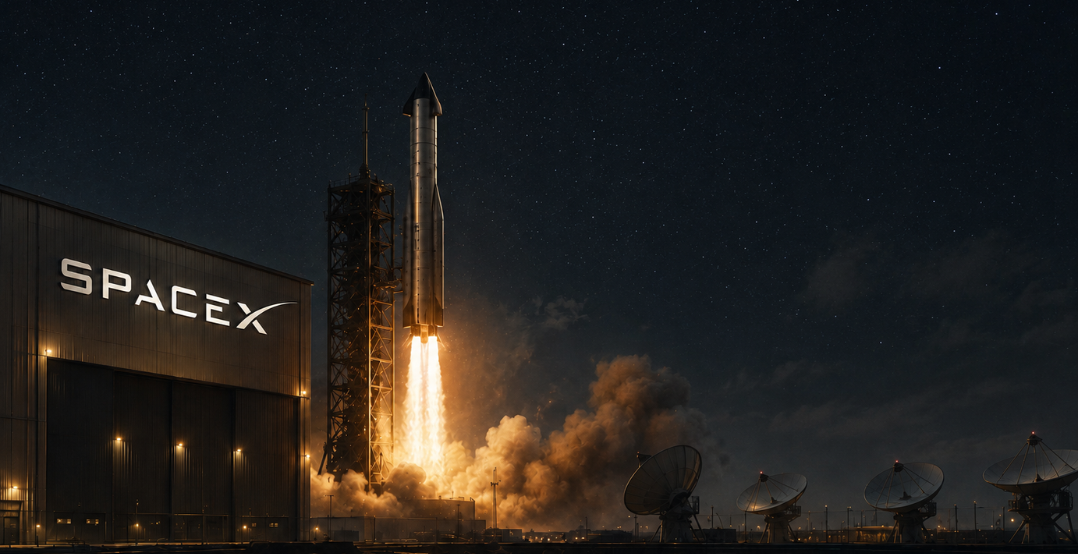
In the space of four days, SpaceX picked up two Golden Dome contracts worth a combined $6.45 billion.

On May 26, the Space Force awarded SpaceX $2.29 billion for the Space Data Network Backbone – a secure, high-speed communications layer built on Starshield satellites that connects missile defense sensors, interceptors, and command systems. The fully operational prototype is due by the end of 2027.

On May 29, SpaceX won $4.16 billion for the Space-Based Airborne Moving Target Indicator (SB-AMTI) program – a satellite constellation designed to detect, track, and maintain targeting data on aircraft, bombers, cruise missiles, and potentially hypersonic weapons from orbit. Initial constellation targeted for 2028.

To put that in perspective: SpaceX’s Golden Dome contracts alone now exceed the combined prototype awards given to every other company in the program. The $3.2 billion in interceptor prototypes we wrote about last month was split across 12 companies. SpaceX just got double that by itself.

What These Contracts Actually Build

The two contracts are different pieces of the same system.

The SDN Backbone is the network.

It’s the plumbing that moves data between sensors, weapons, and command centers at the speed required to track and intercept threats in real time. Think of it as a military-grade version of the Starlink mesh – encrypted, hardened, and designed to work even when parts of the network are disrupted.

The SB-AMTI constellation is the sensor layer.

These satellites replace what aircraft like the E-3 AWACS and E-7 Wedgetail currently do – scanning the sky for airborne threats. The difference is that satellites can do it from orbit, where they’re much harder to shoot down or jam than a plane flying in contested airspace.

Together, they form two core layers of the Golden Dome architecture: the eyes that see the threats and the network that delivers that information to the people who act on it.

Both are being built on Starshield, SpaceX’s government-focused variant of Starlink. Where Starlink delivers broadband to consumers, Starshield carries encrypted communications, optical inter-satellite links, missile warning sensors, and target-tracking payloads.

The Talent Implications

$6.45 billion in new defense work, with 2027 and 2028 deadlines, means SpaceX’s Starshield division needs to scale fast. This isn’t Starlink manufacturing, where the production line is already running at rate. These are new capabilities — sensor payloads, secure communications systems, and AI-enabled ground processing — that need engineering teams built around them.

The roles that will see the most immediate demand:

RF and sensor engineers.

SB-AMTI is fundamentally a sensing program. The satellites need radar systems that can detect and track moving targets from orbit – a technically demanding requirement that draws from both the space and defense radar talent pools.

Mission software and autonomy developers.

A satellite constellation that tracks threats in real time and feeds targeting data into the military kill chain needs onboard processing that makes decisions faster than a ground operator can. The software engineering behind this is closer to autonomous systems work than traditional satellite operations.

Cleared systems engineers.

Both programs require people who can integrate complex military systems while holding TS/SCI clearances. This profile was already one of the hardest hires in the sector. $6.45 billion in new SpaceX defense work makes it harder.

Ground systems engineers.

The data these satellites collect needs to be received, processed, and distributed through ground infrastructure. Building and operating that ground segment is its own engineering challenge with its own workforce requirement.

Secure communications specialists.

The SDN Backbone is a communications network designed to operate under adversarial conditions. The engineers who build it need to understand satellite comms, encryption, network resilience, and the specific requirements of defense data transport.

The SpaceX Defense Machine

This week puts a spotlight on something that’s been building for a couple of years: SpaceX isn’t just a launch company or a Starlink company anymore. It’s becoming one of the largest defense space contractors in the country.

Starshield revenue has been less visible than Starlink’s – the S-1 filing doesn’t break it out separately. But $6.45 billion in new Golden Dome contracts in a single week makes it impossible to ignore. Add in Starshield’s existing classified work (which predates Golden Dome) and the company’s role as the primary launch provider for national security missions, and SpaceX’s defense portfolio is approaching the scale of traditional primes.

For engineers, this changes the calculation.

A few years ago, joining SpaceX meant working on rockets and Starlink. Now it can also mean working on classified missile defense systems, secure military communications, and space-based surveillance. The breadth of work available under one roof is expanding – which makes SpaceX an even more powerful talent magnet for engineers interested in defense space.

For every other company hiring in this market, that’s the challenge.

SpaceX can offer defense engineers the combination of operational tempo, technical scope, compensation (with the IPO approaching), and now $6+ billion in defense contracts. Competing with that requires being very clear about what you offer that SpaceX doesn’t.

The Broader Golden Dome Picture

SpaceX may be the biggest winner so far, but Golden Dome is not a one-company program. The Space Force has said it will not single-source the broader architecture, and additional SB-AMTI vendor awards are expected over the next year. The $3.2 billion in interceptor prototype contracts went to 12 companies. The sensor and interceptor layers will likely involve multiple vendors.

That means the talent competition is multi-directional. SpaceX is hiring for Starshield. The 12 interceptor prototype companies are hiring for their programs. The yet-to-be-announced SB-AMTI vendors will be hiring when their contracts are awarded. And all of them need cleared engineers with overlapping skillsets.

The FY2027 budget request includes $7.06 billion specifically for SB-AMTI, signalling that this is just the beginning. The full Golden Dome architecture is estimated at $175 to $185 billion. The contracts awarded so far are the first pieces of a program that will drive defense space hiring for the next decade.

The Takeaway

$6.45 billion in Golden Dome contracts in one week. A $1.75 trillion IPO on the horizon. Starship V3 flying. 13,000+ employees about to get liquid.

SpaceX is operating on a scale that the space sector has never seen from a single company. For engineers, that creates options that didn’t exist two years ago. For companies competing for the same talent, it creates a hiring environment that requires more speed, more clarity, and a better answer to the question every candidate is asking: why should I come here instead of there?

Golden Dome is the biggest defense space program in history, and the teams that will build it are being assembled right now.

Blue Origin’s New Glenn Just Exploded on the Pad. Here’s Why That Doesn’t Mean What You Think.

Last night, Blue Origin’s New Glenn rocket exploded during a static fire test at Cape Canaveral. The 320-foot rocket erupted into a fireball at around 9pm ET as the engines appeared to ignite. The rocket was destroyed. The launch pad (Blue Origin’s only pad for New Glenn) was destroyed. The transporter, erector, and at least one lightning tower were destroyed. No one was hurt.

The footage is dramatic.

The headlines will be dramatic.

And a lot of people will look at this and think Blue Origin is finished, or that the space sector just took a devastating blow.

They’re wrong.

What Actually Happened

Blue Origin was conducting a hotfire test – firing the rocket’s engines while it’s still bolted to the ground – ahead of a planned launch next week. The NG-4 mission was supposed to carry 48 Amazon Leo broadband satellites into orbit, the first of 24 launches Amazon has contracted Blue Origin to fly.

Something went wrong at the base of the rocket as the engines started firing. The first stage caught fire, the upper stage began tilting, and seconds later the entire vehicle exploded. It was the first on-pad explosion at the Cape since SpaceX’s Falcon 9 blew up on pad 40 in September 2016.

The cause hasn’t been confirmed yet, and this is a separate issue from the NG-3 upper stage failure in April, which was caused by a cryogenic leak that froze a hydraulic line. Blue Origin had just received FAA clearance to fly again six days before this happened.

Jeff Bezos posted: “Very rough day, but we’ll rebuild whatever needs rebuilding and get back to flying. It’s worth it.”

NASA Administrator Jared Isaacman said: “Spaceflight is unforgiving, and developing new heavy-lift launch capability is extraordinarily difficult.”

Both statements are worth taking seriously.

Failure Is How This Industry Works

This is hard to hear on the day a rocket explodes, but it’s true: every major launch company in history has been through catastrophic failures, and the ones that survived them came back stronger.

SpaceX’s Falcon 9 exploded on the pad in 2016.

The company was grounded for three and a half months. The pad was out of action for over a year. Today, Falcon 9 launches every two to three days and is the most reliable operational rocket in the world. SpaceX didn’t succeed despite that failure – the investigation and rebuild made the vehicle better.

Starship has exploded multiple times during its test program.

Each failure generated data that informed the next design. Starship V3 launched successfully on May 19, putting over 100 metric tons to orbit.

New Glenn has now flown three times.

The first flight reached orbit – something no commercial rocket had achieved on its maiden launch. But the booster didn’t land. The second flight landed the booster successfully, and the third flight landed the booster again but lost the payload due to the upper stage failure. Each flight taught the engineering team something that changed the next one.

Last night’s explosion is a setback, but the people who build rockets understand something that the headlines don’t capture: this is what the development cycle looks like. The question isn’t whether failures happen. It’s what you do after them.

The Immediate Impact

The short-term consequences are real and significant.

Amazon’s 24-launch manifest is frozen.

No satellites are going up on New Glenn until the pad is rebuilt and the vehicle is cleared to fly again. After the 2016 SpaceX pad explosion, it took over a year to rebuild the pad. Amazon has 270 production satellites in orbit against an FCC deadline of 1,618 by July. They’ll need alternative launch providers. Atlas V is already launching Amazon Leo satellites, and other vehicles may need to be added to the manifest.

Artemis timelines are at risk.

Blue Origin’s Blue Moon lander launches on New Glenn, the Moon Base 1 cargo delivery was targeting fall of 2026, and the Artemis 3 low-Earth-orbit demonstration is planned for mid-2027. NASA said it’s assessing the impacts, but any extended grounding of New Glenn directly affects these schedules. Just days before the explosion, NASA awarded Blue Origin a $188 million contract for lunar rover deliveries.

The pad needs to be rebuilt.

LC-36 was Blue Origin’s only New Glenn launch pad, and the infrastructure damage appears to be extensive. Rebuilding a launch complex is months of work involving ground systems engineers, facilities specialists, construction crews, and the entire pad operations team.

Why This Is Actually a Hiring Story

Here’s the part that most coverage will miss.

An explosion like this doesn’t reduce a company’s need for people. It increases it.

Blue Origin needs to investigate, rebuild, and return to flight. That means:

  • Forensic engineers analyzing what went wrong
  • Ground systems and facilities engineers rebuilding the pad
  • Quality and reliability specialists reviewing every process that led to the test
  • Manufacturing engineers building the next vehicle
  • The entire existing engineering team continues to work on the programs that don’t stop because of one bad night (the BE-4 engine production line, the Blue Moon lander, the orbital reef program)

Bezos said “we’ll rebuild whatever needs rebuilding.” That’s a hiring statement as much as it’s a mission statement.

Beyond Blue Origin itself, the ripple effects create demand elsewhere. If Amazon needs to shift launches to other providers, those providers need to scale their operations to absorb the additional missions. If Artemis timelines shift, the programs downstream of Blue Origin’s lander – surface systems, crew equipment, science payloads – may need to adjust their own workforce plans.

What This Tells You About Working in Space

If you’re an engineer considering the space sector, last night might have given you pause. A rocket exploding on the pad is not exactly a recruiting video.

But here’s the reality: the engineers who work through failures like this are the most valuable people in the industry. The person who helps investigate what went wrong, redesigns the system, and gets it flying again has experience that can’t be taught in a classroom or gained on a program where nothing ever breaks.

SpaceX’s most experienced engineers are the ones who were there when Falcon 9 blew up in 2016. They stayed, they fixed it, and they built the most successful launch vehicle in history. The Blue Origin engineers who work through this will carry the same kind of experience.

The space sector doesn’t need people who only want to work on successes. It needs people who can handle the hard days, and last night was a hard day.

The Takeaway

New Glenn will fly again. The pad will be rebuilt. The Amazon launches will resume. The Artemis programs will adjust. That’s not optimism – it’s how the space industry has always worked.

The companies and engineers who treat setbacks as data rather than defeat are the ones who build the things that eventually work. Last night’s explosion is a chapter in a story that isn’t close to being finished.

As Bezos said: it’s worth it.

Where the Space Jobs Are: The US Cities Hiring the Most Space Talent Right Now

If you’re thinking about a move into the space sector – or you’re a company trying to figure out where the competition for talent is toughest – geography matters more than you’d think.

The US space economy isn’t spread evenly. It’s clustered in a handful of metro areas, and each one has a different hiring profile depending on who’s based there, what programs they’re running, and what kind of work the local infrastructure supports.

We tracked roles across the US space sector over the past 60 days. Here’s where the hiring is actually happening.

California: 40% of All Roles

Four out of every ten roles we tracked are in California. But it’s not one market – it’s three.

San Diego

San Diego has become a hub for AI-adjacent space companies, satellite comms, and defense programs. The roles here tend to be software-heavy: computational engineering, AI/ML, agentic platforms. San Diego is part defense town, part growing commercial space center, and the hiring reflects both.

LA, Long Beach, and El Segundo

LA, Long Beach, and El Segundo are still the heart of spacecraft manufacturing and satellite operations. El Segundo in particular is home to some of the sector’s fastest-growing companies, with embedded software, flight software, and hardware engineering roles concentrated there. The candidate pool is deep, but so is the competition – every major space company in the LA area is reaching out to the same people.

Folsom and Sacramento

Folsom and Sacramento are quieter but picking up, mostly driven by defense-adjacent programs that need systems engineers, controls specialists, and test engineers.

If you’re a candidate, California gives you the widest range of space roles in the country. If you’re a company, the sheer number of competitors in your corridor means your employer brand and how fast you move matter a lot. A strong engineer in El Segundo is getting approached by multiple companies every month.

Colorado: 20% of All Roles

The Denver and Front Range corridor – Colorado Springs up through Denver to Boulder and Lafayette – is the second biggest space hiring market in the US, and probably the fastest growing.

What makes it different is the overlap between commercial space and national security. Denver has mission operations companies, satellite builders, and a growing number of defense-adjacent startups. Colorado Springs is where the Space Force and US Space Command are headquartered. Boulder and Lafayette have become home to companies building spacecraft hardware – propulsion, mechanical systems, flight components.

The roles here cover everything: GNC, flight software, systems engineering, propulsion, business development. Clearance-required roles are heavily concentrated on the Front Range, which is both an opportunity and a constraint. The pool of cleared engineers in the corridor is well-defined, and every employer there knows it.

If you’re a candidate, Colorado probably offers the best mix of quality of life, role variety, and compensation growth in the sector right now. If you’re a company, you’re going head-to-head with the Space Force industrial base and well-funded startups that are already established there.

DC, Virginia, and Maryland: 9% of All Roles

The DC area is where space meets government. The roles here aren’t engineering-heavy – they’re senior BD directors, VP-level sales positions, and program management. The people who win contracts, not the people who build the hardware.

These roles need specific agency experience: selling to the Space Force, navigating DARPA procurement, building relationships on Capitol Hill. The candidate pool is tiny and very niche. Compensation is high to match.

If you’re a candidate with government sales experience in space or defense, DC is where that experience commands the highest premium. If you’re a company trying to make this hire, it’s one of the most misunderstood roles in the sector. Hiring someone from government IT or cyber because they’ve “sold to the same agencies” is a common and expensive mistake — they know the procurement process but not the space industry, and the hire usually doesn’t last.

Texas, Florida, and New Mexico: The Growing Corridors

Texas (6% of roles) is a split market.

Dallas and Austin are growing for commercial space. The broader state benefits from SpaceX’s Starbase operations and defense infrastructure across multiple military installations.

Florida (6%) is the launch capital of the US.

The roles here connect to launch operations, mission integration, and the growing commercial station ecosystem. As Artemis picks up cadence and commercial launches multiply, Florida’s share of the hiring market will keep growing.

New Mexico (7% – higher than most people expect) has quietly become a propulsion and launch hub.

Companies testing engines and building hardware around Albuquerque and Moriarty are hiring propulsion engineers, avionics specialists, and manufacturing leads. Almost everything is onsite, and the geographic isolation creates a unique challenge: convincing candidates to relocate somewhere that isn’t a traditional tech hub. The companies that figure out how to tell that story well – why the work is worth the move – are the ones filling these roles.

What This Map Tells You

The space economy is national. The talent markets are local.

If you’re a company, your real competition isn’t every space company in the US. It’s the five to ten companies in your corridor hiring for the same roles from the same local pool. Understanding who they are, what they’re paying, and how fast they move is what determines whether you win the people you need.

If you’re a candidate, where you choose to work is also a career decision. The corridor you pick shapes which companies are available to you, which roles exist, and how much leverage you have in a negotiation. An embedded software engineer in El Segundo has a different market than the same engineer in Albuquerque – different compensation, different flexibility, different trajectory.

Pick your corridor deliberately. It matters more than most people realize.

What the Space Force’s $71.2B Budget Means for Your Career

The White House wants to give the Space Force $71.2 billion next year. That’s more than double the $31.6 billion it got this year, and the biggest single-year increase since the service was created in 2019.

The US government is treating space as a primary theater of military competition. That decision is going to change who gets hired, where they work, and how much they get paid.

Where the Money Goes

Here’s how the $71.2 billion breaks down – and why each line item is really a hiring signal.

$38 billion for research, development, testing, and evaluation – more than the Space Force’s entire budget last year. This is the money that flows to contractors building the next generation of satellites, ground systems, and space surveillance capabilities. Every one of those programs needs engineers.

Nearly $10 billion for procurement – a fivefold increase. This is where hardware gets built and bought: satellite buses, launch vehicles, ground terminals. Manufacturing engineers, quality specialists, and production managers are the people who turn procurement dollars into actual systems.

$6.7 billion for satellite communications (up 60%). $6.8 billion for missile warning and tracking (up 70%). $21.6 billion for space control – the systems that contest and defend the domain – up 158%.

The budget also adds 2,800 new Guardians to the force.

The Contradiction

Here’s where it gets interesting. The same administration proposing to double the Space Force budget cut 14% of the service’s civilian workforce last year. More than 4,000 NASA employees left in 2025, and the Space Force saw similar reductions.

So now the service needs to handle a budget that’s grown by $40 billion – with fewer people than it had 12 months ago.

The Pentagon has acknowledged this is a problem. But the people who left aren’t coming back, and the programs they supported still need to run. In practice, that means a huge portion of this budget will flow to contractors – primes, mid-tier defense companies, and the commercial space firms that are increasingly winning defense work.

Those contractors need to grow their teams fast.

One important caveat: not all of this money is guaranteed. Only about $400 million of the Golden Dome funding is in the base budget – the remaining $17.1 billion needs Congress to pass another reconciliation bill. Given last year’s spending fights, that’s not a certainty. But companies are already hiring against the direction of travel, not waiting for the final number.

Space Force officials have said the service’s workforce could double over the next decade. Whether or not the full budget passes as written, the signal is strong enough that the talent market is already moving.

Which Roles Will Be Hardest to Fill

Based on where the spending is concentrated, a few engineering disciplines are about to get much more competitive.

RF and satellite comms engineers

The $6.7 billion satcom investment needs people who can design, build, and integrate communications payloads and ground terminals. RF engineering is already one of the hardest hires in space — across our searches, these roles consistently take the longest to fill.

Missile warning and tracking engineers

The $6.8 billion investment means more demand for EO/IR (electro-optical and infrared) engineers, signal processing specialists, and the systems engineers who put these sensors into working architectures.

Software engineers

Those with experience in space surveillance, command and control, and autonomous systems. The $21.6 billion space control budget needs sophisticated software behind it, and the engineers who can build it are a small group.

Anyone with a clearance

Most programs funded by this budget require security clearances, many at TS/SCI level. The pool of cleared space engineers was already tight. This budget makes it tighter.

What This Means If You’re an Engineer

If you work in or near the space sector, this budget is one of the biggest career signals in years.

Your skills are worth more than you think

When $40 billion in new funding hits a market in a single year, demand for experienced people outpaces what the pipeline can produce. Compensation is going to move. If your current employer hasn’t adjusted, the market will tell you what you’re worth.

Clearance is a career accelerator

If you hold an active clearance or can get one, you’re worth more in this market than you were a year ago. The highest-demand, highest-paying roles are increasingly behind a clearance requirement. Engineers without clearances can still find plenty of opportunity in commercial space, but the defense side is where compensation is climbing fastest.

The line between defense and commercial is disappearing

A lot of the companies that will execute on this budget were purely commercial two years ago. Sierra Space closed $550 million in funding and has won roughly $1.5 billion in defense contracts. Voyager Technologies rebranded to emphasize national security. If you’ve been avoiding defense work, the space sector is making that harder to do.

Location matters

Colorado Springs, Denver, LA, and the DC corridor are where Space Force spending concentrates. If you’re in one of these metros, opportunities will find you. If you’re not, relocation may be part of the equation for the best roles.

What This Means If You’re Hiring

For commercial space companies that also compete for defense work, this budget is both an opportunity and a problem.

The opportunity: $71.2 billion creates contract possibilities at a scale this sector has never seen. Companies that can deliver on defense programs get access to revenue that brings stability and growth.

The problem: every dollar the Space Force spends creates demand for the same engineers that commercial programs need. The RF engineer you want for your comms constellation is the same RF engineer that a Space Force contractor wants for a classified satcom program. And the defense side might offer a higher salary, better job security, and a clearance that makes the engineer more valuable for the rest of their career.

The companies that handle this well will be the ones that understand what they’re actually competing against – and adjust their speed, their compensation, and their pitch accordingly.

The SpaceX IPO Talent Effect: What Happens When 13,000 Engineers Can Finally Cash Out

SpaceX’s S-1 filing went public today. For the first time in 24 years, we can see the actual numbers behind one of the most important companies in the space sector.

  • $18.7 billion in revenue last year.
  • 10.3 million Starlink subscribers across 164 countries.
  • A targeted valuation of $1.75 trillion.
  • A planned raise of up to $80 billion – which would make it the largest IPO in history, more than doubling Saudi Aramco’s 2019 record.

The headline most people will see is that this IPO could make Elon Musk the world’s first trillionaire. He owns approximately 42% of SpaceX, and at a $1.75 trillion valuation, his stake alone would be worth over $700 billion – pushing his total net worth past the trillion-dollar mark when combined with his Tesla holdings. It’s the kind of number that’s easy to scroll past as spectacle.

But look at what it actually represents. A space company – a company that builds rockets and runs a satellite internet network – is about to become one of the most valuable public companies on Earth. That says something about where this industry is heading and what it’s worth.

Every founder in the sector is watching, every investor is recalculating what a space company can become, and every engineer is rethinking what it means to hold equity in a company building the infrastructure of the space economy.

The trillionaire headline is sensational – the signal underneath it is not. The space sector just proved it can produce wealth at a scale that was previously reserved for software and oil. That changes how capital flows into the sector, how companies are valued, and how aggressively they hire to capture the opportunity.

The financial story will dominate the headlines, but the talent story is the one that will reshape the space sector for the next two years.

What the Numbers Tell Us

The S-1 reveals a company that’s really three businesses under one roof.

Starlink is the money machine.

$11.4 billion in revenue last year, $1.2 billion in profit last quarter alone. 10.3 million subscribers, up from 5 million just twelve months ago. This is the business that justifies the valuation and funds everything else.

The space division

Launches, Starship, crew missions – generated $4.1 billion in revenue last year but lost $657 million. Starship is the long-term bet: designed to put 100+ metric tons in orbit, it launched its V3 variant for the first time on May 19, and it’s the vehicle NASA is counting on for Artemis lunar landings.

The AI segment

xAI and X (formerly Twitter) – is burning cash at an extraordinary rate. $7.7 billion in capital expenditure in Q1 2026 alone, most of it going toward GPU clusters, data centers, and infrastructure. SpaceX has said it plans to deploy data centers in space as early as 2028.

Three businesses: all of them hiring, all of them competing for engineers with slightly different but overlapping skillsets.

The Liquidity Event

SpaceX employs more than 13,000 people. Many hold equity that until now has been valuable on paper but not accessible as cash. The company ran periodic tender offers – most recently at $421 per share in late 2025 – but those were limited in scope.

An IPO changes that completely.

Once shares trade publicly on the Nasdaq under the ticker SPCX, every employee with vested equity can sell. For engineers who joined five or more years ago, when SpaceX’s valuation was a fraction of $1.75 trillion, that could be a life-changing amount of money.

And when engineers have financial security, their career thinking changes.

What Happens Next

The pattern from previous large tech IPOs is well-documented. After a major liquidity event (when equity becomes cash), a portion of the workforce starts looking at what else is out there. Not everyone though, as SpaceX’s mission is unusually compelling, and many will stay regardless. But a meaningful percentage will, for the first time, be in a position to take career risks they couldn’t afford before.

Some employees will leave to start companies.

SpaceX alumni have already founded dozens of space startups – Relativity Space, Impulse Space, Varda, Stoke Space, and many others. An IPO gives more people the financial runway to do the same.

Some will move to smaller companies where they can own more.

A principal engineer who’s been one contributor on a massive program might be drawn to a Series A company where they can lead the whole thing.

Some employees will take a break.

After years at one of the most demanding workplaces in aerospace, a subset will step away for six to twelve months. When they come back – and most do – they’ll re-enter the market with SpaceX on their resume and a clear sense of what they want next.

Why This Matters to Every Other Space Company

SpaceX is the sector’s primary talent development engine. Launch, satellite operations, human spaceflight, and now AI infrastructure – the breadth of experience a SpaceX engineer picks up in three to five years is hard to match anywhere else.

That makes SpaceX alumni the most sought-after candidate pool in commercial space. Every growth-stage company wants them, but few can compete on compensation, mission scope, or brand.

But the IPO changes the dynamic in a way that favors smaller companies.

Before the IPO, a SpaceX engineer considering a move had to weigh the cost of leaving before their equity was liquid. That calculation kept a lot of people in place even when they were interested in other things. After the IPO, that anchor goes away, the equity is monetized, and the decision becomes about what they want to do, not what they can afford to do.

For companies that have been trying to recruit from SpaceX and getting nowhere, the six to twelve months after the IPO may be the best window in years.

What We’re Seeing at EVONA

The SpaceX IPO isn’t happening in isolation. It’s one data point in a sector that has seen one of the biggest shifts we’ve seen.

The funding that’s entered the sector – Vast’s $500M, Sierra Space’s $550M, the Space Force budget doubling to $71.2 billion, Starship V3 proving out the most capable rocket ever built – is translating directly into hiring urgency. Companies in the US and across the world are coming to us to grow their teams across all departments.

The excitement for the industry is growing, but so is the competition for talent, and we’re seeing that firsthand. When multiple well-funded companies are all hiring for similar roles at the same time, the candidates have options they didn’t have 12 months ago. The companies that move fast, pay better, and tell a clear story about why someone should join are the ones closing. The ones still operating at previous speeds are losing people to competitors who figured it out.

The SpaceX IPO will accelerate all of this. More engineers with options, more financial freedom to take risks, and more movement in a market that’s already the most active we’ve seen.

What SpaceX Alumni Want

When SpaceX engineers do enter the market, their priorities tend to cluster around a few things.

Ownership.

At SpaceX, you contribute to enormous programs but rarely own one end to end. The engineers who leave want to lead a mission, build a team, or define a technical direction.

Pace with purpose.

They’re used to moving fast and they don’t want to slow down. But they want the speed pointed at something they feel personally invested in.

Equity that could mean something again.

Having been through one liquidity event, they understand what early equity can be worth. A Series A company with a credible growth path is offering something SpaceX can’t — the chance to do it again, earlier.

A different kind of challenge.

Building a spacecraft from scratch at a 50-person company is a fundamentally different problem than optimizing a subsystem on the 300th Falcon 9 mission. For engineers who want to stretch, that’s compelling.

How Space Companies Can Prepare for the SpaceX IPO Talent Window

If you’ve been watching SpaceX thinking “we’ll never compete for those people,” the IPO may change that. But only if you’re ready.

Build relationships now.

The engineers who leave post-IPO won’t be browsing job boards. They’ll go to companies they’ve already heard of, people they’ve already talked to, and opportunities already on their radar. If your first outreach is in August, you’re late.

Know what you offer that SpaceX doesn’t.

You can’t compete on brand or scale. You can compete on ownership, trajectory, flexibility, and the chance to be early at something meaningful. Be specific about what that looks like.

Move fast.

SpaceX engineers approach career decisions the same way they approach engineering problems — clear framework, defined criteria, compressed timeline. If your process takes eight weeks, they’ll have accepted somewhere else.

The Bigger Picture

The SpaceX IPO is a once-in-a-generation event for the space sector. It will create wealth, create movement, and create opportunity – for the engineers who cash out and for the companies ready to receive them.

The talent effect won’t be immediate or uniform. But over the next six to eighteen months, the space sector’s talent market will be more fluid than it’s been at any point in the commercial era. The companies that prepare now will build the next generation of teams from the strongest talent pool the sector has ever produced.

Vast Just Went From Space Stations to Satellite Buses. Here’s What That Tells You About Where Space Hiring Is Heading

This morning, Vast announced a new product line: high-power satellite buses built for communications, Earth observation, national security, and orbital data centers. The first offering is a 15 kW-class bus with a dry mass of 700 kg, capable of hosting payloads of at least 350 kg. They’ve already signed a confidential customer for four satellites, with an option for 200 more. First batch launches are planned for late 2027.

Vast raised $500 million earlier this year to build commercial space stations and they have over 1,000 employees in Long Beach. Haven-1, their first station module, is targeting a 2027 launch. And now they’re entering the satellite bus market.

That pivot tells you something important about where the space sector is heading – and what it means for the people working in it.

The Pattern: Diversify Early, Hire Twice

Vast isn’t the first space company to expand beyond its original product. Rocket Lab started as a launch company and moved into satellite manufacturing. SpaceX went from launch to Starlink to Starshield. Blue Origin is building engines, rockets, and lunar landers simultaneously.

The pattern is consistent: successful space companies diversify earlier than most people expect, and each new product line creates a new wave of hiring.

What Vast’s CEO Max Haot said is worth paying attention to: every successful space company with heritage is diversified. The only questions are when and what. For Vast, the answer is now, and the answer is satellite buses – because nearly all the technology they’ve built for Haven-1 translates directly.

The avionics, power systems, flight computers, sensors, flight software, and GNC – all of it was already developed in-house for the station program and flight-tested on Haven Demo last year. The only major new pieces are deployable solar arrays and electric propulsion, both of which were already in development for Haven-2.

That means the initial engineering team can cover the satellite bus work without a completely separate hiring effort. But here’s where it changes: if the option for 200+ satellites gets exercised, Vast needs to build a production operation. And manufacturing satellites at volume is a fundamentally different workforce challenge than building a one-of-a-kind space station.

From Prototype to Production: The Hiring Shift

Building a space station is a craft operation. Small teams of experienced engineers designing, assembling, and testing a single complex vehicle. The skills that matter most are depth of expertise, the ability to solve novel problems, and comfort with ambiguity.

Building 200 satellites is a manufacturing operation. Production lines, quality systems, supply chain management, and the ability to build the same thing reliably at rate. The skills that matter shift toward manufacturing engineering, production planning, quality assurance, test automation, and supply chain coordination.

This is the transition that every space company faces when it moves from building one of something to building many. And it’s the transition that catches companies off guard if they don’t plan the workforce for it.

The engineers who designed the satellite bus are not the same people who will run a production line building 50 of them a year, but both of these groups are essential. However, the manufacturing and production workforce is the one that needs to be hired, and they’re in short supply across the entire industry.

We’ve seen this pattern across space companies scaling from prototype to production. The engineering talent that gets a company to its first flight is deep but small. The workforce that gets a company to its fiftieth unit is broader and harder to assemble, because manufacturing engineers, production managers, and quality specialists with space hardware experience are one of the tightest candidate pools in the sector.

The Defense Connection

There’s a second angle to this story that’s easy to miss. Vast is positioning these satellite buses for national security applications alongside commercial ones. And they’re entering the market at a moment when the defense sector is struggling with exactly this problem.

Earlier this year, the SDA’s director said that satellite buses – which were supposed to be a commodity – turned out to be one of the biggest challenges in the first tranche of the proliferated constellation. The constraint wasn’t the design. It was building and checking out enough of them at the pace the program needed.

A company like Vast – with over a billion dollars in capital, 1,000+ employees, and an in-house manufacturing facility in Long Beach – entering the bus market is directly relevant to that supply chain gap. If Vast can produce reliable, high-power buses at volume, they become a credible supplier for both commercial constellations and defense programs.

That dual-use positioning means the hiring will reflect both markets. Engineers who can build hardware to commercial timelines and engineers who can work within defense program requirements – and ideally, people who can do both.

The AI Layer

One detail from the announcement that stands out: Vast is offering an optional NVIDIA Vera Rubin Space-1 module for orbital data centers, AI edge compute, and autonomous space operations.

That’s not a standard satellite bus feature; it signals that Vast sees its platform as infrastructure for compute-heavy missions, not just traditional comms or EO payloads. The engineers who build and integrate AI processing systems for space applications sit at the intersection of two talent markets – space hardware and AI/ML – and they’re among the hardest profiles to find because the combination barely existed as a career path five years ago.

As more space companies add AI and edge compute capabilities to their platforms, this crossover talent pool will become one of the most contested in the sector.

What This Tells You

Vast’s move from stations to satellite buses is one company’s announcement. But it reflects something bigger happening across the sector.

Space companies are diversifying faster, leveraging technology they’ve already built to enter adjacent markets. Each expansion creates new hiring demand – sometimes for the same engineers, sometimes for entirely different ones. And the companies that plan their workforce around both the current product and the next one are the ones that scale successfully.

For engineers: the companies worth watching aren’t just the ones building one thing well. They’re the ones that are about to build the next thing. That’s where the new roles open up, the teams are forming, and the opportunity to get in early is real.

For companies: if your product roadmap includes a second product line in the next 18 months, the workforce plan for it should start now. The manufacturing, production, and quality engineers you’ll need aren’t sitting on job boards. And by the time you announce the product, the companies that planned ahead will have already hired them.

What Space Sector Candidates Ask About Before They’ll Even Take a Call

Something has shifted in how engineers in the US space sector evaluate opportunities, and it’s happening before the first conversation even starts.

Two years ago, a strong outreach message from a recruiter – the right role, the right company, the right location – was usually enough to get a response. The candidate would take the call, learn more, and then decide whether to proceed. The evaluation happened during the process.

That’s not how it works anymore. Across the searches we’re running right now, the evaluation is happening before the candidate ever replies.

The Pre-Call Filter

Engineers who receive recruiter outreach are doing their homework before they respond. The pattern is consistent enough to describe.

They check the company’s funding.

Not just whether it exists, but the specifics – when was the last round, how much was raised, who led it, and what the runway looks like based on the team size and burn rate they can estimate from LinkedIn headcount. A candidate who can’t find clear funding information doesn’t decline the opportunity – they simply don’t respond. Silence is their answer to uncertainty.

They look at the team.

Who’s on the engineering leadership page? Are there senior people they recognize or respect? Is the team growing (visible through recent hires on LinkedIn) or stagnant? A company that’s had the same headcount for 18 months reads differently than one that’s added 20 engineers in the last quarter.

They check Glassdoor.

The reviews don’t need to be perfect – candidates are sophisticated enough to discount outliers. But a pattern of reviews mentioning long hours, poor leadership, or broken promises will stop a candidate from engaging. And companies with no reviews at all create a different kind of concern: nobody cared enough to say anything.

They ask their network.

Space is a small sector. An engineer considering a role at a company will message a former colleague who works there, or who interviewed there, or who knows someone who left. The information that travels through these informal channels carries more weight than anything on the company’s careers page.

By the time the candidate decides whether to respond to a recruiter’s message, they’ve already formed an impression. The outreach doesn’t create interest from zero – it either confirms an impression that was already forming or gets filtered out because the impression wasn’t strong enough.

What This Means for Space Companies

The practical implication is that employer competitiveness in the space sector is no longer about the offer. It’s about what the candidate encounters before the offer ever exists.

Companies that are visible in the market – that produce content, that have leaders who share perspectives publicly, that show up in news coverage when they raise a round or win a contract – get higher response rates to recruiter outreach. Not because candidates follow every company closely, but because when the outreach arrives, the name triggers recognition rather than a blank.

Companies that are invisible – that have a bare-minimum website, no content, no leadership presence, and no signal of what it’s like to work there – get lower response rates regardless of how strong the role or the compensation might be. The candidate never gets far enough to learn about the role because the company didn’t clear the pre-call filter.

This doesn’t mean every space company needs a content marketing operation. But it does mean that the signals candidates look for need to exist somewhere. A VP of Engineering who posts occasionally about the technical problems the team is solving. A funding announcement that gets shared with context about what it means for growth. A careers page that says something specific about the work environment rather than listing generic values.

These are not expensive to produce. But their absence is expensive to compensate for, because it means every recruiter conversation starts with a candidate who has low conviction rather than one who’s already interested.

The Takeaway

The best engineers in the space sector are not passively waiting for opportunities. They’re actively filtering before they engage. The companies that pass that filter are the ones that have invested – even modestly – in being knowable. The ones that haven’t are competing with one hand tied behind their back, and most of them don’t realize it because they never see the candidates who decided not to respond.

The Space Force Just Added $4.4 Billion to Its Space Surveillance Program. Here’s What That Means for Hiring.

The Space Force just raised the contract ceiling for its Andromeda program from $1.8 billion to $6.2 billion. That’s an additional $4.4 billion for a program that builds the next generation of satellites designed to watch what’s happening in space.

Andromeda replaces two existing programs: GSSAP, the “neighborhood watch” satellites that inspect objects in geosynchronous orbit, and the classified SILENTBARKER space surveillance constellation. The Space Force described the expansion as a response to an escalating threat environment projected for 2030 and beyond.

Fourteen companies are eligible to compete for task orders under the contract. The list includes defense primes like Lockheed Martin, L3Harris, and Northrop Grumman alongside growth-stage companies like Anduril, True Anomaly, and Quantum Space.

What Andromeda Actually Needs

Space domain awareness

Knowing what’s in orbit, where it’s going, and whether it’s a threat – is one of the fastest-growing mission areas in defense space. Andromeda is the biggest single investment in that capability.

The satellites this program builds will need to do things that are technically demanding: detect and track objects at extreme distances, maneuver close to other spacecraft, process sensor data in real time, and operate in orbits where servicing isn’t an option. That translates to specific engineering disciplines.

Sensor and payload engineers

Sensor and payload engineers who can design and build the optical and infrared systems that detect objects in space. These are the eyes of the satellite, and the performance requirements for a space surveillance mission are different from a standard Earth observation payload. The targets are smaller, farther away, and sometimes deliberately trying not to be seen.

GNC engineers

GNC engineers who can design maneuver and proximity operations capabilities. If Andromeda satellites need to inspect other objects – which the GSSAP replacement mission implies – they need GNC systems that can safely approach, station-keep near, and characterize another spacecraft. That’s a skillset that overlaps directly with satellite servicing, debris removal, and the Golden Dome interceptor prototypes.

Orbital mechanics analysts

Orbital mechanics analysts who can plan and optimize the observation campaigns. Where does the satellite need to be, when does it need to be there, and how do you maximize coverage of the objects you’re tracking? This is applied math at a level that requires years of experience.

Systems engineers with clearances

Systems engineers with clearances who can integrate all of this into a functioning spacecraft that meets defense reliability standards. The systems engineering role on a classified space surveillance program is one of the hardest hires in the sector – you need someone who understands the full spacecraft, has experience with defense program management, and holds an active clearance. That combination narrows the pool significantly.

Flight software and autonomy engineers

Flight software and autonomy engineers who can build the onboard processing systems. A surveillance satellite that has to detect, track, and respond to threats in real time needs software that makes decisions faster than a ground operator can. The autonomy requirements for Andromeda are likely more demanding than for most commercial missions.

Fourteen Vendors, One Talent Pool

The vendor list is what makes this interesting from a hiring perspective.

Lockheed Martin, L3Harris, Northrop Grumman, and Raytheon have deep benches of cleared engineers. They’ll compete for task orders with existing teams, supplemented by targeted hires for specific technical gaps.

The growth-stage companies on the list – Anduril, True Anomaly, Quantum Space, and others – are in a different position. They’re competing for the same work but with smaller teams. Winning a task order means they need to staff up, often quickly, for a program that requires clearances, specific technical expertise, and defense program experience.

And here’s the squeeze: all fourteen vendors are drawing from the same candidate pool. A mid-career systems engineer with a TS/SCI clearance and space vehicle experience is relevant to every company on this list. That person is also relevant to the Golden Dome interceptor program, the SDA’s proliferated constellation, the Artemis supply chain, and the commercial companies building satellite servicing vehicles.

The demand for this profile was already intense. Adding $4.4 billion to a single program makes it tighter.

The Space Domain Awareness Career Path

For engineers thinking about where to build a career in defense space, space domain awareness is worth paying attention to.

Five years ago, SDA (the mission area, not the agency) was a niche within a niche. A handful of GSSAP satellites, some ground-based radars and telescopes, and a relatively small workforce managing it all. The career path was limited and mostly lived inside a few prime contractors.

That’s changed, and the Andromeda expansion to $6.2 billion is one data point. The Golden Dome program – which depends on knowing what’s in orbit before you can intercept anything – is another. The SDA’s proliferated constellation, which includes space domain awareness sensors alongside its communications and missile tracking payloads, is a third. And the commercial sector is building its own SDA capabilities, with companies like LeoLabs, ExoAnalytic, and others offering tracking services to both government and commercial customers.

The combined investment in knowing what’s happening in space is now measured in tens of billions of dollars. The workforce that supports it needs to grow accordingly.

For engineers with clearances and experience in sensor systems, orbital mechanics, GNC, or spacecraft autonomy, this is a sector where demand will be sustained for the foreseeable future. The programs are funded, the threat environment is driving urgency, and the number of companies competing for the work – and for the people – is growing.

The Takeaway

$6.2 billion for a single space surveillance program is a sign of where defense space is heading. The Space Force is investing at a scale that reflects how seriously the US government takes the space domain as a contested environment.

For the fourteen companies on the Andromeda vendor list, the opportunity is significant. For the engineers those companies need, the market just got more competitive in their favor. And for anyone hiring cleared space professionals in 2026, Andromeda is one more program pulling from a pool that was already stretched thin.

How to Build a Cleared Engineering Team From Scratch in the Space Sector

When a commercial space company wins its first classified contract, the excitement doesn’t last long. Pretty quickly, someone asks the question nobody has answered before: how do you build a team with security clearances when nobody on staff has one?

It’s one of the most common turning points for growth-stage space companies. Get it right and you open up a whole category of government revenue. Get it wrong and you spend 12 months burning through budget while the contract sits understaffed.

The Timeline Nobody Plans For

The first thing most companies underestimate is how long clearances actually take.

A Secret clearance: four to eight months. Top Secret: eight to fourteen months. TS/SCI with a polygraph: over 18 months.

You can’t speed this up. No amount of money, urgency, or pressure from leadership changes the timeline. The investigation takes as long as it takes. For a company that just won a contract with a six-month performance period, the math is simple: if the team doesn’t exist yet, you’re already behind.

That’s why the companies that handle this well start planning the cleared workforce before the contract is awarded. If you’re bidding on classified work, the clearance pipeline should be part of the proposal, not something you figure out after you win.

Sponsoring vs. Requiring

You need cleared people, so you hire cleared people. The problem is that the pool of engineers who already hold clearances, have the specific technical skills you need, and are willing to move to your company is tiny. For a niche discipline like propulsion, GNC, or flight software, that pool might be fewer than 50 people in the entire country.

By requiring an active clearance, you’re filtering out hundreds of engineers who are technically qualified and could get cleared – they just haven’t been through the process yet.

The alternative is to sponsor clearances. Hire engineers who are eligible (US citizens with clean backgrounds) and start the clearance process as part of onboarding. It’s slower for the individual role, but it opens up a much bigger candidate pool.

The approach that works best is a mix: hire two or three people who already have clearances to anchor the classified program, and at the same time, sponsor clearances for a larger group of strong engineers who can work on the unclassified parts while their investigations process. By the time their clearances come through, they already know the company, the tech, and the program. They just get access to the classified layer.

The Facility Comes First

Here’s something that catches a lot of companies off guard: you need an approved secure facility before cleared engineers can actually do classified work.

A SCIF or cleared workspace needs approval from the Defense Counterintelligence and Security Agency (DCSA), and that process takes six to twelve months on its own. If you’re hiring cleared people but don’t have an approved space for them to work in, those clearances just sit there.

The companies that do this well run the facility accreditation in parallel with the first wave of clearance sponsorships. The engineers and the building are ready at roughly the same time. The ones that do it in sequence – facility first, then people – add six to twelve months to their timeline.

Not Everything Is Classified

This is the part that a lot of first-time defense entrants miss. A classified program doesn’t mean every task on that program is classified.

Most programs have big chunks of unclassified work: software development environments, simulation tools, design work that doesn’t involve classified inputs, testing infrastructure. All of that can be done by uncleared engineers.

The smart move is to structure the program so that as much work as possible can be done in the open, with classified access limited to the people and tasks that actually need it. This keeps the program moving while clearances are in process, and it means you need fewer clearances overall — which saves time and money.

If your program architecture requires every engineer to touch classified data, you’ve created a bottleneck. If you compartment the classified work to specific roles and interfaces, you can build a bigger team faster with a smaller cleared core.

Where the Cleared Work Happens

Classified work happens in specific places. If your company is based somewhere without defense infrastructure – no SCIFs, no cleared talent pool, no proximity to the agencies you’re serving – you’ll need to think about where the classified team actually sits.

A lot of commercial space companies solve this by opening a second office in a defense hub: Colorado Springs, the DC corridor, Huntsville, or parts of Southern California. It’s a real investment, but it solves two problems at once – facility access and local talent.

The Denver and Colorado Springs corridor is becoming the default for space companies entering classified work. The Space Force is headquartered there, there’s a deep pool of cleared talent, and the defense-adjacent company ecosystem makes it structurally easier to build a cleared team than starting from scratch somewhere that doesn’t have that infrastructure.

The Takeaway

Building a cleared engineering team isn’t the same as building a commercial team on a longer timeline. It’s a different challenge that needs parallel planning across people, facilities, and program structure.

The companies that do it well treat the clearance pipeline as infrastructure – something you build and maintain, not something you scramble to create every time a contract needs it. They sponsor clearances early, structure programs so uncleared engineers can contribute from day one, and make facility decisions early enough that the space is ready when the people are.

The ones that treat it as a hiring problem to deal with after the win – posting “active clearance required” and waiting – end up 12 months into a contract with a team that’s still half-built and a customer that’s running out of patience.

$31 Billion in 30 Days: What Space and Defense Funding Tells Us About Who’s Hiring Next

In March 2026, the space and defense sector saw a concentration of capital that would have been unthinkable five years ago.

Vast raised $500 million to build commercial space stations. Sierra Space closed $550 million at an $8 billion valuation. The White House proposed $71.2 billion for the Space Force – more than double the current year. Starfish Space raised $100 million for satellite servicing. Portal Space Systems closed $50 million for orbital transfer vehicles. SpaceX filed confidentially for what would be the largest IPO in history.

In total, more than $31 billion in funding – combining commercial venture rounds with the proposed Space Force budget increase – flowed into or was allocated to the US space and defense ecosystem in a single month.

Every one of those dollars comes with an implied commitment: we will hire the people needed to execute.

How Capital Converts to Headcount

Not all funding creates hiring on the same timeline. Understanding the relationship between the type of capital and when the hiring happens is what separates companies that are prepared from those that are caught off guard.

Venture capital rounds create immediate hiring demand.

When a space company closes a Series A or B, approximately 60-70% of the capital goes toward people. A $50 million round typically translates to 30-50 new hires over 18 months. A $500 million round like Vast’s creates a headcount expansion that touches every department – engineering, operations, manufacturing, and leadership.

The hiring wave typically begins within 30 days of closing and peaks three to six months later. Companies that haven’t built their talent pipeline before the round closes find themselves entering the market at the same time as every other recently funded competitor who’re all looking for the same pool of experienced engineers.

Defense budget allocations create sustained, multi-year demand.

The $71.2 billion Space Force budget doesn’t translate into hiring the same way venture capital does. Defense spending flows through contract awards to prime contractors and their subcontractors, with hiring timelines that stretch over quarters and years rather than weeks and months.

But the scale is enormous. When the Space Force allocates $6.8 billion to missile warning and tracking, that creates sustained demand for EO/IR engineers, signal processing specialists, and systems integrators across multiple contractor teams for the next three to five years. When $6.7 billion goes to satellite communications, the RF and comms engineering workforce needs to scale accordingly – not for a single program, but across dozens of concurrent efforts.

An IPO creates a different kind of hiring event.

SpaceX’s anticipated IPO won’t directly create new positions at SpaceX. But by providing liquidity to 13,000+ employees, it will create movement in the talent market as a portion of those engineers explore new opportunities for the first time. The companies that benefit will be the ones already positioned to absorb that talent.

What the Funding Map Tells Us About Demand

When you map where the capital is flowing, the hiring implications become specific.

Commercial space stations are absorbing a disproportionate share of venture funding

Vast ($500M), Axiom ($350M earlier this year), and the companies in their supply chains are all scaling toward operational milestones in 2027-2028. The roles they need – life support, mission operations, human factors, station systems engineering – draw from a candidate pool that has historically lived almost entirely within NASA and its contractors. That pool is not growing fast enough to serve multiple commercial station programs simultaneously.

Defense-adjacent space is the biggest single source of new demand.

The Space Force budget, combined with the SDA’s proliferated constellation program and the Golden Dome initiative, is creating demand for cleared engineers across every technical discipline. The challenge is compounded by the fact that many of these programs require TS/SCI clearances, which take months to obtain and cannot be accelerated.

Satellite servicing and in-space logistics is emerging as a funded vertical for the first time.

Starfish Space’s $100 million round and companies like Astroscale and Turion Space are building toward operational satellite servicing missions. The engineering skillsets – proximity operations, robotic systems, orbital mechanics – are niche even by space sector standards.

Launch continues to expand.

Blue Origin’s New Glenn is now operational with reusable capability. Stoke Space raised $510 million. Firefly is scaling. Each of these programs requires manufacturing engineers, test engineers, and operations staff at an increasing scale as flight rates grow.

The Concentration Problem

The most important thing about the March 2026 funding surge isn’t the total dollar amount. It’s the simultaneity.

When multiple companies in the same vertical raise large rounds in the same month, they all enter the hiring market at the same time. When the government proposes doubling the Space Force budget while commercial programs are also scaling, the combined demand hits the same finite candidate pool from both directions.

This is what turns a talent challenge into a structural constraint. It’s not that qualified engineers don’t exist – it’s that the number of companies competing for them has grown faster than the pool itself.

In the next 12 months, the companies funded by March 2026’s capital surge will all be hiring for similar roles: systems engineers, flight software developers, GNC specialists, RF engineers, program managers with defense experience, and senior leaders who can build organizations, not just teams.

The candidates who fill those roles are already employed. Many are already in conversations with other companies. And the window between “we’re ready to hire” and “the candidate we wanted accepted elsewhere” is getting shorter.

What This Means

Capital is a leading indicator of hiring. When $31 billion flows into a sector in 30 days, the talent market that follows will be tighter, faster, and more competitive than anything the industry has experienced.

The companies that treat this as a signal – and start building a pipeline, revising compensation benchmarks, and accelerating their processes now – will build the teams they need. The ones that wait for the headcount plan to be approved before thinking about talent will discover that the candidates they want were hired three months ago by someone who started sooner.