Navigating the Space Job Market: Tips for Transitioning from Other Industries

It used to be that when you told someone you wanted to work in space, they’d look at you like you just announced plans to time travel. But today? Moving into space careers isn’t just possible—it’s smart. From AI experts to creative storytellers, the space sector is looking beyond astronauts and engineers. That means people from all walks of professional life are now figuring out how to navigate career changes into one of the world’s fastest-growing industries—and above it. If that’s you, you’re not alone. This guide walks through key strategies to transition from your current field into one of the many exciting jobs that deal with space.


Understand the Landscape Before You Leap

If you’re coming from education, finance, healthcare, or tech, the first step is getting familiar with the shape of the space industry. You don’t need a PhD in astrophysics. But you do need to know that companies like SpaceX, Planet Labs, and EVONA are filling roles in everything from cloud systems to HR. The careers involving space now stretch across legal, logistics, policy, and marketing—making room for lateral movers. According to the latest data from Space Foundation, over 1 million new space-related jobs are expected globally in the next decade. That’s not a niche market—it’s a hiring boom. To navigate career paths into this sector, spend time on the ground floor: read recent launch news, follow top space recruiters on LinkedIn, and skim key resources like “The Space Report” or EVONA’s insight blogs.


Make Transferable Skills the Star of Your Resume

Navigate career

Let’s say you’re coming from tech project management. Great. You’ve probably managed budgets, cross-team communication, and rapid product cycles. Guess what? Those are exactly the skills small satellite startups need. The secret sauce to successfully navigate career switches is not pretending to be an expert—it’s showing how your current toolkit solves the same problems in a new context. One of the most effective ways to do that is with data. Space recruiters want impact. Quantify your contributions. Don’t just say “launched new systems.” Say “reduced system rollout time by 32% across four countries.” Whether you’re applying to roles at geospatial startups or companies focused on space infrastructure, measurable results help you stand out.


Do the Homework (and Then a Little More)

It’s easy to say you’re excited about the space industry. But it lands differently when you show it. One candidate wrote in their cover letter that they binge-read “The Space Barons” and highlighted parallels to their previous job in government tech. Another came in already fluent in launch schedule terminology. That curiosity is gold to space industry recruiters. It shows initiative, and more importantly, it lowers their risk in hiring someone new to the domain. You don’t need to be an expert overnight, but learning basic lingo, current missions, and challenges like satellite congestion or lunar payload rules proves that you’re not just career-wandering—you’re career-targeting.


Build Relationships with the People Already in Orbit

Transitioning industries is hard when you go it alone. But the good news? You don’t have to. The space sector has one of the most active and welcoming professional communities. From Slack channels and Twitter chats to conferences like Space Symposium, there are plenty of ways to connect. If you’re trying to navigate career options into space, start with conversations, not just applications. Reach out to people doing jobs that deal with space and ask them how they got there. Platforms like EVONA specialize in connecting non-traditional candidates with the right opportunities—and having someone on your side who knows how to interpret your background in a space context can be a game-changer.


Start by Adding Value, Not Opinions

When you land your first role in the space sector, resist the urge to impress everyone with grand insights. Instead, contribute through execution. Fix a process. Build a dashboard. Optimize reporting flows. Especially when you’re new to careers involving space, actions speak louder than space-inspired brainstorms. This strategy was highlighted in a firsthand account by an Astranis employee who came from the ed-tech world. She found that the best way to build credibility was through consistent delivery—not trying to sound like a space insider. That mindset keeps your ego in check and your output front and center.


Accept That You’ll Feel Like the Rookie for a While

Let’s face it—shifting into a new industry means you’ll fumble some acronyms and second-guess your knowledge more than you’d like. That’s okay. What’s not okay is letting that discomfort turn into silence. One of the best ways to navigate career shifts is to stay confident in what you do know while staying humble about what you don’t. Practice your industry pitch. Ask dumb questions. Represent your company at events, even if you’re still Googling terms at lunch. The quickest way to fit in is to show up and geek out, imperfections and all.


Find a Space Mentor (Yes, That’s a Thing)

Everyone remembers their first confusing meeting where someone dropped “propellant mass fraction” like it was everyday coffee chat. That’s why having a go-to mentor makes a huge difference. Whether it’s someone with NASA roots or a startup founder who used to be a systems engineer, find someone who’s willing to explain the un-Googleable. A mentor helps you avoid rookie mistakes, builds your confidence, and often, connects you to job leads. And with professional growth being one of the top motivators for career-switchers, mentorship in this industry isn’t just a support system—it’s part of the map.


Leverage Your Business Instincts

Navigate career

You might not know orbital mechanics. But you know ROI. Every space industry recruiter will tell you this: space companies need strong business minds just as much as they need technical ones. Marketing, sales, finance, operations—these areas are just as critical to launching a satellite as the rocket itself. So, when in doubt, go back to what you’re great at. If you’ve increased margin, closed partnerships, or scaled user bases in your previous role, bring that energy into the space world. As the EVONA audit noted, many growing companies are balancing performance with scale. That’s where business acumen shines brightest.


Conclusion

Switching industries is never easy, and space can feel like another universe altogether. But if you’re curious, driven, and ready to learn, you already have what it takes to succeed. The trick is to be patient, strategic, and relentlessly open to learning. As you navigate career changes, remind yourself that every big leap starts with one small step—like researching companies, sending a message, or updating your resume to reflect your real-world impact. The space sector isn’t just for the technically trained—it’s for the curious, the capable, and the ones bold enough to explore new ground. It’s not just rocket science. It’s business, creativity, systems thinking, and collaboration. And you might be exactly who the industry is waiting for.

If you’re ready to launch your next chapter, partner with the experts at EVONA—the leading name in helping people like you find careers involving space.

It used to be that when you told someone you wanted to work in space, they’d look at you like you just announced plans to time travel. But today? Moving into space careers isn’t just possible—it’s smart. From AI experts to creative storytellers, the space sector is looking beyond astronauts and engineers. That means people from all walks of professional life are now figuring out how to navigate career changes into one of the world’s fastest-growing industries—and above it. If that’s you, you’re not alone. This guide walks through key strategies to transition from your current field into one of the many exciting jobs that deal with space.


Understand the Landscape Before You Leap

If you’re coming from education, finance, healthcare, or tech, the first step is getting familiar with the shape of the space industry. You don’t need a PhD in astrophysics. But you do need to know that companies like SpaceX, Planet Labs, and EVONA are filling roles in everything from cloud systems to HR. The careers involving space now stretch across legal, logistics, policy, and marketing—making room for lateral movers. According to the latest data from Space Foundation, over 1 million new space-related jobs are expected globally in the next decade. That’s not a niche market—it’s a hiring boom. To navigate career paths into this sector, spend time on the ground floor: read recent launch news, follow top space recruiters on LinkedIn, and skim key resources like “The Space Report” or EVONA’s insight blogs.


Make Transferable Skills the Star of Your Resume

Navigate career

Let’s say you’re coming from tech project management. Great. You’ve probably managed budgets, cross-team communication, and rapid product cycles. Guess what? Those are exactly the skills small satellite startups need. The secret sauce to successfully navigate career switches is not pretending to be an expert—it’s showing how your current toolkit solves the same problems in a new context. One of the most effective ways to do that is with data. Space recruiters want impact. Quantify your contributions. Don’t just say “launched new systems.” Say “reduced system rollout time by 32% across four countries.” Whether you’re applying to roles at geospatial startups or companies focused on space infrastructure, measurable results help you stand out.


Do the Homework (and Then a Little More)

It’s easy to say you’re excited about the space industry. But it lands differently when you show it. One candidate wrote in their cover letter that they binge-read “The Space Barons” and highlighted parallels to their previous job in government tech. Another came in already fluent in launch schedule terminology. That curiosity is gold to space industry recruiters. It shows initiative, and more importantly, it lowers their risk in hiring someone new to the domain. You don’t need to be an expert overnight, but learning basic lingo, current missions, and challenges like satellite congestion or lunar payload rules proves that you’re not just career-wandering—you’re career-targeting.


Build Relationships with the People Already in Orbit

Transitioning industries is hard when you go it alone. But the good news? You don’t have to. The space sector has one of the most active and welcoming professional communities. From Slack channels and Twitter chats to conferences like Space Symposium, there are plenty of ways to connect. If you’re trying to navigate career options into space, start with conversations, not just applications. Reach out to people doing jobs that deal with space and ask them how they got there. Platforms like EVONA specialize in connecting non-traditional candidates with the right opportunities—and having someone on your side who knows how to interpret your background in a space context can be a game-changer.


Start by Adding Value, Not Opinions

When you land your first role in the space sector, resist the urge to impress everyone with grand insights. Instead, contribute through execution. Fix a process. Build a dashboard. Optimize reporting flows. Especially when you’re new to careers involving space, actions speak louder than space-inspired brainstorms. This strategy was highlighted in a firsthand account by an Astranis employee who came from the ed-tech world. She found that the best way to build credibility was through consistent delivery—not trying to sound like a space insider. That mindset keeps your ego in check and your output front and center.


Accept That You’ll Feel Like the Rookie for a While

Let’s face it—shifting into a new industry means you’ll fumble some acronyms and second-guess your knowledge more than you’d like. That’s okay. What’s not okay is letting that discomfort turn into silence. One of the best ways to navigate career shifts is to stay confident in what you do know while staying humble about what you don’t. Practice your industry pitch. Ask dumb questions. Represent your company at events, even if you’re still Googling terms at lunch. The quickest way to fit in is to show up and geek out, imperfections and all.


Find a Space Mentor (Yes, That’s a Thing)

Everyone remembers their first confusing meeting where someone dropped “propellant mass fraction” like it was everyday coffee chat. That’s why having a go-to mentor makes a huge difference. Whether it’s someone with NASA roots or a startup founder who used to be a systems engineer, find someone who’s willing to explain the un-Googleable. A mentor helps you avoid rookie mistakes, builds your confidence, and often, connects you to job leads. And with professional growth being one of the top motivators for career-switchers, mentorship in this industry isn’t just a support system—it’s part of the map.


Leverage Your Business Instincts

Navigate career

You might not know orbital mechanics. But you know ROI. Every space industry recruiter will tell you this: space companies need strong business minds just as much as they need technical ones. Marketing, sales, finance, operations—these areas are just as critical to launching a satellite as the rocket itself. So, when in doubt, go back to what you’re great at. If you’ve increased margin, closed partnerships, or scaled user bases in your previous role, bring that energy into the space world. As the EVONA audit noted, many growing companies are balancing performance with scale. That’s where business acumen shines brightest.


Conclusion

Switching industries is never easy, and space can feel like another universe altogether. But if you’re curious, driven, and ready to learn, you already have what it takes to succeed. The trick is to be patient, strategic, and relentlessly open to learning. As you navigate career changes, remind yourself that every big leap starts with one small step—like researching companies, sending a message, or updating your resume to reflect your real-world impact. The space sector isn’t just for the technically trained—it’s for the curious, the capable, and the ones bold enough to explore new ground. It’s not just rocket science. It’s business, creativity, systems thinking, and collaboration. And you might be exactly who the industry is waiting for.

If you’re ready to launch your next chapter, partner with the experts at EVONA—the leading name in helping people like you find careers involving space.

The Future of Space Exploration: Career Opportunities on the Horizon

Space exploration isn’t just about launching rockets anymore. It’s about solving real-world problems, designing for off-world living, and creating entire industries in orbit. But getting there isn’t easy. The challenges for space exploration are real—from protecting astronauts’ health in microgravity to managing space junk in orbit. Still, those challenges are opening the door to exciting new career paths. From working on a next-gen space satellite to developing life-support systems for Mars missions, the jobs being created today are what science fiction writers only dreamed of. Let’s dive into what’s on the horizon—and what kinds of roles will help tackle the future’s biggest space challenges.


The Rise of Commercial Space Flight and Its Workforce

Challenges for Space Exploration

Not too long ago, space travel was government territory. Now, companies like SpaceX, Blue Origin, and Rocket Lab are leading a commercial boom. They’re not just launching rockets—they’re hiring. The career in space today could mean working on launch logistics, orbital vehicle design, or human-factor testing. But the real workforce shift is in making space travel sustainable. That’s where the challenges for space exploration translate into job openings. You’ll need engineers who understand cost-saving payload strategies, operations leads for long-duration missions, and customer experience designers—for actual space tourists. According to the Space Foundation, commercial space grew over 8% last year alone, and it now accounts for over 75% of the global space economy. This means a huge demand for fresh talent that can think both technically and creatively.


The Demand for Space Engineers Isn’t Slowing Down

If you’re looking for something hands-on and high-impact, becoming a space engineer could be your path. These aren’t just folks who build rockets anymore. Modern space engineers are also designing robotic arms, mobility suits, inflatable habitats, and thermal control systems that can withstand -200°C lunar nights. One of the space exploration challenges engineers are helping solve is how to construct durable systems in low-gravity environments. Think 3D-printed parts using lunar dust or self-healing spacecraft hulls. NASA’s Artemis program, for example, has opened new design challenges where engineers are prototyping systems to live on the Moon for 30 days at a time. If that doesn’t sound like a future-forward career in space, what does?


Earth-Orbit Infrastructure: The New Satellite Economy

While Mars gets the spotlight, most of the space economy right now is buzzing in Earth’s orbit. Satellites are a big deal. Not just the old school ones used for TV and weather, but thousands of new micro and nano satellites that are driving industries forward. From GPS navigation to climate monitoring and emergency services, space satellite networks are crucial infrastructure. With over 4,500 active satellites in orbit and more being launched every week, the challenges for space exploration now include everything from data traffic management to orbital debris cleanup. This creates jobs for satellite technologists, AI data specialists, and orbital traffic analysts. These roles are essential for managing the congested space highways of the future.


Facing the Harsh Reality of Deep Space Travel

As we push past low Earth orbit into deep space, the risks get real. Long-term exposure to radiation, microgravity-induced bone loss, and the psychological toll of isolation are all major space exploration challenges. This opens new opportunities for specialists in aerospace medicine, space nutrition, and even mental health. A growing number of space programs are investing in biosciences and human performance research. If you have a background in physiology or psychology, a career in space might look like developing stress-management programs for astronauts or wearable sensors that monitor bone density in zero gravity. According to NASA research, missions beyond Earth’s orbit will require up to 30% more medical planning and support staff than current operations on the ISS. So yes, you can go into healthcare and still end up in space.


Earth-Based Jobs That Shape the Stars

Challenges for Space Exploration

You don’t need to fly to space to work in it. Some of the most impactful jobs are done right here on Earth. Climate scientists are using space satellite data to track wildfires and melting ice caps. Software developers are building autonomous navigation systems for unmanned rovers. Even artists and storytellers are getting involved, creating immersive experiences to educate and inspire the public about space. What these all have in common is that they solve or communicate the challenges for space exploration—and help build support for space innovation. If you’re in tech, marketing, education, or creative media, you’re already closer than you think to building a career in space.


Sustainability in Orbit and On Other Worlds

Space isn’t immune to pollution. In fact, it has its own mess—space debris. From defunct satellites to loose screws, there’s junk hurtling through orbit at 17,000 mph. One collision could knock out critical communication lines or worse. Cleaning up that junk and designing safer, more sustainable systems is a major priority now. That’s where space environmentalists, orbital debris specialists, and responsible mission planners come in. These emerging roles tackle not only the challenges for space exploration but also protect the investments made by countries and companies. It’s one of the few career paths where your daily work could literally prevent cosmic catastrophe.


Conclusion

Space is no longer the faraway fantasy of a few scientists and astronauts. For engineers, analysts, medical professionals, coders, and creatives, it’s a frontier. Although the possibilities are great, the difficulties for space exploration—such as safety, sustainability, and cost—are what will inspire hiring innovation. The next wave of talent is, therefore, not only about constructing rockets but also about addressing genuine human issues in the most severe climate we know. From launching satellites to engineering homes to narrating gripping space stories, your route will find relevance in this expanding sector. Reaching Mars is not the only goal of space exploration; it is also about creating the human networks, the data layers, and the support systems to carry us there safely.

Ready to take the leap and turn those dreams into action? Connect with EVONA—your guide to future-focused space careers built on purpose, curiosity, and real impact.

Space exploration isn’t just about launching rockets anymore. It’s about solving real-world problems, designing for off-world living, and creating entire industries in orbit. But getting there isn’t easy. The challenges for space exploration are real—from protecting astronauts’ health in microgravity to managing space junk in orbit. Still, those challenges are opening the door to exciting new career paths. From working on a next-gen space satellite to developing life-support systems for Mars missions, the jobs being created today are what science fiction writers only dreamed of. Let’s dive into what’s on the horizon—and what kinds of roles will help tackle the future’s biggest space challenges.


The Rise of Commercial Space Flight and Its Workforce

Challenges for Space Exploration

Not too long ago, space travel was government territory. Now, companies like SpaceX, Blue Origin, and Rocket Lab are leading a commercial boom. They’re not just launching rockets—they’re hiring. The career in space today could mean working on launch logistics, orbital vehicle design, or human-factor testing. But the real workforce shift is in making space travel sustainable. That’s where the challenges for space exploration translate into job openings. You’ll need engineers who understand cost-saving payload strategies, operations leads for long-duration missions, and customer experience designers—for actual space tourists. According to the Space Foundation, commercial space grew over 8% last year alone, and it now accounts for over 75% of the global space economy. This means a huge demand for fresh talent that can think both technically and creatively.


The Demand for Space Engineers Isn’t Slowing Down

If you’re looking for something hands-on and high-impact, becoming a space engineer could be your path. These aren’t just folks who build rockets anymore. Modern space engineers are also designing robotic arms, mobility suits, inflatable habitats, and thermal control systems that can withstand -200°C lunar nights. One of the space exploration challenges engineers are helping solve is how to construct durable systems in low-gravity environments. Think 3D-printed parts using lunar dust or self-healing spacecraft hulls. NASA’s Artemis program, for example, has opened new design challenges where engineers are prototyping systems to live on the Moon for 30 days at a time. If that doesn’t sound like a future-forward career in space, what does?


Earth-Orbit Infrastructure: The New Satellite Economy

While Mars gets the spotlight, most of the space economy right now is buzzing in Earth’s orbit. Satellites are a big deal. Not just the old school ones used for TV and weather, but thousands of new micro and nano satellites that are driving industries forward. From GPS navigation to climate monitoring and emergency services, space satellite networks are crucial infrastructure. With over 4,500 active satellites in orbit and more being launched every week, the challenges for space exploration now include everything from data traffic management to orbital debris cleanup. This creates jobs for satellite technologists, AI data specialists, and orbital traffic analysts. These roles are essential for managing the congested space highways of the future.


Facing the Harsh Reality of Deep Space Travel

As we push past low Earth orbit into deep space, the risks get real. Long-term exposure to radiation, microgravity-induced bone loss, and the psychological toll of isolation are all major space exploration challenges. This opens new opportunities for specialists in aerospace medicine, space nutrition, and even mental health. A growing number of space programs are investing in biosciences and human performance research. If you have a background in physiology or psychology, a career in space might look like developing stress-management programs for astronauts or wearable sensors that monitor bone density in zero gravity. According to NASA research, missions beyond Earth’s orbit will require up to 30% more medical planning and support staff than current operations on the ISS. So yes, you can go into healthcare and still end up in space.


Earth-Based Jobs That Shape the Stars

Challenges for Space Exploration

You don’t need to fly to space to work in it. Some of the most impactful jobs are done right here on Earth. Climate scientists are using space satellite data to track wildfires and melting ice caps. Software developers are building autonomous navigation systems for unmanned rovers. Even artists and storytellers are getting involved, creating immersive experiences to educate and inspire the public about space. What these all have in common is that they solve or communicate the challenges for space exploration—and help build support for space innovation. If you’re in tech, marketing, education, or creative media, you’re already closer than you think to building a career in space.


Sustainability in Orbit and On Other Worlds

Space isn’t immune to pollution. In fact, it has its own mess—space debris. From defunct satellites to loose screws, there’s junk hurtling through orbit at 17,000 mph. One collision could knock out critical communication lines or worse. Cleaning up that junk and designing safer, more sustainable systems is a major priority now. That’s where space environmentalists, orbital debris specialists, and responsible mission planners come in. These emerging roles tackle not only the challenges for space exploration but also protect the investments made by countries and companies. It’s one of the few career paths where your daily work could literally prevent cosmic catastrophe.


Conclusion

Space is no longer the faraway fantasy of a few scientists and astronauts. For engineers, analysts, medical professionals, coders, and creatives, it’s a frontier. Although the possibilities are great, the difficulties for space exploration—such as safety, sustainability, and cost—are what will inspire hiring innovation. The next wave of talent is, therefore, not only about constructing rockets but also about addressing genuine human issues in the most severe climate we know. From launching satellites to engineering homes to narrating gripping space stories, your route will find relevance in this expanding sector. Reaching Mars is not the only goal of space exploration; it is also about creating the human networks, the data layers, and the support systems to carry us there safely.

Ready to take the leap and turn those dreams into action? Connect with EVONA—your guide to future-focused space careers built on purpose, curiosity, and real impact.

How to Land a Job in the Space Industry (Even If You Didn’t Study Aerospace Engineering)

Let us be clear: the space sector is no longer a closed club for rocket experts. Although aerospace engineering standards are still relevant in many technological disciplines, there is a vast universe of possibilities available to individuals from all different educational and professional backgrounds. Should you have ever gazed up at the stars and questioned, “Could I actually work in the space sector?” You don’t need an astrophysics degree to begin your path, and no. Indeed, space industry is being driven by new talent from marketing, law, design, software development, and even life sciences as much as ever.


Understand the Expanding Nature of the Space Industry

Gone are the days when only government agencies and elite labs were the gatekeepers of space careers. Private companies like SpaceX, Blue Origin, and OneWeb are hiring thousands of people to help them conquer low Earth orbit and beyond. But they need more than engineers. They need storytellers, analysts, strategists, cybersecurity experts, policy nerds, and yes, even HR managers. As the sector evolves, so do the types of space industry jobs available. And guess what? Many of them don’t ask for traditional aerospace engineering criteria.


Identify Transferable Skills That Match Jobs Involving Space

You might not realize it, but you probably already have skills that fit jobs involving space. Are you a graphic designer? Space companies need brand storytelling. Are you in logistics? Someone needs to plan satellite deployments. Coders, business analysts, and cybersecurity specialists are all being scooped up by organizations navigating space challenges. Even communications experts are being recruited to craft public messaging for space missions and product launches. The point is, you don’t need to build rockets to be part of a rocket launch.


Explore Entry Points Without an Engineering Background

Space industry

So how do you actually get in? The first step is identifying where your skills align with industry needs. Sites like EVONA, EuroEngineerJobs, and even LinkedIn often list positions in finance, law, operations, and more. Companies like EVONA have made it their mission to help people navigate career changes into the space industry, offering subscription-based recruiting and direct hire options for both technical and non-technical roles. They’re transforming how people from non-traditional paths can enter space careers.


Build Credibility Through Practical Experience

The key is this section. Your best hope is to demonstrate knowledge of working in a high-tech, high-impact sector if you did not study aerospace engineering. Research grants like NASA’s Space Grant program, hackathons, open-source initiatives, and internships are all good places to start. Participate in events such as the International Space Apps Challenge to demonstrate your abilities. Work with charities concentrating on space. Every one of these choices enables you to create a portfolio demonstrating your seriousness to companies.


Consider Online Courses and Certifications

You don’t need a PhD, but you do have to remain sharp. Websites such as MIT, edX, and Coursera OpenCourseWare provides courses in orbital mechanics, space law, satellite operations, and Python for space applications. Certifications in data science, remote sensing, or even GIS might increase your reputation. When combined with practical knowledge, these can replace official aircraft engineering standards. Many of these classes are also taught by industry experts, therefore providing you insights directly from the cosmos.


Stay Informed and Join the Conversation

The space industry changes fast. Staying updated with space news isn’t just good practice; it’s crucial. Follow blogs, listen to podcasts like EVONA’s “Origin Stories,” and track trending topics like satellite internet, lunar mining, or Mars colonization. This helps you speak the language and makes you a better candidate in interviews. Employers love when candidates can discuss space industry trends fluently—it shows you’re already halfway through the door.


Tailor Your Resume to Space Industry Roles

If your resume screams “retail” or “generalist,” it’s time for a makeover. Translate your past experience into language that resonates with space employers. Don’t just say “project manager” — say “delivered high-impact tech solutions on tight timelines.” Highlight technical tools you’ve used, whether it’s Python, MATLAB, GIS, or Agile methodologies. Make it easy for recruiters to picture you in careers involving space, even if you haven’t been there before.


Apply Strategically and Be Persistent

Here’s a stat to remember: according to EuroEngineerJobs, over 25% of space industry hires in 2024 came from non-traditional academic backgrounds. That number is rising. The key is to apply consistently, customize your application to each role, and follow up. Platforms like EVONA simplify this by offering direct access to niche space roles and guiding you through the process.


Network Like Your Orbit Depends on It

Space industry

People hire people. Reach out to recruiters, follow engineers on Twitter (yes, it still works), and attend space conferences. Talk to people at events like the Space Resources Conference or local meetups. You’ll find that many professionals are open to mentoring and eager to share how they themselves learned to navigate career twists in the space sector. Networking turns you from a name on a resume to a known quantity in the industry.


Embrace the Future of Space Careers

Once a niche, the space business is now a thriving economy forecast to reach $1.8 trillion by 2035, McKinsey estimates. Commercial launches, satellite constellations, and space-based services have all contributed to a great need for both technical and non-technical workers. Whether your interests are in digital marketing, sustainability, robots, or policy, there is a position ready for you. The conventional aeronautical engineering standards are changing to allow for abilities from many walks of life. Jobs connected to space in the future is as inclusive as it is broad, providing new routes for the brave to pursue.


Conclusion

You don’t need to have taken a single aerospace class to land a role in the space industry. In fact, many of the most exciting space careers are now accessible to people with skills in areas like software, marketing, logistics, and law. The industry is growing fast, and it needs passionate problem solvers of all kinds. So, if you’re serious about entering this frontier, start where you are, use what you have, and don’t let the myth of needing an aerospace engineering degree stop you. Space is big enough for all of us. For expert guidance and real opportunities, visit EVONA.

Let us be clear: the space sector is no longer a closed club for rocket experts. Although aerospace engineering standards are still relevant in many technological disciplines, there is a vast universe of possibilities available to individuals from all different educational and professional backgrounds. Should you have ever gazed up at the stars and questioned, “Could I actually work in the space sector?” You don’t need an astrophysics degree to begin your path, and no. Indeed, space industry is being driven by new talent from marketing, law, design, software development, and even life sciences as much as ever.


Understand the Expanding Nature of the Space Industry

Gone are the days when only government agencies and elite labs were the gatekeepers of space careers. Private companies like SpaceX, Blue Origin, and OneWeb are hiring thousands of people to help them conquer low Earth orbit and beyond. But they need more than engineers. They need storytellers, analysts, strategists, cybersecurity experts, policy nerds, and yes, even HR managers. As the sector evolves, so do the types of space industry jobs available. And guess what? Many of them don’t ask for traditional aerospace engineering criteria.


Identify Transferable Skills That Match Jobs Involving Space

You might not realize it, but you probably already have skills that fit jobs involving space. Are you a graphic designer? Space companies need brand storytelling. Are you in logistics? Someone needs to plan satellite deployments. Coders, business analysts, and cybersecurity specialists are all being scooped up by organizations navigating space challenges. Even communications experts are being recruited to craft public messaging for space missions and product launches. The point is, you don’t need to build rockets to be part of a rocket launch.


Explore Entry Points Without an Engineering Background

Space industry

So how do you actually get in? The first step is identifying where your skills align with industry needs. Sites like EVONA, EuroEngineerJobs, and even LinkedIn often list positions in finance, law, operations, and more. Companies like EVONA have made it their mission to help people navigate career changes into the space industry, offering subscription-based recruiting and direct hire options for both technical and non-technical roles. They’re transforming how people from non-traditional paths can enter space careers.


Build Credibility Through Practical Experience

The key is this section. Your best hope is to demonstrate knowledge of working in a high-tech, high-impact sector if you did not study aerospace engineering. Research grants like NASA’s Space Grant program, hackathons, open-source initiatives, and internships are all good places to start. Participate in events such as the International Space Apps Challenge to demonstrate your abilities. Work with charities concentrating on space. Every one of these choices enables you to create a portfolio demonstrating your seriousness to companies.


Consider Online Courses and Certifications

You don’t need a PhD, but you do have to remain sharp. Websites such as MIT, edX, and Coursera OpenCourseWare provides courses in orbital mechanics, space law, satellite operations, and Python for space applications. Certifications in data science, remote sensing, or even GIS might increase your reputation. When combined with practical knowledge, these can replace official aircraft engineering standards. Many of these classes are also taught by industry experts, therefore providing you insights directly from the cosmos.


Stay Informed and Join the Conversation

The space industry changes fast. Staying updated with space news isn’t just good practice; it’s crucial. Follow blogs, listen to podcasts like EVONA’s “Origin Stories,” and track trending topics like satellite internet, lunar mining, or Mars colonization. This helps you speak the language and makes you a better candidate in interviews. Employers love when candidates can discuss space industry trends fluently—it shows you’re already halfway through the door.


Tailor Your Resume to Space Industry Roles

If your resume screams “retail” or “generalist,” it’s time for a makeover. Translate your past experience into language that resonates with space employers. Don’t just say “project manager” — say “delivered high-impact tech solutions on tight timelines.” Highlight technical tools you’ve used, whether it’s Python, MATLAB, GIS, or Agile methodologies. Make it easy for recruiters to picture you in careers involving space, even if you haven’t been there before.


Apply Strategically and Be Persistent

Here’s a stat to remember: according to EuroEngineerJobs, over 25% of space industry hires in 2024 came from non-traditional academic backgrounds. That number is rising. The key is to apply consistently, customize your application to each role, and follow up. Platforms like EVONA simplify this by offering direct access to niche space roles and guiding you through the process.


Network Like Your Orbit Depends on It

Space industry

People hire people. Reach out to recruiters, follow engineers on Twitter (yes, it still works), and attend space conferences. Talk to people at events like the Space Resources Conference or local meetups. You’ll find that many professionals are open to mentoring and eager to share how they themselves learned to navigate career twists in the space sector. Networking turns you from a name on a resume to a known quantity in the industry.


Embrace the Future of Space Careers

Once a niche, the space business is now a thriving economy forecast to reach $1.8 trillion by 2035, McKinsey estimates. Commercial launches, satellite constellations, and space-based services have all contributed to a great need for both technical and non-technical workers. Whether your interests are in digital marketing, sustainability, robots, or policy, there is a position ready for you. The conventional aeronautical engineering standards are changing to allow for abilities from many walks of life. Jobs connected to space in the future is as inclusive as it is broad, providing new routes for the brave to pursue.


Conclusion

You don’t need to have taken a single aerospace class to land a role in the space industry. In fact, many of the most exciting space careers are now accessible to people with skills in areas like software, marketing, logistics, and law. The industry is growing fast, and it needs passionate problem solvers of all kinds. So, if you’re serious about entering this frontier, start where you are, use what you have, and don’t let the myth of needing an aerospace engineering degree stop you. Space is big enough for all of us. For expert guidance and real opportunities, visit EVONA.

Welcoming Evan Lesser as an Advisor to the EVONA Group

Evan’s decades of experience and deep expertise in the defense, intelligence, and security sectors will be a tremendous asset across all of our services including, FRACTION, and Gram Partners.

Since the inception of ClearanceJobs in 2002, Evan has been a leading figure in the recruitment space, particularly within security-cleared professionals. Under his leadership, ClearanceJobs became the top Internet-based career network dedicated to these specialized professionals, offering unmatched insights, data, and analysis on defense, homeland security, and intelligence industries. His work on innovative projects, such as the creation of The Cleared Network—an exclusive platform for secure networking—speaks to his visionary approach to recruitment in specialized industries.

Evan’s background also includes key positions managing technical projects for CACI with the U.S. Navy’s Science and Technology directorate at the Pentagon and Boeing’s Reserve Component Automation System program for the U.S. Army. This experience, combined with his knowledge of software development and IT, provided the foundation for his successful career in recruitment.

The EVONA group provides vertically integrates staffing solutions.

From VC, PE and Family Offices, through Founders and Managers we provide Executive Search to low-cost subscription models which suit every budget and scale. We are committed to pushing the boundaries of human capital services in the aerospace, deep tech and defense sectors. Our brands serve unique and critical needs within these industries:

EVONA is our tried and tested recruiting service for direct and contractor placements. Award winning and original, including subscription monthly fee services to suit scale, paid advertising and sourcing models along with full outsource/RPO.

FRACTION connects fractional executives with companies and investors in the same industries, offering a unique platform for flexible, high-level leadership.

Gram Partners specializes in executive search services, primarily targeting space, defense, and mobility tech sectors, run by ex head of TA from Apple & Space-X.

Evan’s role as an advisor will strengthen our capabilities and reinforce our commitment to innovation and excellence. His strategic insights into the recruitment landscape, particularly within highly specialized and secure sectors, will help us continue building connections that fuel innovation and growth for our clients.

We are excited to leverage Evan’s expertise as we scale our operations and broaden our impact across these critical industries. Please join us in welcoming Evan H. Lesser to the EVONA Group!

Stay connected for more exciting updates as we continue to build the future of recruitment for the world’s most innovative industries and strive to be the next generation human capital services partner for the aerospace, defense & deep tech sectors.

GRAM Partners: Leading the future of Executive Search in Deep Tech, Defense, and Space

Why GRAM Partners?

Our world is rapidly evolving. Technologies that once seemed futuristic are now reality, and the challenges that accompany this rapid development require visionary leaders. At GRAM Partners, we understand that hiring the right talent isn’t just about filling a role—it’s about securing the future. With our tailored executive search services, leadership development programs, and deep industry expertise, we are uniquely positioned to help organizations thrive in complex and competitive markets.

Our Mission: Empowering innovation and security

GRAM Partners operates at the intersection of innovation and national security, offering bespoke solutions that cater to the unique demands of high-stakes industries. Whether it’s connecting you with the visionary leaders you need or providing strategic consulting services, we are here to help you meet the challenges of tomorrow head-on.

As we continue to expand our reach across the U.S. and global markets, GRAM Partners will remain laser-focused on supporting organizations that are shaping the future. Our commitment is to partner with you in identifying and developing the leadership required to drive the innovations that matter most to our world.

Learn more about GRAM Partners
Discover how our expertise in executive search and leadership development can help your organization thrive. Visit our website to learn more about our services and how we can support your goals.

EVONA INSIGHTS: Role Deep Dives – Software Engineer

SALARY COMPARISON

This comparison underlines the importance of considering various regional factors when analyzing salary trends in the aerospace and defense sectors.

LinkedIn provides a snapshot of average salaries across several key states, reflecting broader market trends:

California tops the list with an average salary of $124,700, likely influenced by the high concentration of tech companies and the cost of living.

Texas and Colorado follow, with salaries of $116,500 and $115,800 respectively, both states being significant hubs for aerospace and defense activities.

Texas and California again feature prominently but with significantly higher averages than LinkedIn’s data, at $190,000 and $181,900 respectively, suggesting a strong demand for more specialized roles being filled.

The higher figures from our EVONA placements indicates strong demand and niche specialization, highlighting lucrative opportunities for software engineers willing to work in these high-tech fields:

Washington and Mississippi are the highest, each with an impressive average salary of $200,000. This could be due to specific high-paying contracts or niche roles in these states.

SOFTWARE ENGINEERING SKILLS

ALIGNMENT AND GAPS: While C++, Linux, and SQL show a balanced demand between professionals’ skills and job postings, Java and HTML reveal gaps where professionals may need to pivot towards more in-demand skills like Python.

EMERGING TRENDS: The higher demand for Python underscores a shift towards modern programming practices, emphasizing automation and data-centric roles.

SPECIALIZATION NEEDS: The specific demand for C++ and Linux highlights the sector’s need for specialized skills pertinent to high-performance and secure environments, reflecting the technical demands of aerospace and defense projects.

This analysis provides a roadmap for professionals to align their skill sets with market demands. Emphasizing skills like Python, C++, and Linux can enhance employability in the competitive space sector and aerospace & defense industry, where technical expertise is paramount. Employers, on the other hand, should recognize the evolving landscape and support skill development in these key areas to maintain a robust and capable workforce.

TOP HIRING COMPANIES

ESTABLISHED GIANTS VS INNOVATIVE NEWCOMERS: While LinkedIn’s data points to well-established industry leaders, out EVONA data highlights emerging companies making significant strides in space technology and defense. This contrast underscores the dynamic nature of the industry, with opportunities spanning both traditional and cutting-edge sectors.

DIVERSE OPPORTUNITIES: The range of companies reflects diverse opportunities for software engineers, from working on legacy defense systems with giants like Northrop Grumman and Lockheed Martin to engaging in pioneering projects at Turion Space and Anduril Industries.

FOCUS AREAS: Traditional defense companies often focus on secure communications, advanced weaponry, and aerospace projects. In contrast, newer companies are pushing the envelope in space logistics, AI, and satellite technology, indicating a shift towards more technologically advanced and autonomous systems.

SOFTWARE ENGINEER POSITIONS BY TOP LOCATION (USA)


Interested in exploring our Software Engineer roles? Check our jobs

Interested in the latest insights and trends transforming space industry talent? Download our whitepaper “Decoding The Talent Trends Reshaping The Space Economy: Q1 2024” today.


Insights into the engineering job market in the space economy

In today’s dynamic job market, engineering roles remain at the forefront of technological and industrial innovation. Whether you are an experienced engineer contemplating a career shift or a newcomer eager to break into the field, these insights offer a glimpse into the current trends and dynamics of the engineering space, showing how you compare against your peers.

The most sought-after Engineering job titles 

The engineer U.S. labor market showcases a variety of highly sought-after roles. Leading the pack are Software Engineers, Mechanical Engineers, or Technicians—roles that we have live on our site if you’re interested in a change. Notably, roles like Electrical Engineer, and Test Engineer also demonstrate significant presence. 

Fastest-growing job titles

Recent trends highlight a significant surge in demand for roles such as Aeronautical Engineer and System Technician, with growth rates reaching up to 1,292.0%.  If you are contemplating a career transition or are keen on these roles, now is the best time to take action. 

Key skills in the spotlight 

It’s common to see many engineers list foundational skills like Software Development, Engineering, and SQL on their profiles. While these are important, they often overlap with job titles and can appear somewhat generic. However, being more specific about your capabilities can truly make your profile stand out. For instance, the less commonly listed skills can highlight your unique expertise and improve your visibility to employers. So, if you’re aiming to differentiate yourself in a competitive job market, consider emphasizing such specific skills that are less common among your peers but highly relevant and sought after by employers.  

Industry dynamics: Where talent is heading 

We’re seeing substantial shifts in the industry, with significant talent inflows into Higher Education and outflows from sectors like Aviation and Aerospace Component Manufacturing. This movement suggests a broadening of opportunities and a potential shift in career preferences within the engineering community. 

What matters most: Valued benefits 

  • Compensation remains a top priority, with 72.5% of professionals emphasizing the importance of excellent pay and benefits. At EVONA, we always advocate for transparency in salaries, ensuring that our candidates and employers have clear expectations from the start.  
  • Job security is becoming increasingly important, reflecting industry fluctuations and the significance of stable employment in sectors known for contractual and project-based work. 
  • We encourage employers to consider offering flexible work options where possible, as this not only attracts top talent but also promotes a more satisfied and productive workforce. Such benefits are crucial in an industry known for its contract-heavy nature and can significantly enhance job satisfaction and retention rates. 


Find your next engineering role

If you are looking for new engineering opportunities, we have positions open across various regions: 

All our insights and data are sourced from LinkedIn Talent Insights, providing a comprehensive view of the current engineering job market trends.

The Future of Tourism

The continuation of technological advancements will ultimately revolutionize the world of travel and the tourist industry as a whole.

Artificial Intelligence (AI), online booking, and mobile technology will be the key pillars shaping the tourism industry, empowering travelers with greater choice and control over their journeys.


AI: Personalized and Efficient Experiences

AI is poised to enhance traveler experiences, providing seamless interactions and instant support through chatbots and virtual assistants. These intelligent tools will cater to travelers’ queries and concerns, offering assistance at any time and from any location.

Personalization will be the hallmark of AI-driven travel, as smart algorithms analyze user preferences and behaviors to tailor travel recommendations. From suggesting destinations aligned with individual interests to crafting custom travel itineraries, AI will create personalized and efficient travel planning experiences.

AI-powered data analytics will provide valuable insights into customer preferences and trends, leading to the development of innovative travel offerings.

Online Booking: Streamlined and Convenient

The ease of online booking will continue to revolutionize travel planning, providing travelers with a hassle-free experience. Advanced booking platforms and mobile apps will offer a vast array of accommodation options, transportation choices, and activity packages at their fingertips.

AI integration into booking engines will streamline the process, learning from users’ preferences to present the most relevant options. With user profiles securely stored online, booking flights, accommodations, and tours will become a one-click process, minimizing administrative tasks and maximizing the time spent on the journey.


Mobile Dependency: The Ultimate Travel Companion

Mobile phones are the source of interconnectivity and are depended on every day for work, socials, information, and an escapism through different varieties of apps such as, music, podcasts, TikTok, Instagram, twitter, games, etc… the list truly is endless, but the bottom line is we are a generation that depends on their phones.

However, mobile phones can only enrich every aspect of the travel experience. Real-time information, flight updates, weather forecasts, and local event listings will be readily available through travel apps.

Augmented reality navigation apps will offer interactive and informative experiences, guiding tourists through unfamiliar cities and historical sites. Mobile payment solutions will make transactions seamless and secure, Booking travel accommodation with a mobile phoneeliminating the need for multiple credit cards or cash while traveling.
With the continuous expansion of 4G and 5G networks, mobile data connectivity will become faster, more reliable, and more accessible in even the most remote destinations. This enhanced connectivity will empower tourists with real-time access to travel information, interactive maps, augmented reality guides, and personalized recommendations on their mobile devices.

Mobile data has become a crucial way to stay connected with loved ones while traveling, making it easier for people to relocate or extend their trips. With the rise of remote work, individuals can now work from anywhere they want, thanks to the changes in the workplace and people’s preferences for more flexible arrangements. As a result, mobile data enables a dynamic lifestyle, allowing people to balance work and leisure while enjoying thrilling adventures and exploration.


Accessibility and Choice: Empowering Travelers

Advancements in technology will make travel more accessible and diverse. Supersonic and electric aircraft developments will increase the accessibility of air travel, connecting even remote destinations.

The tourism industry will adapt to changing preferences, catering to niche and adventure tourism. Travelers can expect eco-friendly getaways and immersive cultural exchanges.

The future of tourism promises to be an era of endless possibilities…

Driven by technological innovations that prioritize customer-centric experiences. AI, online booking, and mobile technology will empower travelers with greater control over their journeys, offering personalized and convenient solutions.


As the tourism industry embraces these technologies, preserving the authenticity of travel experiences will be crucial. The seamless integration of AI, online booking, and mobile dependency will create a dynamic, accessible, and personalized industry, providing unforgettable adventures for every traveler.

Spotlight On Chris Watson-Bell

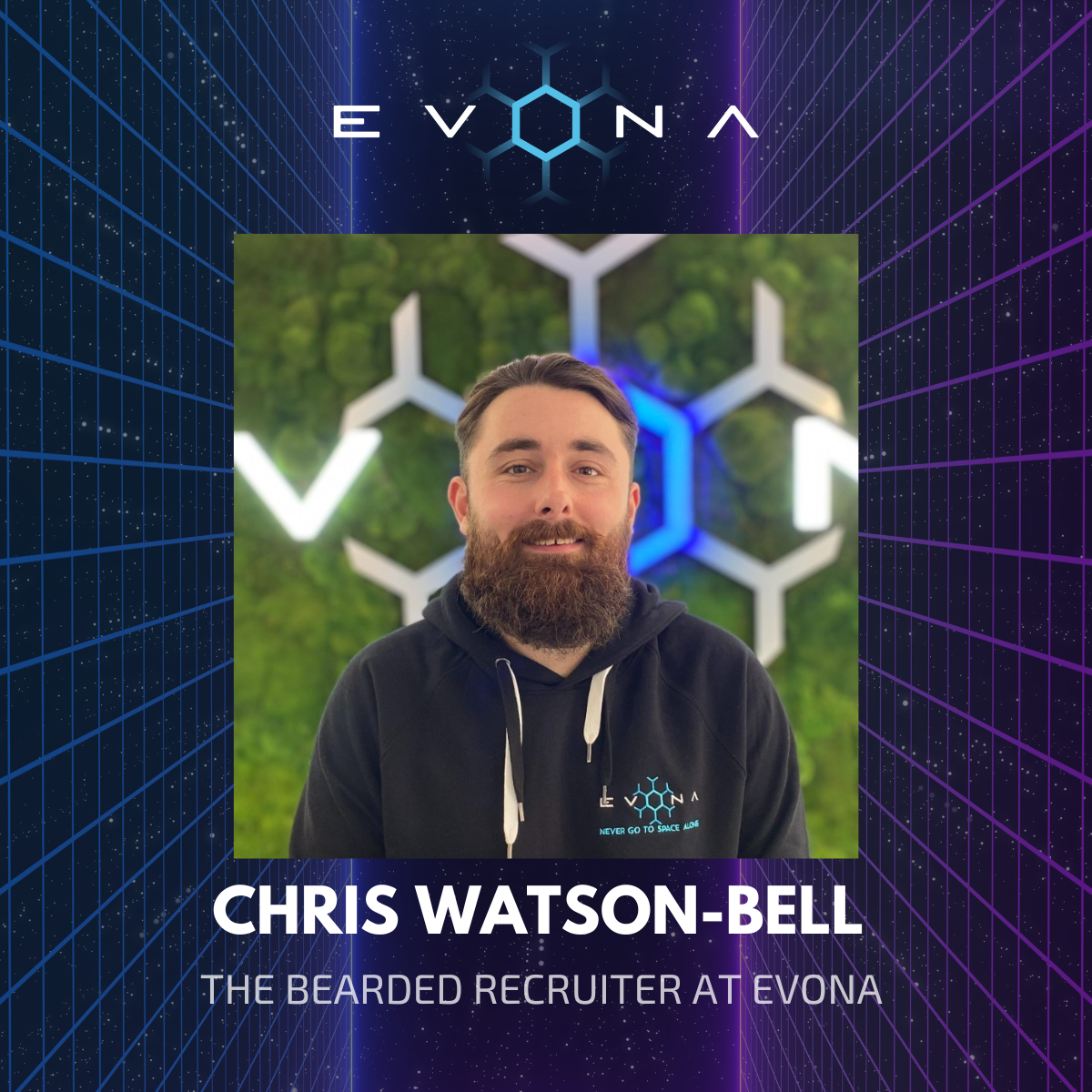
Welcome to another edition of our “Spotlight On” series where we get up close and personal with the people who make EVONA tick. This time, we’re chatting with Chris Watson-Bell, our Bearded Recruiter, with 2.5 years under his belt at our company, Chris has become a cornerstone of our recruitment efforts, particularly in the vibrant space economy sector.

His approach goes beyond traditional recruitment by emphasizing cultural fit and leadership qualities alongside necessary skill sets, with a knack for seeing the potential in people and a deep understanding of our clients’ needs, he helps carve out spaces where both can thrive.

Join us as Chris shares advice for those transitioning into the space economy field, and reveals his passions outside of work.


Chris, could you give us a snapshot of what your day-to-day role at EVONA entails?

Recruitment. That’s probably too short of an answer. I spend my days speaking to people either within the sector or looking to break into the sector. I’m currently working on 2 big projects for clients within Europe going through growth phases.

What are some of the key challenges you encounter when finding the perfect candidates for roles in the space economy, and how do you navigate these challenges?

Personally, I don’t buy the adage of there being ‘perfect candidates.’

Of course, every role has key skills people need to have but beyond that, it’s really getting to know the candidate & client, and seeing where people can add value beyond the hard skills. This can be with culture fit/add, eagerness to learn, or having great leadership skills to bring out the best of people already within the business.

Based on your experience, what roles are currently the most in-demand? 

  • Any sales roles – it’s great building products but unless someone can demonstrate/sell the benefits your company isn’t going to make money to grow.
  • GNC/AOCS Engineers.

What advice would you give to someone who is looking to shift their career towards the space economy?

  • Connect with people in the field – me included
  • Attend Space-related events.
  • Show/share your passion for the sector wherever you can.

Outside of your professional life, how do you recharge? Do any of your hobbies or passions influence how you approach your role as a recruiter?

Outside of work I’m a big football fan both playing (badly) & watching (quite often through my fingers) my team Crystal Palace. Maybe this influences my job as supporting a not-so-big team you get used to disappointment (haha). Also, I spend a lot of time with my wife & my big ginger cat Cheeto!

Looking for new opportunities? Explore our job board


Spotlight On Natasha Fletcher

In this edition of our “Spotlight On” series, we turn our attention to the operational heartbeat of EVONA, exploring the multifaceted world of operations through the lens of Natasha, our Operations Executive.

Having been promoted to this pivotal role within the company, Natasha embodies the innovative drive that pushes our team forward in the fast-evolving space economy.

Join us to hear Natasha talk about her everyday challenges and achievements, her path into the space industry, and her advice for those looking to enter the field. Learn what drives her passion and commitment, at work and beyond.

Natasha, could you give us a snapshot of what your day-to-day role as an Operations Executive at EVONA entails? 

It can vary massively from day to day, which is what keeps the job interesting to me and keeps me on my toes. Some days I am doing event planning trips around the world and other days I am working on internal projects, like PowerBI candidate/client reports or project managing new product launches. At the moment I am working on a lot of reporting/data-led projects for the team to help enable them to make data-driven decisions.

Can you share with us how you ended up working at EVONA and what drew you to the space staffing sector?  

Initially, I was drawn in by the space industry, I thought it would be an interesting area to work in. Once I had visited the office, I was drawn in by the buzz – I found the 4 Co-Founders very inspiring and knew that the values of the company aligned closely with mine. 

What keeps you motivated, and can you share a moment or achievement at EVONA that you’re particularly proud of?

I find working in an innovative environment very motivating, I love that we are encouraged to think outside of the box and bring unique perspectives to the table. I find this very energising and keeps me excited to be at work. I would say that the achievement I am most proud of is recently getting promoted to Operations Executive. It always feels good to know that you are valued and appreciated – it has also opened up a new career path for me and a chance to understand the operational side of the business, which is something I am interested in. 

If you could offer a piece of advice to someone aspiring to enter the space economy staffing sector, what would it be? 

Entering the space economy staffing sector is both exciting and challenging, given the fast-paced development of the Space Economy. I believe that the best bit of advice I could offer someone is to always be adaptable and willing to learn. This way you can excel by staying on top of the latest trends and technologies, be resilient in the face of change, and evolve with the company.

Finally, beyond the office, what are some of your passions or hobbies? 

Usually I am hanging out with my friends, going to festivals/music events, or walking my dog – Outside of that I enjoy travelling and experiencing different cultures as much as I can. 


Looking for new opportunities? Explore our job board