SpaceX and T-Mobile Partner to Boost Signal from Space

SpaceX Chief Engineer Elon Musk and T-Mobile CEO and President Mike Sievert have announced ‘Coverage Above and Beyond: a game-changing new plan to bring cell phone connectivity everywhere’.

The team are working to provide some degree of cellular service “practically everywhere in the continental U.S., Hawaii, parts of Alaska, Puerto Rico and territorial waters”, according to Musk and Sievert.

“The important thing about this is that it means there are no dead zones anywhere in the world for your cell phone,” said Elon Musk. “We’re incredibly excited to do this with T-Mobile.”

Despite powerful 5G and Long-Term Evolution (LTE) wireless networks, over 500,000 square miles of the US, as well as large stretches of ocean, receive absolutely no signal from any provider. Multiple wireless coverage providers have struggled to find a solution for these dead zones. However, terrain limits like deserts and mountains across the US as well as land-use restrictions such as national parks make this an incredibly difficult task.

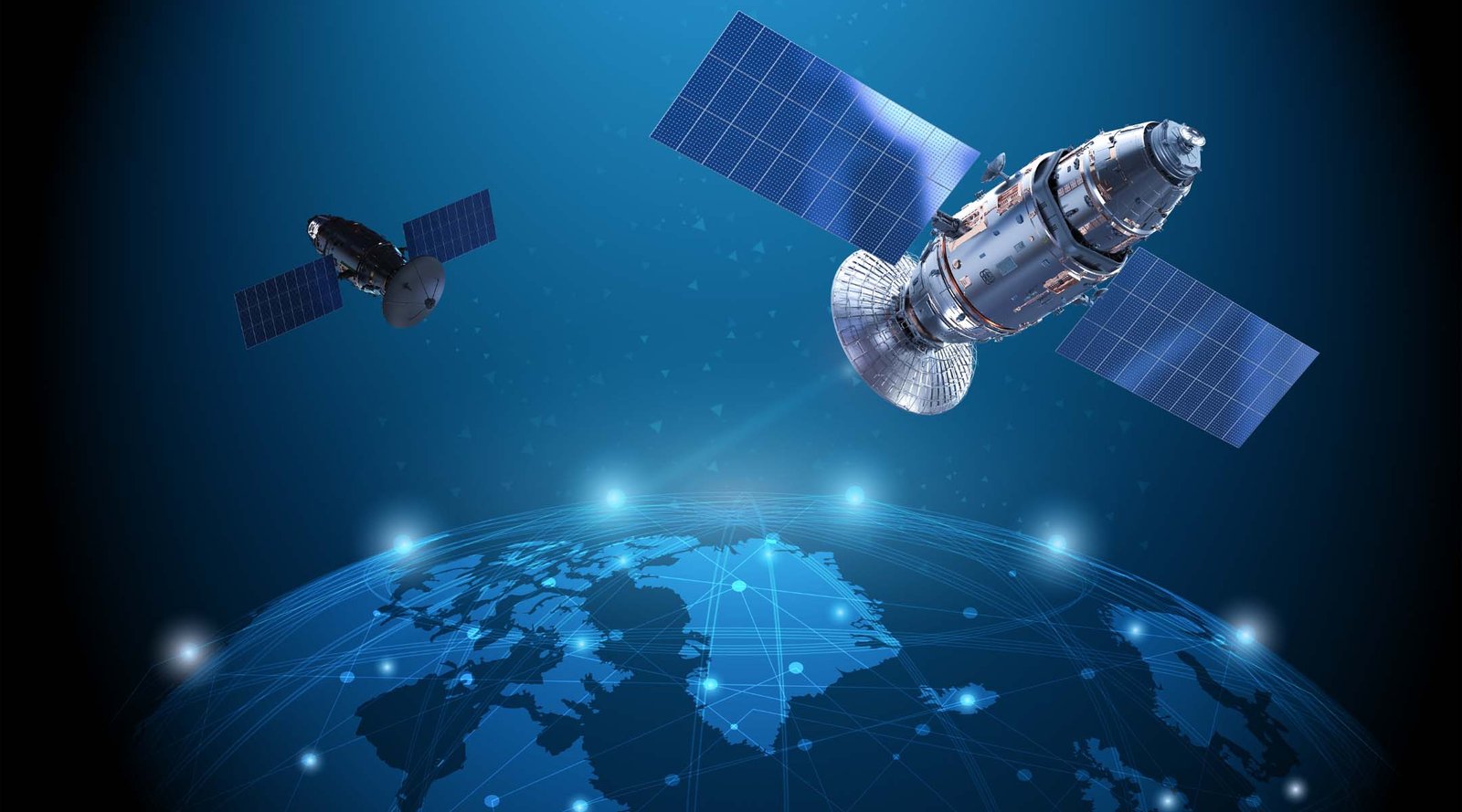
To remedy the problem, the two companies are building a new network that will broadcast nationwide from Starlink’s satellites using T-Mobile’s mid-band spectrum. This satellite-to-cellular service will offer near to complete coverage practically anywhere users can see the sky.

“It’s going to massively improve people’s convenience and it’s going to save lives,” commented Elon Musk.

Using this technology, the pair plan to bring text coverage to customers across all corners of the continental US, Hawaii, parts of Alaska, Puerto Rico and territorial waters. Following more satellite launches from SpaceX over the next year, coverage will be brought to even more areas outside of T-Mobile’s coverage/signal network.

“We’ve always thought differently about what it means to keep customers connected, and that’s why we’re working with the best to deliver coverage above and beyond anything customers have ever seen before,” commented Mike Sievert. “More than just a groundbreaking alliance, this represents two industry-shaking innovators challenging the old ways of doing things to create something entirely new that will further connect customers and scare competitors.”

This project will rely on Starlink’s next-generation satellites, planned to launch on SpaceX’s Starship rocket. These satellites will have large antennae to directly provide connectivity to phones on the T-Mobile network. Users won’t need to make any additional purchases to access this new service. Conveniently, the majority of smartphones on T-Mobile’s network will already be compatible with the network.

“We are constructing special antenna. They are actually very big antenna that are extremely advanced,” said Musk. “The important thing is you will not need to get a new phone. The phone you currently have will work.”

With other exciting companies like Aquarian Space working to develop communication networks for interplanetary exploration – including high speed internet on the moon – this marks the beginning of a very exciting time for the space sector. With capabilities like these, we’ll be connected like never before with people in the most remote corners of the world, and maybe one day the universe.

These two industry giants are paving the way for global connectivity with a shared vision to empower the world. Could SpaceX and T-Mobile’s partnership signal the end of cellular dead zones?

Elon Musk’s Starlink Hacked With $25 Device

AT THE BLACK HAT SECURITY CONFERENCE IN LAS VEGAS, BELGIAN CYBER-SECURITY RESEARCHER LENNERT WOUTERS REVEALED VARIOUS HARDWARE VULNERABILITIES THAT LEFT STARLINK’S SATELLITES EXPOSED TO HACKERS. USING A HOMEMADE MODCHIP THAT COST $25 TO DEVELOP, HE WAS ABLE TO GAIN FREE ACCESS TO STARLINK’S SYSTEM AND RUN CUSTOM CODE ON THE NETWORK’S DEVICES.

Wouters has also previously hacked Tesla, another of Elon Musk’s companies, by producing hardware that can unlock one of their electric vehicles in just 90 seconds.

In a presentation titled “Glitched on Earth by Humans”, Wouters demonstrated the attack on a Starlink User Terminal (UT) that allowed him to break into the dish and explore the Starlink network. Using a voltage fault injection attack, he was able to bypass SpaceX security protections.

“Our voltage fault injection attack was first performed in a laboratory setting and later implemented as a custom printed circuit board or ‘modchip’. The presented attack results in an unfixable compromise of the Starlink UT and allows us to execute arbitrary code,” Wouters commented. “The ability to obtain root access on the Starlink UT is a prerequisite to freely explore the Starlink network.”

Starlink operates through satellite dishes or UTs located in people’s homes and businesses. Wouters’ successful breach has exposed the system’s vulnerability.

In a press release, Wouters commented, “The widespread availability of Starlink User Terminals (UT) exposes them to hardware hackers and opens the door for an attacker to freely explore the network.”

Following the hack, Wouters has made his homemade tool available on GitHub, complete with instructions on how to execute the attack.

SpaceX have dubbed Wouters a ‘badass engineer’ and now offer up to $100,000 to researchers who can find bugs in the network through their bug bounty programme. Their website already provides a list of 32 researchers who have found significant flaws in Starlink’s system. Elon Musk commented that the company actually encourages this type of hacking, as long as it’s done non-disruptively. SpaceX even praised Wouters’ work in a six-page paper called ‘Starlink invites security researchers (bring on the bugs)’.

Following the presentation, SpaceX’s information security manager Christopher Stanley tweeted, “#BringOnTheBugs – We love working closely with security researchers! Special shout-out to @LennertWo for an amazing presentation! We are hiring! If you are a badass engineer and love space, please check out spacex.com/careers”.

It seems SpaceX have given people the chance to hack into the space sector, quite literally. To anyone thinking a career in space is out of reach – we hope this story inspires you to think otherwise. Aspiring hackers can breach multi-billion-dollar space giants from the comfort of their bedrooms. These individuals are forcing these companies to take notice of them and learn from their expertise.

The space industry is rapidly expanding and constantly providing new areas to enter into. There’s more than one way to get into the space sector, and they’re not as conventional as you might think.

Whether your background is in cybersecurity, engineering, or something less conventional, the space industry needs people like you. Explore current space sector opportunities on our Job Board → https://evona.com/spacejobs/

‍

‍

Celebrating 10 Years of the Curiosity Mars Rover

WHEN A JETPACK FIRST LOWERED CURIOSITY ONTO MARS, SHE WAS ONLY SETTING OUT ON A TWO-YEAR MISSION TO DISCOVER WHETHER THE RED PLANET COULD HAVE HOMED ANCIENT MICROBIAL LIFE. FAST FORWARD 10 YEARS – THE CAR-SIZED ROVER IS STILL EXPLORING WITH NO SIGNS OF STOPPING.

‍

Since landing, Curiosity has travelled 17.5 miles and climbed over 2000ft in elevation. You can even track her live location! The rover still has practically full capabilities, with all science instruments said to be working almost just as they were when they landed.

Curiosity has collected 41 material samples, had her data published in 883 scientific papers and captured 494,540 images – including a 1.8-billion-pixel panorama, her largest and highest resolution panorama ever.

A great way to keep up with Curiosity’s adventures is to follow her Twitter account. As of August 2022, she has 4.3 million followers cheering her on.

Launched in November 2011, Curiosity was designed to explore Gale Crater, a 96-mile-wide impact basin with a 3-mile-high rock-layered mountain called Mount Sharp in the centre. This particular landing site was chosen as it has several signs of the historic presence of water. Scientists back on Earth wanted to discover the history of this crater, how it came to be, and what it could teach us about the Red Planet’s history.

After years of exploration, experts concluded the crater was formed around 3.7 billion years ago when a large meteor hit the planet, annihilating the rock below while forming the mountain peak in the middle.

‍

In alignment with NASA’s Mars Exploration Program, Curiosity’s main science goals are divided into four categories:

• determine whether life ever arose on Mars

• characterize the climate of Mars

• characterize the geology of Mars

• prepare for human exploration

‍

To mark 10 incredible years of exploration and discovery, we’re looking back over Curiosity’s achievements as one of the largest and most powerful rovers ever sent to Mars.

‍

DISCOVERING AN ANCIENT STREAMBED

Only seven weeks after landing, Curiosity discovered smooth, rounded pebbles that experts believe likely rolled downstream for miles on an ancient streambed. The varying sizes and shapes of these rocks allowed experts to calculate the speed and depth of the water that once flowed there.

“At a minimum, the stream was flowing at a speed equivalent to a walking pace – a meter, or three feet, per second – and it was ankle-deep to hip-deep,” said Rebecca Williams of the Planetary Science Institute.

Since life thrives around water on Earth, this first discovery suggested that parts of Mars may well have been habitable billions of years ago.

‍

DRILLING SAMPLES FROM MARTIAN ROCK

Curiosity later drilled her first sample from an ancient network of streams flowing from the rim of Gale Crater. Vital chemical ingredients for life such as nitrogen, sulphur, oxygen, carbon, hydrogen and phosphorus were discovered in powder from the sedimentary rock. Layers of mudstone, nodules, and veins were also found in the ancient bedrock, indicating that the planet experienced multiple periods of wet conditions. After studying the sample further, scientists found that clay minerals made up at least 20% of its composition – these minerals form when fresh water reacts with igneous materials. Experts concluded that rivers and lakes existed in Gale Crater for a million years, if not longer.

“The range of chemical ingredients we have identified in the sample is impressive, and it suggests pairings such as sulphates and sulphides that indicate a possible chemical energy source for micro-organisms,” said Paul Mahaffy, principal investigator of the SAM suite of instruments at NASA’s Goddard Space Flight Center.

‍

DETECTING ACTIVE AND ANCIENT ORGANIC CHEMICALS

After discovering the historic presence of water and life-supporting chemistry, Curiosity went on to measure a tenfold increase of methane – an organic chemical – in Mars’ atmosphere over a two-month period. This was a huge discovery as methane is produced both by chemical reactions and by living organisms – this means that present-day Mars is an active environment.

“This temporary increase in methane – sharply up and then back down – tells us there must be some relatively localized source,” commented Sushil Atreya of the University of Michigan, a member of the Curiosity rover science team. “There are many possible sources, biological or non-biological, such as interaction of water and rock.”


ASSESSING RADIATION LEVELS

Aside from discovering about Mars’ past, Curiosity has taught us about our potential future on the planet. The rover has been measuring and assessing the planet’s radiation levels with her Radiation Assessment Detector (RAD), helping scientists understand potential risks to human visitors.
While Earth has a magnetic field to shield it from high-energy particles, Mars does not. This kind of radiation can cause serious problems both for health and for astronaut’s life support systems. However, data from Curiosity’s RAD suggests that natural Martian elements like sediment and rock could shield astronauts from this harmful radiation.

In 2019, Curiosity was parked by a cliff in Murray Buttes from September 9th to 12th. During this time, RAD reported a decrease in overall radiation of 4%, and a decrease in neutral particle radiation of 7.5%. These findings sparked new areas of research, one of which involved Curiosity’s counterpart, Perseverance, being sent to Mars with spacesuit samples to see how they fare against the planet’s radiation.

‍

So, there you have it. After 6686 Martian days, Curiosity’s incredible journey and discoveries like these have led to some ground-breaking conclusions about the Red Planet’s history, as well as our future there.

“A fundamental question for this mission is whether Mars could have supported a habitable environment,” said Michael Meyer, lead scientist for NASA’s Mars Exploration Program at the agency’s headquarters in Washington. “From what we know now, the answer is yes.”

Thanks to Curiosity, scientists have pieced together the history of Mars’ evolution. Now we’ve answered this essential question, it seems we still have a lot to learn.

On her 10th birthday, we’re wishing this curious robot many more on Martian soil as she continues to fuel our understanding of the planet.

NASA’s Orion Spacecraft Ready for Deep Space Tests

NASA’S SPACE LAUNCH SYSTEM (SLS) AND ORION SPACECRAFT ARE READY FOR AN UNCREWED TEST FLIGHT AROUND THE MOON ON MONDAY.

This is the first in a series of increasingly complicated tests under the Artemis 1 mission, working towards getting humans back on the Moon and eventually onto Mars.

Monday’s launch will be NASA’s first moon rocket test flight since 1967. For the first time in a generation, this human spacecraft designed for deep-space missions will usher in a new era of space exploration. If Orion returns from the Moon as planned, astronauts could be setting off on their own mission around the Moon in 2023 before actually landing there in 2025.

“We are go for launch, which is absolutely outstanding. This day has been a long time coming,” commented Robert Cana, NASA Associate Administrator. “I’m a product of the Apollo generation, and look what it did for us. I cannot wait to see what comes from the Artemis generation because I think it’s going to inspire even more than Apollo did.”

The entire spacecraft stands at 322 feet, which is almost as tall as The Shard in London. SLS, which will catapult the Orion capsule into space, has been dubbed the most powerful rocket ever built.

NASA has now extended Orion’s initial 21-day mission to 42 days. Once the spacecraft has orbited the Moon, it will have travelled around 40,000 miles beyond the far side of the Moon – further than any crewed spacecraft has travelled before. The craft will spend around two weeks in orbit before returning to Earth for an ocean splashdown.

“We are pushing the vehicle to its limits, really stressing it to get ready for crew. It is incredibly risky,” said NASA Associate Administrator for Exploration Systems Development, Jim Free.

Launch is set for Monday 29th August from the Kennedy Space Centre in Florida, 8:33am local time (1:33pm in the UK). While many space-enthusiasts will flock to watch liftoff in person, you can also catch it on NASA’s website, their app and or their YouTube channel.

NASA’s Artemis 1 mission heralds a huge leap in space exploration. This is an incredibly exciting time not just for the space community, but for the whole of humanity. As NASA prepares for this mission milestone, we can’t wait to see where this extraordinary project takes us.

NASA Record Supermassive Black Hole’s Song

FOR THE FIRST TIME EVER, NASA HAVE MADE SOUNDWAVES FROM A SUPERMASSIVE BLACK HOLE AUDIBLE.

The eerie wails wouldn’t sound out of place in a horror film, with some comparing it to a whale’s song or a Pink Floyd track.

While this isn’t the universe’s first celestial melody, we’ve only recently developed the technology to hear them. Astronomers first detected acoustic waves transmitting through the gas surrounding this black hole in 2003.

Principle investigator of the NASA sonification project, Kimberly Arcand, commented, “The idea that there are these supermassive black holes sprinkled throughout the universe that are… belching out incredible songs is a very tantalising thing.”

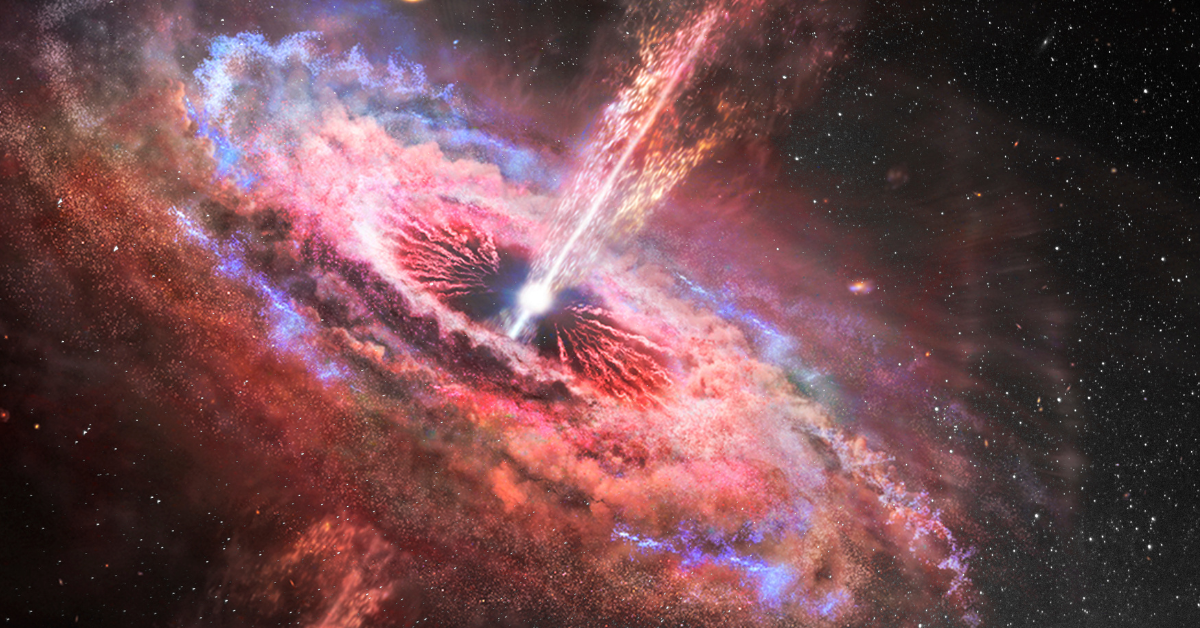
The sound waves originated from the centre of the Perseus galaxy cluster, which is essentially a giant gas cloud. Pressure waves sent from the centre of the black hole have caused the cluster’s hot gas to ripple, with the cluster containing so much gas that it allows some sound to travel.

The Perseus galaxy cluster is one of Earth’s closest clusters. It’s so full of galaxies, experts assume it to be one of the most enormous objects in the universe.

“The misconception that there is no sound in space originates because most space is a vacuum, providing no way for sound waves to travel,” commented a NASA spokesperson. “A galaxy cluster has so much gas that we’ve picked up actual sound. Here it’s amplified, and mixed with other data, to hear a black hole.”

NASA’s experts amplified the noise – translating astronomical data into sound – to give the rest of the world a peek into the unknown. The original sound is 57 octaves below middle C, making it inaudible to humans.

“Another way to put this is that they are being heard 144 quadrillion and 288 quadrillion times higher than their original frequency,” a NASA spokesperson commented.

Black holes are one of the universe’s greatest mysteries. Even after decades of research, there’s still a lot we don’t know.

A black hole’s gravitational field is so strong that no light can escape. We can’t directly view them with any light we are able to detect, or observe them directly with telescopes detecting x-rays or other forms of electromagnetic radiation. We can only deduce their presence by observing their effect on nearby matter. NASA’s astounding discovery triggers new questions about black holes and potential areas of research to better understand them.

This audio clip is a portal into corners of the universe many never dreamed they’d reach. NASA have shed some light on the mystery surrounding black holes – what will be discovered next?

SpaceX Starlink Satellites Threatened by Russian Space Junk

SPACEX RECENTLY REPORTED THAT RUSSIAN SPACE DEBRIS WAS ON A COLLISION COURSE WITH SPACEX STARLINK SATELLITES. RESEARCHERS DOCUMENTED OVER 6,000 NEAR-MISSES.

The debris was created in 2021 when Russia used an anti-satellite weapon (ASAT) to destroy the defunct 2,000kg Cosmos 1408 satellite, launched in the Soviet era. The explosion created around 1,500 pieces of space debris, now orbiting between 300 and 1,100 km above Earth. According to the US Space Command, this debris “will likely generate hundreds of thousands of pieces of smaller orbital debris over time.”

The near collisions were discussed at the Small Satellite Conference in Utah last week. Dan Oltrogge, chief scientist at COMSPOC, reported that debris from the destruction of Cosmos 1408 is causing an increase in close approaches, or “conjunction squalls.” COMSPOC tracked over 6,000 squalls within 10km of Starlink satellites, threatening 841 of their 2,748 satellites in low-Earth orbit.

Russia made headlines again earlier this year when from the same debris “endangered” the International Space Station (ISS), resulting in an avoidance manoeuvre. The ISS crew had to take cover in their escape capsule as the debris cloud passed.

It must be noted that SpaceX’s hands aren’t exactly clean when it comes to space debris. Earlier this month, a sheepherder in rural Australia discovered a large piece of space debris from SpaceX’s Crew-1 Dragon spacecraft. The debris was said to be from the spacecraft’s trunk, which transports the spacecraft’s solar panels and allows unpressurized cargo to be transported to the ISS.

Space debris, also known as ‘space junk’, is a growing problem in the space sector. As of April 2022, the European Space Agency reported over 30,000 pieces of debris with a mass of over 9,000 metric tons. Debris collisions have already caused significant damage to important satellites, and with more launches taking place than ever before, the probability of collisions is increasing. The probability of any satellite in low Earth orbit colliding with a piece of debris over 1cm is now 50% in a year.

With close calls like this becoming a more regular occurrence, it’s clear that something needs to be done about the space junk problem. Experts are currently developing innovate methods to clean up space with exciting projects like Astroscale’s ELSA-d, a spacecraft that uses a magnetic capture system to capture debris, already reporting successful tests.

As the threat posed by space debris becomes greater, the sector looks to these companies for a solution before it reaches breaking point.

‍

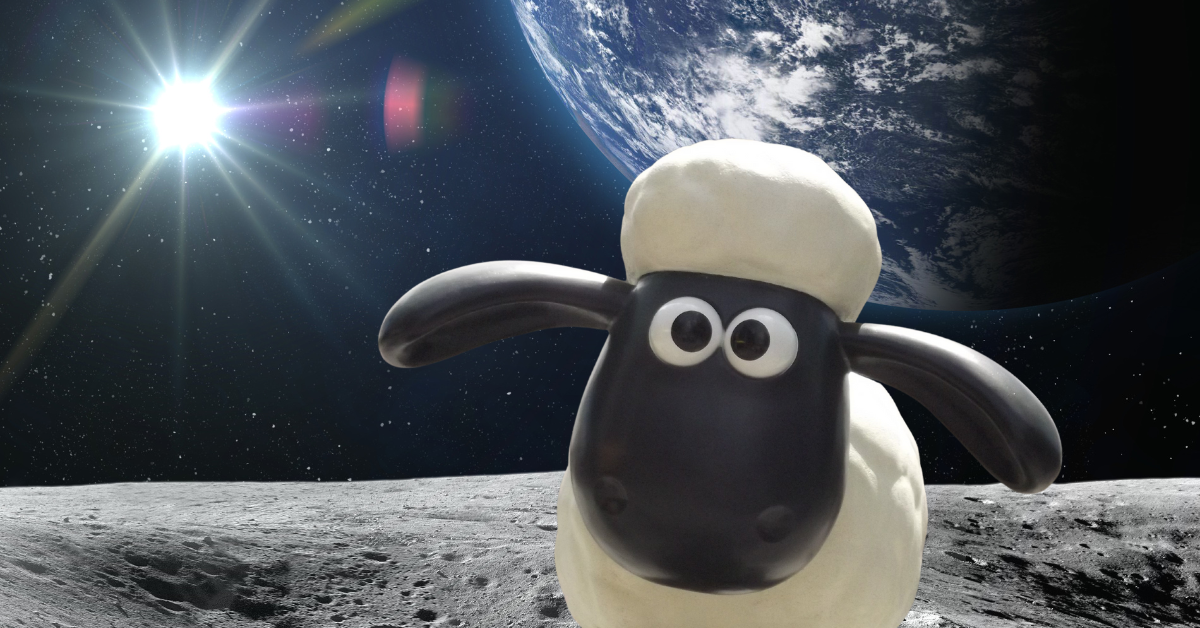
Shaun the Sheep recruited as NASA’s latest astronaut

IN A WONDERFULLY SURPRISING TURN OF EVENTS, SHAUN THE SHEEP WILL BE FLYING ON NASA’S ARTEMIS 1 MOON MISSION, SET FOR AUGUST 29TH.

‍

Artemis 1 is the first in a series of tests that will allow humans to explore the Moon and Mars. Through the Artemis program, NASA aims to jump-start its exploration plans by over four years, establishing sustainable exploration by the end of the decade. The program also hopes to send the first woman and person of colour to the Moon.

The European Space Agency (ESA) is working in partnership with Shaun’s creators, Bristol-based Aardman Animations, to send the sheep – in doll form – on an adventure beyond the stars.

A long way from Mossy Bottom Farm, Shaun is set to fly beyond the Moon aboard NASA’s Orion spacecraft, returning to Earth after the month-long flight. This will be a solo mission for Shaun, the spacecraft’s only passenger.

The stop-motion star will be flying past the Moon, where the spacecraft will use lunar gravity to propel itself another 70,000km. This is further than man or sheep has gone before.

“This is an exciting time for Shaun and for us at ESA,” said David Parker, ESA’s director for human and robotic exploration. “We’re woolly very happy that he’s been selected for the mission and we understand that, although it might be a small step for a human, it’s a giant leap for lambkind.”

Shaun is currently preparing for his mission, undertaking astronaut training around the world and becoming familiar with the Orion spacecraft. He even flew aboard the Airbus ‘Zero G’ A310 aircraft, which creates a minimal-gravity experience similar to in space.

Aardman’s marketing director Lucy Wendover said, “Aardman is excited to be joining ESA in making history by launching the first ‘sheep’ into space. As one of the first astronauts to fly an Artemis mission, Shaun is leading the way in lunar exploration, a great honour for our woolly adventurer! 2022 marks the 15th anniversary of Shaun’s first TV series, so what better way to celebrate than by travelling farther than any sheep has gone before.”

We’re wishing Shaun the best of luck on his biggest adventure yet.

‍‍

Image: Shaun the Sheep at the Bullring

Credit: Elliott Brown

Star Trek’s Nichelle Nichols – TV Icon & NASA Recruiter

NICHELLE NICHOLS, MOST FAMOUS FOR HER ICONIC ROLE AS COMMUNICATIONS OFFICER LT. NYOTA UHURA IN THE ORIGINAL STAR TREK SERIES, HAS DIED AT THE AGE OF 89.

‍

Nichelle’s son announced her death on Facebook last Sunday morning,

“I regret to inform you that a great light in the firmament no longer shines for us as it has for so many years. Her light however, like the ancient galaxies now being seen for the first time, will remain for us and future generations to enjoy, learn from and draw inspiration.”

Nichelle was a true pioneer across both the television and space industries. As Lt. Uhura, she pushed boundaries as the first Black actress to be cast in a continuous co-starring role. Not only this, but she featured in US television’s first interracial kiss with William Shatner.

Nichols’ influence spread beyond film and television – she even managed to incorporate her life-long fascination with space travel. She was a passenger on NASA’s C-141 Astronomy Observatory, which conducted an eight-hour high-altitude mission to study the atmospheres of Mars and Saturn. A decade after Star Trek ended, she was even hired by NASA to encourage more women and Black Americans to become astronauts. Check out her 1977 recruitment video.

Many of NASA’s employees referenced Nichols’ performance in Star Trek as their inspiration to join the agency. With her involvement, they went on to recruit Guion Bluford, the first Black American in space, Mae Jemison, the first Black woman in space, and Sally Ride, the first American woman in space.

At Nichols’ 85th birthday party, Jemison recounted seeing Lt. Uhura on her television as a child and knowing her dream was within reach,

“How we think about the world is shaped by our fantasies. Star Trek’ happened to be a really great fantasy. Nichelle represented the fact that we had inclusion everywhere, and it so much has influenced how people think of a hopeful future. What we have to do today is get back to that.”

Following Nichols’ death, Jemison tweeted,

“@NichelleIsUhura is forever for me the embodiment of grace, daring, intelligence, fun, inspiration, beauty, talent & the future. Today I am heart-sad at her passing. I consider our dearest friendship a great treasure & privilege in my life.”

Alongside Jamison, Sally Ride thanked Nichols for inspiring her career,

“I think it’s been one of the most remarkable things in my career … that this one character that was a gift to me … became this iconic image and inspired and impacted so many people’s lives in positive ways.”

Nichelle Nichols’ influence will transcend her lifetime. Her performance fuelled a generation’s fascination with space, standing as testament to the countless influences that have shaped the space sector as we know it. She inspired us to strive for more, regardless of social constructs.

In what was still a segregated time, the representation of a Black female on television – a sci-fi series no less – was groundbreaking. Legends like Nichols paved the way for a more sustainable space industry through diversity, inclusion, and inspiration. As she exemplified so perfectly, space really is for everyone. Representation like this is what will continue to drive the sector into the future, allowing it to progress and thrive alongside humanity.

In light of her passing, the world celebrates the life’s work and accomplishments of a true icon.

Image: Nichelle Nichols speaking at the 2013 Phoenix Comicon at the Phoenix Convention Center in Phoenix, Arizona.

Credit: Gage Skidmore
‍

Earth completes its fastest ever rotation – what does this mean?

ON JUNE 29, THE EARTH EXPERIENCED ITS SHORTEST DAY ON RECORD. IT COMPLETED ONE ROTATION IN 1.59 MILLISECONDS UNDER ITS USUAL 24 HOURS.

‍

IT MAY SEEM INSIGNIFICANT, BUT THE POTENTIAL IMPACTS HAVE BEEN CALLED ‘DEVASTATING’.

‍

Typically, Earth’s average rotation decreases sightly over time. This has led to 27 ‘leap seconds’ – an extra second to keep our clocks in sync with solar time – to be added to the Coordinated Universal Time (UTC). We last added a leap second on New Year’s Eve 2016. Midnight struck twice worldwide as clocks paused for one second, allowing the Earth’s rotation to catch up with us.

Contrastingly, the speeding up of Earth’s rotation could require a ‘negative leap second’. This means that for the first time in history, timekeepers may need to speed up clocks worldwide and effectively remove time. The potential effects of this could impact some key components of modern life.

If this continues, our satellite communication and navigation systems could be compromised as they rely heavily on time’s consistency with the usual positions of the sun, moon and stars. Not only this, but various IT systems and software that depend on schedulers and timers could be seriously affected. Such systems could experience large-scale outages if their internal clocks were to be moved backwards. Experts have called the potential consequences ‘devastating’.

Scientists have speculated on the possible causes of this record-breaking rotation. One explanation could be the Chandler Wobble – movement in Earth’s axis of rotation that causes latitude to vary. Dr. Leonid Zotov, of the Sternberg Astronomical Institute, noted that, “The normal wobble amplitude is about four meters at Earth’s surface, but from 2017 to 2020 it disappeared.” Without this wobble, Earth is completing its rotation faster than usual.

Another potential cause could be climate change. Rising sea levels are impacting the Earth’s distribution of mass, bringing it closer to its rotation axis and speeding up its rate of rotation. This process has been compared to an ice skater pulling their arms in while spinning to increase speed.

Processes taking places in the planet’s inner molten core could also be to blame. Experts discovered that the Earth’s core is in fact rotating slightly faster than the planet itself. Over the past 100 years, this has resulted in the core gaining a quarter-turn on the rest of the planet.

While the exact cause is undetermined, it may well be a combination of all possibilities.

Following this record-breaking rotation, only time will tell the measures experts may take to keep our clocks in check.

‍

Nancy Grace Roman – NASA’s Next-Generation Space Telescope

IMAGES FROM THE JAMES WEBB TELESCOPE LEFT THE WORLD STARSTRUCK. THANKS TO ITS STATE-OF-THE-ART TECHNOLOGIES, WE WERE ABLE TO GAZE FURTHER INTO DEEP SPACE THAN EVER BEFORE – UNTIL NOW.

‍

NASA’S NANCY GRACE ROMAN SPACE TELESCOPE, SET TO LAUNCH IN 2026, WILL TAKE US EVEN FURTHER.

This next-generation space telescope promises to be an extremely powerful tool, allowing us to study the cosmos and its many galaxies from a brand new perspective.

NASA recently announced a $255m partnership with SpaceX for Roman’s launch. Liftoff will take place at the Kennedy Space Center aboard a Falcon Heavy rocket.

Roman, which cost $4.3 billion in total, will combine tried and tested technologies with state-of-the-art additions.

With a Hubble-sized mirror and 18 newly developed HgCdTe 4K × 4K photodiode arrays, the Roman Space Telescope will take infrared images of the sky to observe dark energy, stars, exoplanets and galaxies. It will measure the positions and shapes of hundreds of millions of galaxies, the light curves of thousands of supernovae, and the microlensing signals of over a thousand exoplanets toward the galaxy’s bulge.

Roman will have a panoramic field of view 200 times larger than the Hubble Telescope’s, allowing it to create the first wide-field maps of the universe. The telescope is comprised of a 2.4-meter telescope with a Wide-Field Instrument (WFI) – a 300-megapixel infrared camera – and a coronagraph. It’s Hubble-like, but with the added benefit of 30 years’ technological development.

All these instruments working together, and in collaboration with hi-tech future telescopes, will herald a new era of space exploration.

The Roman Space Telescope will survey billions of galaxies, capturing the light of stellar explosions. Its powerful WFI can capture thousands of objects from a single observation. Scientists are hoping to solve the mystery of dark energy, which is causing the universe’s expansion to accelerate. Roman’s sky scans will reveal thousands of exoplanets beyond our solar system, including planets that have never been studied before.

The telescope’s mission lifecycle also promises to shed new light on the heyday of star formation. Astronomers will be able to study a galaxy’s spectrum to learn about its stars’ ages, star formation history, the number of heavy chemical elements it contains, and much more. By doing this for multiple early galaxies, we can learn about the processes that began and eventually ended this period of rapid growth.

Keep your eyes to the sky as NASA prepares for this mind-blowing mission.